Summary The EU would also step in to coordinate countries’ efforts to fill gas storage in the coming months.
(Reuters) - The European Commission is expected to set out plans on Wednesday to cut electricity taxes and coordinate the summer refill of countries’ gas storage, as it seeks to cushion the energy fallout from the Iran war.
Draft proposals show the EU will, for now, avoid major market interventions such as capping gas prices or taxing energy companies’ windfall profits — measures it used in 2022 when Russia cut gas supplies and prices hit record highs.
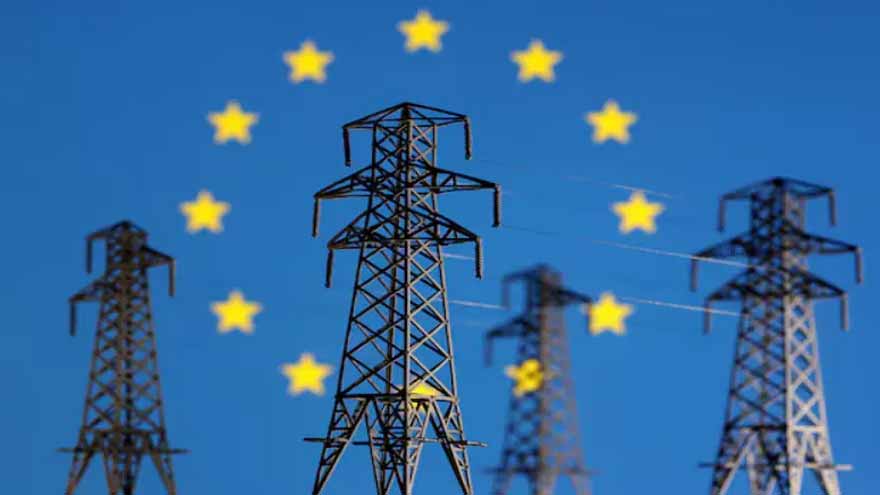
Instead, the Commission plans to curb EU tax rules to favour electricity over oil and gas, and make it easier for governments to cut industries’ electricity taxes to zero, according to the drafts, which could still change before publication.
The EU would also step in to coordinate countries’ efforts to fill gas storage in the coming months, and provide guidance on how governments should handle potential jet fuel shortages.
Europe’s heavy reliance on oil and gas imports has left it exposed to spiralling prices since the Strait of Hormuz, a vital fuel shipping route, was effectively closed and Iran started attacking energy infrastructure in the Middle East.
Europe’s benchmark gas price on Tuesday was roughly a third higher than before the US-Israeli war with Iran began on February 28.
However, the EU’s biggest oil and gas suppliers — the US and Norway — are outside the Middle East, and the Iran crisis has not yet triggered fuel shortages in Europe.
Airlines have warned, though, that jet fuel shortages could emerge in weeks.
EU officials told Reuters the bloc’s relatively restrained response reflects the fact that national governments, rather than Brussels, control many crisis-management levers, including subsidies and cutting national taxes and levies.
The Commission’s plans outline non-binding ways for governments to provide “immediate relief”, including requiring businesses to avoid air travel where possible.
Some officials said the response also reflects an assessment that the war-driven energy shock could last for months, making it prudent to hold back more extreme measures for now.
Elisabetta Cornago, assistant director at the Centre for European Reform think tank, said continued closure of the Strait of Hormuz “may lead us to a worse shock regarding oil than in 2022, a similar gas shock, but I think a smaller shock on electricity prices”.
That’s because countries have significantly expanded renewable electricity since 2022, she said.
The EU produced 71% of its electricity from low-carbon sources, including renewables and nuclear, last year, up from around 60% in 2022, data from think tank Ember showed.