Summary Islamabad High Court declared maintainable a petition seeking verification of Justice Tariq Mehmood Jahangiri’s LLB degree and ordered respondents to submit replies within three days.
ISLAMABAD (Web Desk) - The Islamabad High Court (IHC) on Tuesday declared maintainable a petition seeking verification of the LLB degree of Justice Tariq Mehmood Jahangiri and directed the judge and other respondents to submit their replies within three days.
A divisional bench comprising IHC Chief Justice Sardar Muhammad Sarfraz Dogar and Justice Muhammad Azam Khan heard the petition filed by Advocate Mian Dawood.
The controversy relates to Justice Jahangiri’s law degree, which was cancelled by the University of Karachi. According to a notification dated September 25, the university syndicate, in its August 31, 2024 meeting, approved Resolution No 06 in line with the competent authority’s decision and upheld the findings of the Unfair Means Committee.
The notification stated that Justice Jahangiri was found guilty of using unfair means and was barred for three years from admission to any university or college, as well as from appearing in any university examination. The University of Karachi also clarified that he was never enrolled as a student at Islamia Law College, Karachi, in 1989.
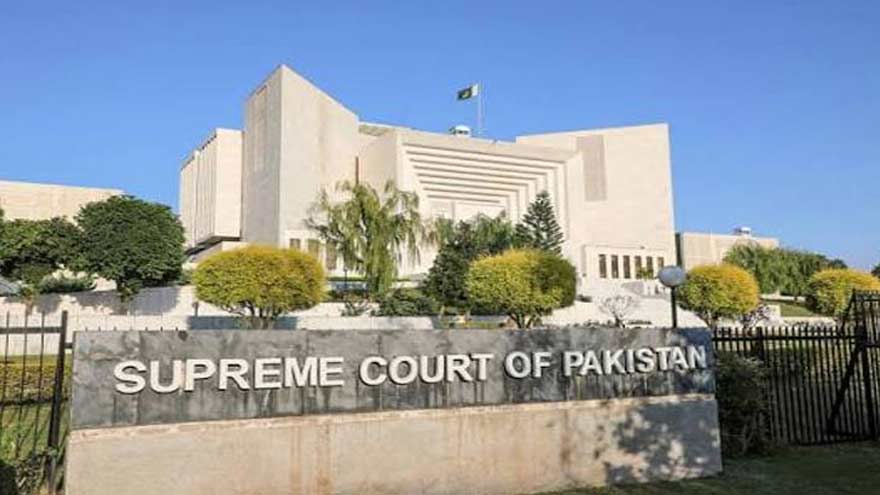
Earlier, the same IHC bench had restrained Justice Jahangiri from performing judicial functions pending a decision by the Supreme Judicial Council (SJC). However, five IHC judges, including Justice Jahangiri, challenged that order in the Supreme Court, which later suspended the restraining order.
The Supreme Court allowed Justice Jahangiri to continue performing his judicial duties and directed the petitioner to address objections regarding the maintainability of the plea before further proceedings in the IHC.
During subsequent hearings, the IHC sought records from the Higher Education Commission (HEC) concerning the judge’s law degree. Replies from the HEC and the University of Karachi were placed on the record in the latest hearing.
A large number of lawyers and bar office-bearers were present during the hearing, prompting Chief Justice Dogar to direct them to remain seated and state that the court would first hear arguments on the maintainability of the petition.
Advocate Mian Dawood argued that under Article 193 of the Constitution, a high court judge must be a qualified advocate. He claimed that official correspondence from Karachi University confirmed that the degree in question was not genuine. He informed the court that the petition was a writ of quo warranto challenging Justice Jahangiri’s eligibility.
He further argued that issues arising after a judge takes oath fall under the jurisdiction of the Supreme Judicial Council under Article 209 and referred to the Justice Mazahir Ali Akbar Naqvi case, stating that the burden now lay on Justice Jahangiri to prove the authenticity of his degree.
The court later sought assistance from Barrister Zafarullah; however, lawyers from the Islamabad Bar Association insisted on being heard first.
The Islamabad Bar’s counsel argued that the petitioner was not an aggrieved party and should have approached the Bar Council. He maintained that verification of licences and legal qualifications falls under the Bar Council’s authority, and that the court should not conduct fact-finding in such matters, which lie within the domain of the Supreme Judicial Council.
After hearing the arguments, the Islamabad High Court declared the petition admissible and directed all parties to submit their replies within three days.