Summary The Black Sea is a vital route for shipments of grain, crude oil and refined products
LONDON (Reuters) - A surge in attacks on ships, ports and export terminals in the Black Sea is disrupting global supplies of grain and oil, turning the region into the latest strategic trade chokepoint to be hit by escalating conflict.
The Black Sea is a vital route for shipments of grain, crude oil and refined products. Its waters are shared by Russia and Ukraine as well as Bulgaria, Georgia, Romania and Turkiye.
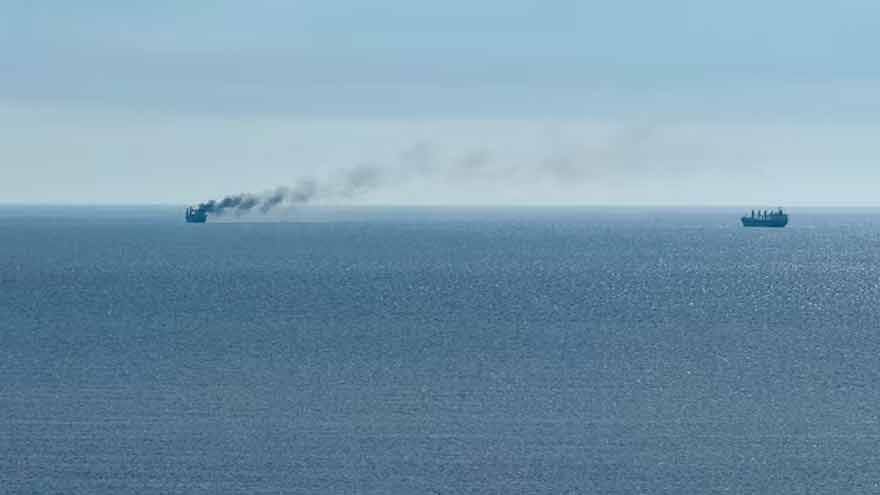
Russia, the world's largest wheat exporter, and Ukraine, also a major agricultural exporter, have intensified attacks on each other's agricultural export facilities and commercial vessels in the Black Sea area in recent weeks.
Kyiv has also ramped up attacks on tankers involved in Russia's oil trade.
The latest escalation is creating another pressure point for commodity markets already coping with disruptions to major shipping routes in the Middle East.
"The consequences ... are already visible in global agricultural markets," UN official Kayoko Gotoh told a Security Council session last week. "We must not allow this dangerous escalatory spiral to continue."
Oil flows through the Strait of Hormuz have been disrupted by the US-Iran conflict, while a maritime embargo declared by Yemen's Iran-aligned Houthis on Saudi Arabian ports and ships has raised risks for Red Sea shipping.
GRAIN EXPORTS STRAINED
Ukraine recorded 35 attacks on vessels in port and 22 at sea in July, along with 67 strikes on port facilities, according to the infrastructure ministry.
By comparison, vessels were attacked 14 times in all of 2025. Reuters estimates Ukraine has targeted dozens of tankers involved in Russia's oil trade.
The escalation is already affecting trade flows.
Russian shipping group FESCO said this week it had suspended new shipment orders via the Black Sea after one of its vessels was hit in a Ukrainian drone attack.
Russia has meanwhile intensified strikes on civilian vessels and port infrastructure around Ukraine's southern Odesa hub, through which more than 90% of Ukraine's agricultural exports are shipped.
Both Russia and Ukraine say they only strike military-related targets.
Agricultural products remain Ukraine's largest source of export revenue more than four years into the war.
Kyiv is seeking alternative export routes, but Agriculture Minister Vitaliy Koval told Reuters this week they would not reach full capacity until the end of August and would handle only about half the volumes normally shipped through Black Sea ports.
Shipping activity in the Sea of Azov, which leads into the Black Sea, has been restricted since July 10, impacting activity at the major Russian grain port of Taman, trade sources said.
Grain exports continue from Novorossiysk and Tuapse, but at a slower pace than before.
Oil exports are also being affected. Ukrainian attacks on tankers in July damaged several vessels and forced temporary suspensions of loading operations at Novorossiysk and the Caspian Pipeline Consortium (CPC) terminal, the main export outlet for Kazakh crude.
"The CPC system is a critical export route for Kazakhstan, handling roughly 80% of the country's crude exports, making any prolonged disruption a potential concern for regional supply flows," shipbroker BRS said in a report this week.
BLACK SEA WAR INSURANCE JUMPS
Rising security risks are also driving up shipping costs.
Average daily Black Sea oil tanker costs have jumped to over $300,000 a day from just over $200,000 a day a week ago, according to market estimates.
War insurance costs for port calls to Black Sea terminals have risen to as much as 2% of the value of the ship, from around 1% two weeks ago, according to insurance sources.
Even small increases translate into hundreds of thousands of dollars in additional costs per voyage.
"Should (Black Sea) volumes continue at the reduced levels seen over the past two weeks, global dirty (crude oil) tanker volumes could decline 3% in a market already challenged," said Niels Rasmussen, chief shipping analyst with shipping association BIMCO.