Updated on
Summary EU leaders have focused on striking deals with Greece's private creditors and political parties.
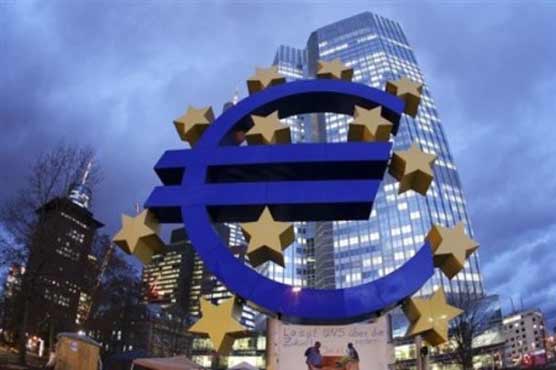
European finance ministers on Tuesday ordered Greece and Spain to swiftly get debts under control as a recession threatened to undermine dogged efforts to end a two-year crisis.Six days before a summit of European Union leaders in Brussels focused on striking deals with Greeces private creditors and political parties, Madrids struggle to fix its finances and chronic unemployment entered a worrying new phase.Economic affairs commissioner Olli Rehn said it was essential that Spain meet the 2012 public deficit target already agreed with EU partners to ensure that debt sustainability was restored without delay.Spanish Prime Minister Mariano Rajoy vowed later in Lisbon to do so as Madrid scrambled to retain investor confidence.Spain will respect the deficit target. Today that is 4.4 percent (of gross domestic product) and Spain will respect that target, Rajoy told a joint press conference with Portuguese counterpart Pedro Passos Coelho.On Sunday, Spanish budget minister Cristobal Montoro called for the deficit target to be relaxed because the 2012 GDP forecasts on which it was based no longer looked attainable.With the Spanish 2011 deficit now set to hit 8.0 percent of GDP, way above the previously agreed 6.0-percent limit, the 2012 target looked like it could be out of reach.While Rehn described the 2011 picture as regrettable, his remarks amounted to a rejection Montoros call for the target to be eased.The International Monetary Fund has forecast that Spains economy will shrink by 1.7 percent this year, while Rehn expected a moderate recession across all of Europe.In a bid to meet the Spanish target, Rajoys right-leaning government has announced tax increases and spending cuts.Rehn urged Madrid to spell out as soon as possible exactly how it plans to restore fiscal sustainability, and to quickly prepare a 2012 budget while detailing plans to shake up rigid Spanish labour laws.The renewed focus on Spanish public finances and a tougher line agreed to on Tuesday on Hungarys deficit as it tries to secure a new IMF credit line raised the stakes ahead of the EU summit on Monday.EU officials are set to approve a new treaty aimed at imposing tougher fiscal discipline -- although not on Britain, where net debt has now surpassed 1.0 trillion pounds (1.2 trillion euros, $1.55 trillion).But they might again be caught up in talks on Greece after eurozone finance ministers demanded that Greek political rivals deliver written pledges to reform the nations economy.This was made a new condition for EU partners to unlock further aid, just as a cut in Greeces private sector debt appeared to get hung up again.Banks have refused to accept substantially lower interest rates on replacement bonds to be issued after 100 billion euros is slashed from Greeces total debt of around 350 billion euros.Finance Minister Evangelos Venizelos said he is trying to get political statements signed by coalition parties before Monday, in an echo of a demand met late last year to obtain an 8.0-billion-euro tranche of loans.A second, 130-billion-euro rescue package was initially agreed in October, but Greek parties are said to be dragging their heels with an eye on elections -- and Austrian Finance Minister Maria Fekter said: Only if we have this written statement will there be further aid.Despite several waves of spending cuts and tax hikes, Greece will likely be pushed to make further efforts including structural reforms to labour and other markets.Its quite clear that the implementation in Greece has failed, said Swedish Finance Minister Anders Borg, whose non-euro country took part in the first, 110-billion-euro Greek bailout in 2010.Private creditors hold about 200 billion euros of the countrys debt. They are being pushed to accept interest rates well below the 4.0 percent they have sought, to cut Greek debt from a massive 160 percent of gross domestic product. But the banks chief negotiator has said that Europe and the IMF have to choose between a voluntary deal and a default.Venizelos has said a deal needs to be struck by February 1 for legal contracts to be ready by a February 13 deadline.Athens faces bond redemptions worth a total 14.4 billion euros on March 20.