Updated on
Summary India's central bank has decided to keep interest rates unchanged.
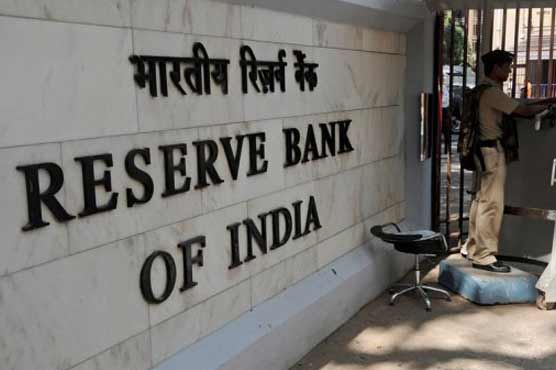
Indias central bank is expected to keep interest rates on hold Tuesday, judging it too early to begin lowering them despite concerns over slowing growth in Asias third-largest economy.Policymakers from the Reserve Bank of India (RBI) are to meet in the financial capital Mumbai, with pressure mounting from business leaders for the bank to help stimulate growth.Late Monday, the RBI hinted that interest rates would most likely be kept unchanged -- as they were at the previous policy meeting in December -- with the bank still worried that inflation and upside risks to inflation remain high. There is growing speculation among analysts that the RBI may lower the amount of cash banks must hold in reserve, to boost liquidity in the financial system.Indian shares were trading marginally up on Tuesday morning, with the benchmark Sensex up 0.3 percent at 16,802.22.The RBI has raised interest rates 13 times since March 2010 in a prolonged battle against inflation, which has stayed close to 10 percent.Inflation dropped to 7.47 percent on an annual basis in December, a two-year low, but it is still above the banks comfort level of around five percent. With the Indian rupee still weak at 51.2 against the dollar, there is also a risk of imported inflation as imports become more expensive to buy.A cut at this time could be perceived as a dilution of the RBIs inflation-fighting stance, which the bank would possibly like to avoid at the moment, said Siddhartha Sanyal, chief India economist with Barclays Capital.Deepali Bhargava, chief economist with Espirito Santo Securities, agreed, saying: The RBI is not likely to let go of inflation priority. The banks repo rate at which it lends to commercial banks is at a near three-year high of 8.50 percent while the reverse repo rate that it pays banks for deposits is at 7.50 percent -- its highest in more than a decade.Indias industrial production has returned to growth, data showed earlier this month, after a shock contraction in October when output shrank 4.7 percent year-on-year.RBI governor Duvvuri Subbarao is expected to strike a more dovish tone with growth concerns now predominating, said Moodys Analytics economist Glenn Levine, who echoed other analysts in predicting a possible rate cut in March.The bank is also likely to lower its growth forecast for India to around 7.0 percent from an earlier 7.5 percent -- in line with the governments projections -- for the financial year to March 2012.