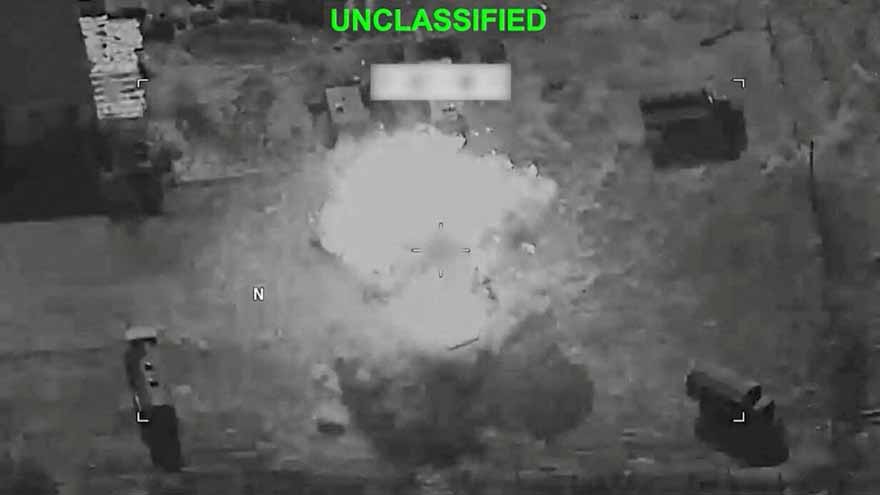
Summary The drone hit the U.S.-owned gas storage tanker Energos Winter, causing a fire that spread to a second vessel
DUBAI (Reuters) - A drone strike that sparked fires on two gas vessels in Egypt's Mediterranean port of Damietta has raised a new threat to shipping through the Suez Canal, one of the last major export routes available to Saudi oil amid the expanding U.S.-Iran war.
No one has claimed responsibility for what Egypt's cabinet said on Thursday was an unidentified drone that caused a fire on two vessels at Damietta a day earlier. The port lies near the Suez Canal, which links the Mediterranean and Red Seas.
The drone hit the U.S.-owned gas storage tanker Energos Winter, causing a fire that spread to a second vessel, people familiar with the incident said.
Iran has denied any involvement in the Damietta strike.
"Egypt is an important friend and partner in the region, and its security is of utmost importance to us," Iranian Foreign Minister Abbas Araqchi wrote on social media. "We must all be vigilant against Israeli plots and false-flag operations designed to undermine regional peace."
The five-month-old war has already brought shipping traffic through the Strait of Hormuz, a slender chokepoint in the global energy trade, to a virtual standstill.
Before the conflict, the waterway between Oman and Iran carried about a fifth of global oil and liquefied natural gas supplies. The strait has become the main hurdle in peace talks and a flashpoint for repeated escalations in the conflict.
SAUDI PROPOSES MULTINATIONAL MARITIME DEFENCE COALITION
Iran-aligned Houthis on July 20 declared a maritime embargo against Saudi Arabia, opening a new front against the U.S. and its allies in the Iran war.
Recent Houthi attacks on shipping prompted London's marine insurance market on Thursday to widen its "high risk" zone in the Red Sea to include more coastline adjacent to Saudi ports.
Saudi Arabia unveiled plans on Thursday for a multinational maritime defence coalition aimed at protecting international shipping and energy supply routes in the Red Sea region.
The drone strike on the two gas tankers in Egyptian waters has renewed energy security concerns about the nearby Suez Canal and a related pipeline, a vital export route for Saudi Arabian oil since the beginning of the Iran war, say energy analysts.
A growing volume of Saudi oil, along with other shipping, has been diverted north up the Red Sea toward the Suez Canal and the SUMED pipeline, according to data from market intelligence firm Kpler. For Asian customers, however, that means a longer voyage around Africa instead of south via the Gulf of Aden.
Oman has presented Iran with a plan backed by Gulf states to manage the Strait of Hormuz, including collecting voluntary fees for using it, people familiar with the matter told Reuters.
While Iran has publicly rejected the Omani proposal, its semi-official ILNA news agency quoted foreign ministry spokesperson Esmaeil Baghaei as saying talks with Oman over the strait were continuing.
IRAQ SAYS IT HAD NO KNOWLEDGE OF STRIKES ON SAUDI TARGETS
In a first in the five-month war, Saudi Arabia publicly joined strikes alongside U.S. forces, targeting Iran-aligned groups in eastern Iraq on Wednesday in retaliation for what it said were drone attacks on Saudi oil targets launched from Iraq.
According to assessments by Saudi Arabia and regional partners the Houthis carried out the attacks on Saudi Arabia from Iraqi territory in coordination with Iraqi groups.
Iraqi government spokesperson Haider al-Aboudi said on Thursday that Baghdad neither approved nor had prior knowledge of U.S.-Saudi strikes on Iraqi territory, the state news agency reported.
The latest strikes in Iraq and Egypt threatened to draw more Middle Eastern countries into the conflict.