Summary JD Vance’s Islamabad visit faces delay as US-Iran talks stall amid tanker seizure tensions, ceasefire uncertainty and rising global energy concerns.
WASHINGTON/ISLAMABAD (Web Desk/Reuters) – Uncertainty deepened over planned United States-Iran talks in Islamabad on Tuesday, as Vice President JD Vance delayed his departure and Tehran signalled it had yet to decide whether to attend negotiations, citing escalating maritime tensions and alleged violations of a fragile ceasefire.
The diplomatic effort, with Pakistan positioned as mediator, faces mounting strain after US forces boarded an Iranian oil tanker carrying approximately 2 million barrels of crude in the Indian Ocean. The operation, described by US Central Command as conducted “without incident”, has drawn sharp condemnation from Tehran, which labelled it an act of aggression.
Iran’s Foreign Minister, Abbas Araqchi, said the US blockade of Iranian ports amounted to an “act of war” and violated the ceasefire framework currently in place. Iranian officials further accused Washington of “piracy at sea” following the seizure of another cargo vessel days earlier, raising doubts about the viability of renewed dialogue.
Blockading Iranian ports is an act of war and thus a violation of the ceasefire.
— Seyed Abbas Araghchi (@araghchi) April 21, 2026
Striking a commercial vessel and taking its crew hostage is an even greater violation.
Iran knows how to neutralize restrictions, how to defend its interests, and how to resist bullying.
Diplomatic pause
A White House official confirmed that JD Vance had not yet departed for Islamabad and was attending additional meetings in Washington. Reports citing US officials indicated the diplomatic process had effectively paused due to a lack of response from Tehran, although the visit has not been formally cancelled.
Pakistan’s Information Minister, Attaullah Tarar, said Islamabad remained engaged with Iranian counterparts and continued to pursue dialogue. “Pakistan as the mediator is in constant touch with Iranians and pursuing the path of diplomacy,” he stated, as preparations in the capital continued under heightened security.
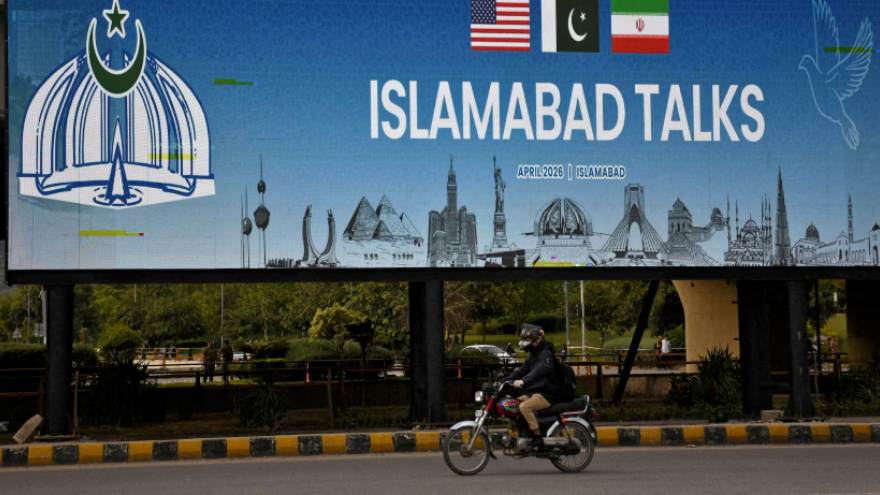
Authorities have deployed nearly 20,000 personnel across Islamabad, with parts of the city under lockdown and a luxury hotel cleared to host delegations. The arrangements underscore Pakistan’s role in facilitating high-stakes talks aimed at preventing a renewed escalation in the Gulf conflict.
Escalating rhetoric
US President Donald Trump signalled a hardening stance, saying he did not favour extending the ceasefire beyond its current deadline. Speaking to CNBC, he indicated the US military was “raring to go” should negotiations fail, adding that adopting a tougher posture could strengthen Washington’s position at the negotiating table.
Iranian government spokesperson Fatemeh Mohajerani warned that Tehran would respond “more firmly than before” to any renewed attacks, while foreign ministry spokesman Esmaeil Baghaei questioned Washington’s commitment to diplomacy, citing what he described as contradictory actions at sea.
The ceasefire timeline itself has added to the uncertainty. Initially announced as a two-week pause beginning April 7, US officials now indicate it will expire late on April 22, effectively extending the truce by 24 hours. A Pakistani source involved in the process said the deadline corresponds to 8 pm Eastern Time, or early Thursday morning in Iran.
Maritime tensions
Tensions have been exacerbated by restrictions around the Strait of Hormuz, a critical artery for global energy supplies. Iran has largely blocked the passage to foreign vessels, reversing an earlier pledge to reopen the route after Washington maintained its blockade of Iranian ports.
The disruption has halted the flow of roughly 20 million barrels of oil per day, tightening global supply and contributing to a rise in energy prices. Oil markets climbed about 3 per cent on Tuesday, while global equities edged lower as optimism over a diplomatic breakthrough faded.
Since the start of the U.S. blockade against ships entering or exiting Iranian ports, U.S. forces have directed to turn around or return to port. pic.twitter.com/mZOq3SfxKt
— U.S. Central Command (@CENTCOM) April 21, 2026
US Central Command said it had directed 28 vessels to turn back under enforcement measures linked to sanctions on Iranian maritime trade. Washington maintains that such operations are part of efforts to disrupt networks supporting Tehran’s oil exports.
Nuclear stakes
At the core of the negotiations remains Iran’s nuclear programme. The United States is seeking commitments that would prevent Tehran from developing nuclear weapons capability, including relinquishing its stockpile of highly enriched uranium.
Iran, which insists its nuclear activities are for peaceful purposes, is attempting to leverage its control over strategic waterways to secure sanctions relief while preserving elements of its programme.
A previous round of talks held 10 days ago ended without agreement, with Tehran ruling out further engagement unless the US lifted its blockade. However, sources indicate there remains some momentum for discussions to resume, contingent on Iran’s response.
Meanwhile, the United States imposed fresh sanctions targeting individuals and companies linked to Iranian trade and aviation, adding another layer of pressure as diplomatic channels remain uncertain.
The conflict has already inflicted significant casualties and triggered a shock to global energy markets, with rising jet fuel prices and broader concerns over economic stability. Against this backdrop, Islamabad remains on alert, awaiting confirmation on whether the high-stakes talks will proceed.