Summary In the past, administrations typically issued postcard-style Easter greetings, and critics said officials' messages this time had blurred the line between faith and policy by invoking religion
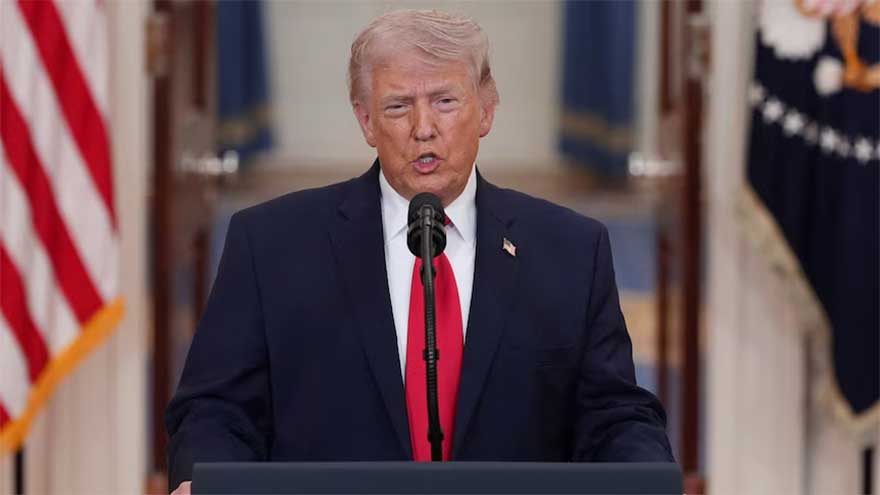
NEW YORK (Reuters) – President Donald Trump and other US officials cast the rescue of a US airman in Iran as an “Easter miracle” on Sunday, framing the operation in religious terms that portrayed the war as a just cause and divinely blessed.
In the past, administrations typically issued postcard-style Easter greetings, and critics said officials' messages this time had blurred the line between faith and policy by invoking religion to justify the war and shape the military’s conduct.
"The rescue was an Easter Miracle," Trump told NBC's "Meet the Press," and some cabinet members followed with messages of their own.
In a separate message that invoked religion in another way, Trump threatened on social media to strike power plants and bridges, urged Tehran to open the Strait of Hormuz, "you crazy bastards” or face “living in Hell,” and signed off with the phrase “Praise be to Allah.”
In a social media message, Treasury Secretary Scott Bessent drew on the symbolism of Easter, the day Jesus was resurrected from the dead.
"The Easter miracle is considered the greatest victory in history," Bessent said on X. "And so, it (is) fitting on this holiest of Christian days that a brave American warrior was rescued from behind enemy lines in one of the greatest search and rescue missions in military history."
Defense Secretary Pete Hegseth wrote “God is good” on his private account on X on Sunday, reposting a social media post by Trump about the success of the rescue mission in Iran.
Axios, citing an interview with the Republican Trump and an unnamed U.S. defense official, reported that was the phrase uttered by the rescued officer over the radio after he ejected from his aircraft.
FAITH AND POLICY LINKS DRAW CRITICISM
Trump said at his inauguration in 2025 that God enabled him to survive an assassination attempt during the 2024 election campaign. “I felt then and believe even more so now that my life was saved for a reason. I was saved by God to make America great again," he said then.
But his blending of religious references with threats of military action drew some criticism on Sunday.
Republican former Representative Marjorie Taylor Greene, writing on X, accused Trump of betraying Christian values. She said Christians in the administration should be “pursuing peace” rather than “escalating war” and argued that Jesus’ teachings emphasized forgiveness and love, including toward enemies.
The Council on American‑Islamic Relations also condemned Trump’s language, saying in a statement that his “mocking of Islam and his threats to attack civilian infrastructure” were reckless and dangerous.
CAIR said the casual use of “Praise be to Allah” in the context of violent threats reflected a willingness to weaponize religious language while showing contempt for Muslims and their beliefs.
Last month, a group of 30 Democratic US lawmakers asked Defense Department Inspector General Platte Moring to investigate reports that some within the US military had sought to justify the war in Iran by invoking "biblical end-time prophecies."
"At a time when billions of dollars and untold numbers of lives hang in the balance while the Trump administration wages a war of choice in Iran, the imperative of maintaining strict separation of church and state and protecting the religious freedom of our troops is especially critical," the letter to the inspector general said.
"We must ensure that military operations are guided by facts and the law, not end-times prophecy and extreme religious beliefs," the letter said.
Iran, whose political system is based on the Shia Islamic belief that religious authority derives from the line of imams descended from the Prophet Mohammad, routinely portrays the United States as “the Great Satan” and uses religious language in military propaganda, describing fallen fighters as martyrs.