Summary Tharoor wrote that the BJP’s hardline stance has been proven ineffective and that its confrontational politics are making the region less secure
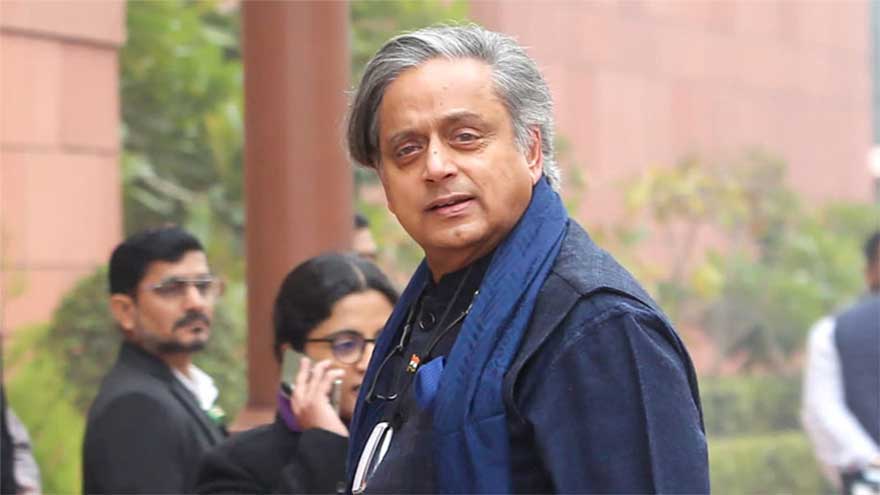
NEW DELHI: Senior Indian politician Shashi Tharoor has said that India’s policy of treating Pakistan as a permanent enemy has failed, arguing that lasting peace between the two nuclear-armed neighbours is not possible without dialogue.
Tharoor, a leader of the opposition Indian National Congress and a former United Nations diplomat, made the remarks in the context of long-standing tensions between India and Pakistan, which have remained largely frozen in recent years.
In an article published in The Indian Express, he wrote that questions are increasingly being raised within India about the country’s Pakistan-centric hostile policy, and that the Bharatiya Janata Party’s (BJP) narrative is facing internal challenges. He said that engaging in dialogue with Pakistan should not be seen as a defeat.
Tharoor wrote that the BJP’s hardline stance has been proven ineffective and that its confrontational politics are making the region less secure. He argued that the anti-Pakistan narrative has been used for political gains and stressed that peace is not possible without talks with Islamabad.
According to the Indian Member of Parliament and former foreign minister, the BJP’s war-driven mindset is being questioned, and viewing peace as a sign of weakness is a flawed approach. He added that India’s policy of isolating Pakistan has turned out to be self-delusional.
Tharoor’s column indicates that voices opposing a policy of permanent hostility towards Pakistan are growing within India, and that a serious segment of Indian society supports dialogue with Pakistan.
His comments come amid periodic debate in India over a hardline approach towards Pakistan, including the suspension of talks following border tensions, developments in Kashmir, and militant attacks. The ruling government has defended a policy of diplomatic pressure and limited engagement.
Tharoor said decades of hostility had failed to produce peace or durable solutions, adding that while disengagement may temporarily contain disputes, it does not resolve them. He stressed that dialogue should not be viewed as a sign of weakness but as an exercise in strategic maturity.