
Summary Lahore High Court acquits Salman Ahmed Suleman in a murder case over weak evidence and investigation flaws, ordering disciplinary action against the concerned prosecutors.
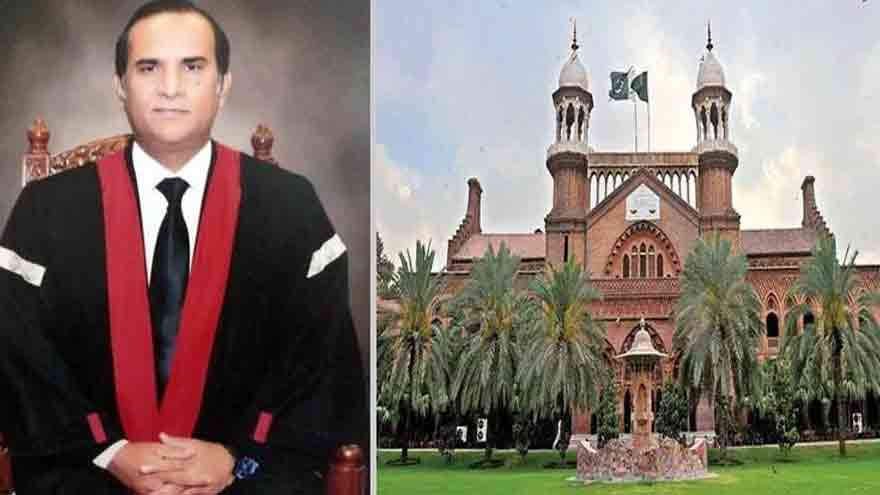
LAHORE (Dunya News) – The Lahore High Court (LHC) has acquitted a suspect Salman Ahmed Suleman, who was serving a life sentence in a murder case, citing serious shortcomings in the police investigation and prosecution's handling of the case.
The court also directed the Prosecutor General Punjab to initiate departmental proceedings against the concerned prosecutor and the District Public Prosecutor over negligence and failure to perform their duties.
Justice Muhammad Amjad Rafiq announced the verdict on October 30, 2026, while hearing Suleman's criminal appeal against his conviction.
In its detailed judgment, the court identified several inconsistencies in witness accounts, medical evidence and investigative procedures, observing that the prosecution had failed to establish the accused's involvement through reliable evidence.
The case stemmed from the murder of Nabeel Asghar, who was allegedly stabbed during a dispute outside a grocery store in Lahore's Misri Shah area on February 18, 2023. The complainant, Rohail Asghar, who was the victim's brother, had accused Suleman of carrying out the attack. Two individuals, Haider Ali and Ali Butt, who reportedly intervened in the incident, along with Constable Shakeel Ahmed, were also injured.
On August 29, 2024, the trial court convicted Suleman of murder and sentenced him to life imprisonment along with compensation of Rs500,000. He was also handed down sentences under attempted murder and other relevant provisions. He subsequently challenged the conviction before the high court.
The LHC noted that although the incident reportedly took place at around 11:30 am, the first information report (FIR) was registered at 2:25 pm, nearly three hours later. The post-mortem examination was also conducted approximately 14 hours after the incident. The court treated these delays as weaknesses in the investigation.
The judgment further questioned the credibility of the complainant's testimony. Although Roheel Asghar initially presented himself as an eyewitness, he acknowledged during cross-examination that he had been inside the grocery store and came outside after hearing a commotion, only to find his brother lying on the ground. He had not witnessed the accused stabbing the victim.
Consequently, the court held that his testimony was insufficient to establish the identity of the attacker or directly connect Suleman to the crime.
The court also pointed out that Constable Shakeel Ahmed underwent a medical examination 12 days after the alleged incident. Furthermore, investigators failed to record statements from other potential eyewitnesses present at the scene and did not obtain CCTV footage from a nearby grocery store.
Another major shortcoming identified by the court was the failure to conduct an identification parade before a magistrate. Since the complainant and other witnesses were not previously acquainted with the accused, the court observed that a formal identification process was necessary.
Regarding the alleged recovery of the murder weapon, the court noted that a knife was reportedly recovered at the accused's identification and found to contain human blood.
However, investigators did not conduct blood grouping or DNA testing to determine whether the blood belonged to the deceased or another individual. The court held that the recovery alone could not establish guilt.
The high court also expressed serious concern over the prosecution's decision to drop Haider Ali, an important injured witness, by declaring his testimony unnecessary.
Referring to Sections 265-A and 493 of the Code of Criminal Procedure, the court explained that the public prosecutor is responsible for conducting cases initiated on police reports before sessions courts. A private lawyer may assist the public prosecutor but cannot assume control of the prosecution.
The court observed that allowing an important witness to be dropped on the instructions of a private lawyer was contrary to the legal framework governing criminal proceedings.
The LHC directed the Prosecutor General Punjab to formulate comprehensive guidelines to protect the independent functioning of public prosecutors across the province. It also ordered departmental action against the prosecutor concerned and the District Public Prosecutor for negligence and dereliction of duty.
The court further instructed that a copy of the judgment be forwarded to the Prosecutor General Punjab.
The court reiterated that criminal convictions must rest on credible evidence that establishes guilt beyond reasonable doubt. It emphasized that the burden of proving the charge rests entirely with the prosecution and that any reasonable doubt must be resolved in favour of the accused as a legal right, not as a concession.