Summary Pakistan’s top leadership meets in Islamabad to tackle rising fuel costs and energy risks as Iran conflict disrupts global oil and gas supplies.
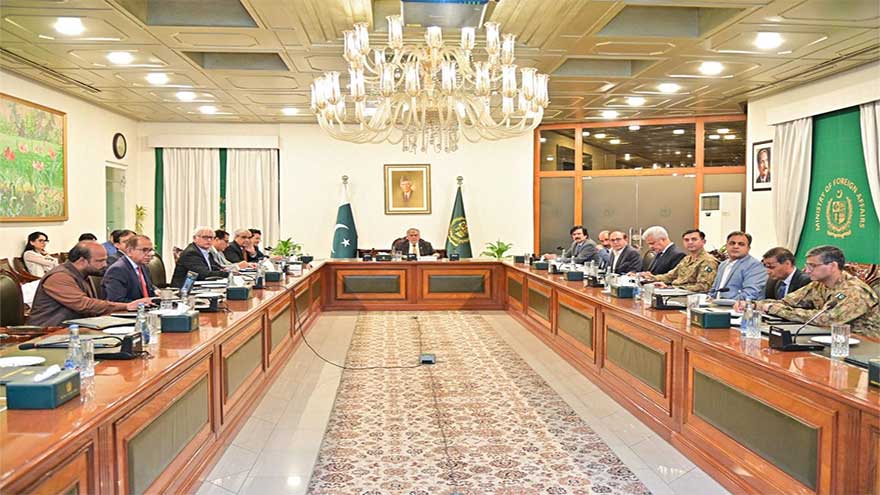
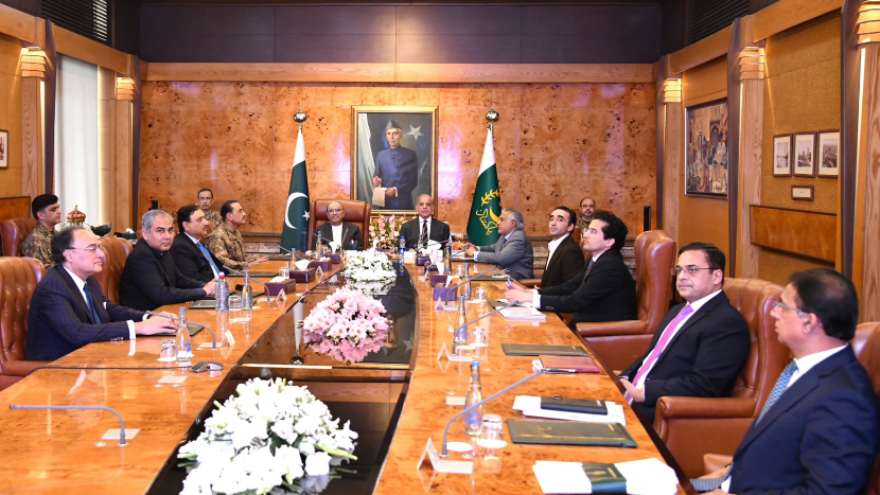
ISLAMABAD (Dunya News) – President Asif Ali Zardari chaired a high-level consultative meeting at Aiwan-e-Sadr on Thursday, bringing together the country’s top civil and military leadership to assess the worsening economic and energy situation triggered by regional conflict and global supply disruptions.
The meeting was attended by Prime Minister Shehbaz Sharif and Chief of Defence Forces (CDF) and Chief of Army Staff Field Marshal Asim Munir, alongside key members of the federal cabinet and senior officials. Among those present were Deputy Prime Minister and Foreign Minister Ishaq Dar, Bilawal Bhutto Zardari, Interior Minister Mohsin Naqvi, Finance Minister Muhammad Aurangzeb, Petroleum Minister Ali Pervaiz Malik and Economic Affairs Minister Ahad Khan Cheema.
President Zardari chaired a high-level meeting with PM @CMShehbaz, Field Marshal Asim Munir and senior ministers to review economic, energy and regional situation amid oil and gas supply concerns, focusing on coordination, austerity, fuel conservation and public relief. pic.twitter.com/RjcuNrZ9gK
— The President of Pakistan (@PresOfPakistan) March 26, 2026
The discussions centred on the sharp volatility in global oil and gas markets following the ongoing conflict involving Iran, which has disrupted critical supply routes and intensified pressure on energy-importing economies such as Pakistan. Officials noted that constraints in oil shipments and liquefied natural gas supplies have significantly raised import costs, with the country’s oil import bill reaching approximately $10.71 billion.
Particular concern was expressed over disruptions linked to the Strait of Hormuz, a key transit route for global energy supplies. The situation has affected shipments from Gulf producers, including Qatar and the United Arab Emirates, raising fears of potential shortages in the coming months if supply constraints persist beyond April.
The finance and petroleum ministries briefed participants on measures aimed at stabilising petroleum prices and containing the ripple effects of higher fuel costs across the economy. These include efforts to manage inflationary pressures, maintain fiscal discipline through austerity policies and reduce expenditure burdens on the national exchequer.
Officials highlighted that rising fuel prices have had a cascading impact on transport, food supply chains and industrial output, intensifying the cost-of-living challenges faced by the public. The meeting stressed the urgency of coordinated policymaking to cushion these effects while ensuring uninterrupted energy availability.
The broader regional security environment also featured prominently in the deliberations, with participants examining its implications for Pakistan’s economic outlook, national security and food security. The leadership underscored that evolving geopolitical tensions require a unified and calibrated national response.
According to an official statement, the meeting emphasised the importance of maintaining national consensus and strengthening institutional coordination to navigate the unfolding crisis. It was agreed that economic management, energy planning and security considerations must remain closely aligned to address the challenges effectively.
In addition to policy measures, the leadership called for greater public awareness to reduce fuel consumption. Citizens were encouraged to adopt energy-saving practices, increase reliance on public transport and make use of shared mobility options to ease demand pressures.