Summary Secretary of State Marco Rubio expressed hope that a deal to end the war in Iran was in the cards, stressing that Tehran must severely curtail its nuclear programme before any sanctions are lifted
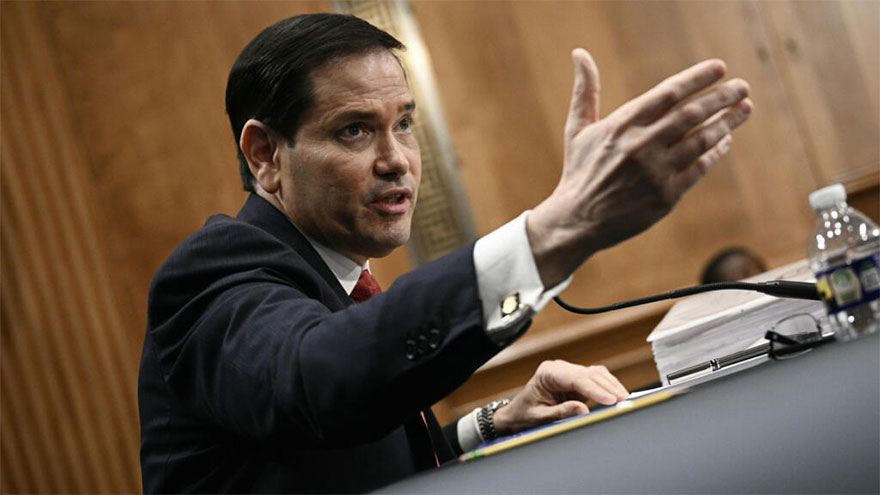
WASHINGTON (United States) (AFP) – Secretary of State Marco Rubio on Tuesday expressed hope that a deal to end the war in Iran was in the cards, stressing that Tehran must severely curtail its nuclear program before any sanctions are lifted.
"There is the prospect before us, which could happen today, it could happen tomorrow, it could happen next week," Rubio told a Congressional panel.
Rubio was testifying in front of the Senate Foreign Relations Committee, as the three-month US-Israeli war on Iran appears to have reached an impasse, with the closure of the strategic Strait of Hormuz continuing to disrupt global energy markets.
Rubio insisted that Tehran must reopen the shipping channel for any peace agreement to take hold, while also agreeing to curb its nuclear activities in order to see sanctions lifted.
"Iran is being sanctioned because they've highly enriched uranium, Iran is being sanctioned because of their nuclear activities," Rubio said. "If they agree to give up those things, there will be sanctions relief."
US President Donald Trump has repeatedly expressed confidence that a deal with Iran was near, but talks have stalled. And although a ceasefire has largely held since early April, Iranian and US forces have traded strikes in recent days.
Rubio sought to downplay the hostilities, saying the conflict had effectively ended. "Well, the war is over," he said.
While acknowledging that the Iranians "still have a lot of drones," Rubio defended the decision to go to war, saying it has significantly reduced the Islamic republic's ability to do harm.
"Iran has no navy left, they've lost a substantial percentage of their defense industrial base, that Iran has lost a substantial percentage of their missile launchers," Rubio said.
He added: "And their economy is far worse today, and I mean, far worse today than it was six to nine months ago."
Rubio also stated that Iran's supreme leader Mojtaba Khamenei, who was wounded in US-Israeli attacks and has not been seen in public since assuming office, is alive and increasingly active.
"I think there are indications out there that he is increasingly engaging at some level," Rubio told the panel.
Mojtaba Khamenei, 56, succeeded his father Ali Khamenei, who was killed in the first wave of US-Israeli strikes that launched the war on February 28.
TRUMP INSISTS IRAN TALKS HAPPENING ‘CONTINUOUSLY’
Trump has said his priorities for any deal include Iran agreeing to never develop nuclear weapons and to reopen the Strait of Hormuz, through which about 20 percent of the world’s oil and liquefied natural gas supplies transited before the war.
In a social media post on Tuesday, Trump disputed reports that talks with Iran had paused, saying “conversations between us have been going on continuously”. “Where they lead, one never knows, but as I told Iran, ‘It’s time, one way or another, for you to make a Deal’,” wrote Trump in his Truth Social platform.
Addressing lawmakers, Rubio said the US talks with Iran may now include “aspects of their nuclear programme” the country was unwilling to discuss as recently as a month ago.
However, “that is not a guarantee it will ultimately lead to a deal that’s acceptable,” Rubio cautioned.
“There is the prospect before us, which could happen today, it could happen tomorrow, it could happen next week,” he added.
Rubio, who also serves as Trump’s national security adviser, said the first condition in the talks was that Iran opened the Strait of Hormuz, and it also had to commit to negotiations on its stock of highly enriched uranium.
Asked whether the US would lift sanctions on Iran in return for the country reopening the Strait of Hormuz, Rubio said that would not be sufficient.
“That’s not been discussed. That’s not been offered,” said Rubio, adding that sanctions relief would only come after significant concession on the nuclear programme and the enriched uranium.
Al Jazeera’s Patty Culhane, reporting from Washington, DC, said Rubio’s remarks give the clearest indication to date of “what the negotiations are actually centred on”.
“The US isn’t even offering any carrots,” said Culhane. “He [Rubio] talked about the stick, that they have to open the Strait of Hormuz and then the Iranians have to commit to getting rid of its enriched uranium and limits on future uranium.”
The UN’s International Atomic Energy Agency chief, Rafael Grossi, said Iran has stopped many nuclear activities that were previously taking place in the country. In comments cited by the Reuters news agency, Grossi said any deal to end the war on Iran should have robust verification and monitoring mechanisms.
IRAN WARNS OF ‘DIRECT CONFRONTATION’ IF ISRAEL CONTINUES LEBANON ‘AGGRESSION’
The US-Israel war on Iran that began on February 28 has killed thousands of people, mainly in Iran and Lebanon. It has caused global pain by pushing up energy prices since Iran effectively closed the Strait of Hormuz, which previously carried about a fifth of global supplies of oil and liquefied natural gas.
It also triggered the latest round of conflict between Israel and Lebanese group Hezbollah, with Israel invading deep into Lebanon and even attacking parts of the capital Beirut.
On Tuesday, Israel kept up deadly strikes on a string of towns in southern Lebanon, despite a US-mediated partial ceasefire announced the day before.
The continuing Israeli attacks in Lebanon have become a major point of contention for Iran, which insists a full ceasefire in Lebanon must be part of any agreement with Washington
Iran’s parliament speaker and chief negotiator, Mohammad Bagher Ghalibaf, said he told Lebanon’s Parliament Speaker Nabih Berri if Israel’s “aggression against Lebanon continues”, Tehran “will not only halt the path of negotiations” with the US, “but we will also be in direct confrontation with the enemy.”