Summary Hundreds of commercial vessels and up to 20,000 seafarers have been unable to transit the waterway as result of the Iran war
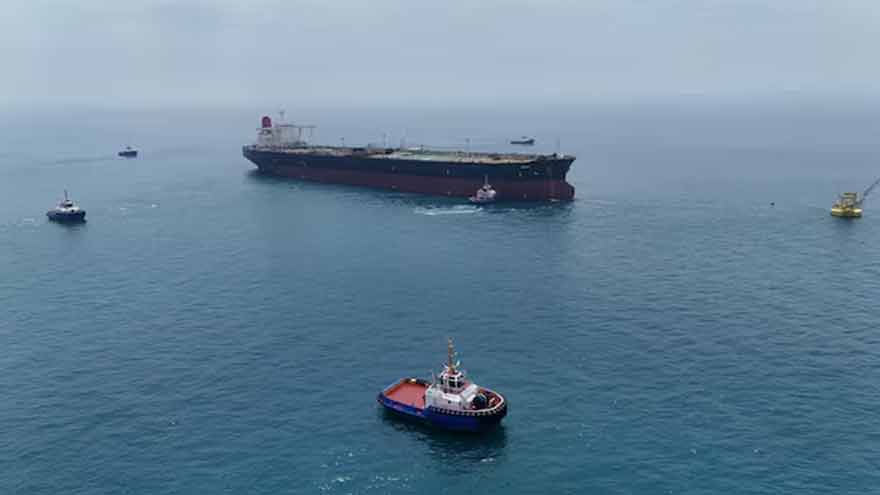
OSLO (Reuters) - There were no signs of increased vessel traffic through the Strait of Hormuz on Monday, a day after President Donald Trump said the US would begin efforts to free up shipping.
Only one tanker, a sanctioned, handy-sized LPG carrier, along with a few cargo ships and a cable-laying vessel passed into the Gulf of Oman on Monday, MarineTraffic data showed.
No tankers or other commercial vessels were seen lining up to transit and German shipping group Hapag-Lloyd said transit for its vessels remained impossible due to a lack of clarity over secure passage procedures.
US Central Command (CENTCOM) said it would begin helping to restore freedom of navigation through the strait on Monday, while continuing its blockade of Iranian ports.
The shipping industry has received no guidance regarding the US operation and its intent, while the overall security situation remained unchanged, shipping association the Baltic and International Maritime Council (BIMCO) said.
"Without consent from Iran to let commercial ships transit safely through the Strait of Hormuz, it is currently not clear whether the Iranian threat to ships can be degraded or suppressed," its chief safety and security officer, Jakob Larsen, said. BIMCO provides security alerts for the industry.
Hundreds of commercial vessels and up to 20,000 seafarers have been unable to transit the waterway as a result of the Iran war, the International Maritime Organization said.
The US-led Joint Maritime Information Center said the maritime security threat level in the strait remained "critical", advising mariners to consider routing via Omani territorial waters south of the traffic separation scheme.
CENTCOM described US missions as "defensive" and said they would combine diplomatic efforts with military coordination.
Iran, meanwhile, warned the US Navy to stay out of the Strait of Hormuz and said commercial vessels would need to coordinate any passage with its military.
It also issued a new map outlining what it said was Iran's control area.
Pakistan said all 22 crew members of the Iranian-flagged container ship Touska, which was boarded and seized by US forces last month, were evacuated to Pakistan and would be returned home.
The vessel will also be returned to its owners after repairs, Pakistan's foreign ministry said, calling the move a "confidence-building measure".
The US naval blockade imposed on Iranian ports on April 13 has also shrunk Tehran's oil exports.