Summary US President Donald Trump orders immediate naval blockade of the Strait of Hormuz after Iran refuses to concede on nuclear programme during Islamabad talks.
WASHINGTON (Web Desk) – The United States has announced a sweeping naval blockade of the strategically vital Strait of Hormuz, marking a sharp escalation in tensions with Iran following the high-level negotiations in Islamabad that reached no agreement.
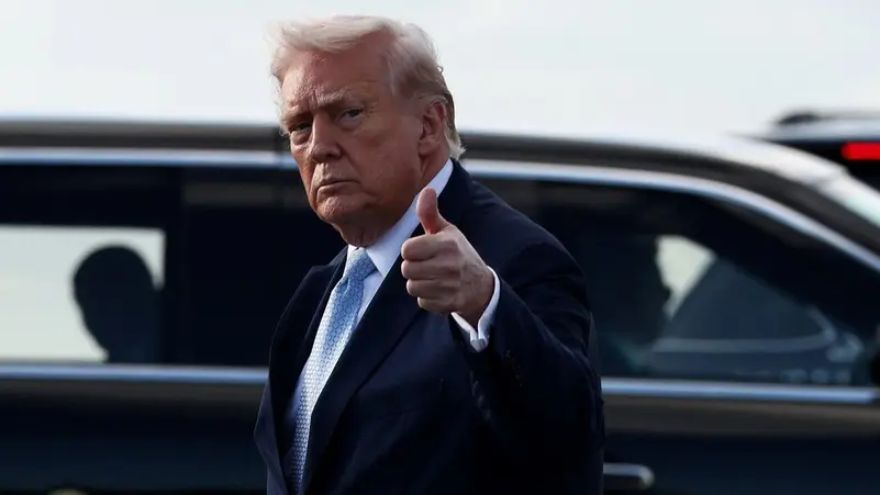
Donald Trump said on Sunday that the US Navy had been instructed to begin blocking “any and all ships” attempting to enter or leave the narrow maritime corridor, one of the world’s most critical oil transit routes. The directive came hours after marathon talks between Washington and Tehran ended without a breakthrough on Iran’s nuclear programme.
Despite describing the discussions as largely constructive, Trump indicated that Iran’s refusal to abandon its nuclear ambitions had forced the United States to take decisive action. He noted that “most points were agreed to” during the negotiations, but the core dispute over nuclear development remained unresolved.
In a statement posted on Truth Social, Trump declared that the blockade would take effect immediately. He emphasised the operational readiness of the US Navy, describing it as “the finest in the world”, and said it would begin enforcing restrictions across the strait without delay.
— Rapid Response 47 (@RapidResponse47) April 12, 2026
The announcement also included a further directive targeting maritime activity beyond the immediate blockade zone. Trump said US forces would seek out and interdict vessels in international waters that had paid transit tolls to Iran, a practice Washington has strongly opposed. He characterised such payments as illegitimate and warned that ships engaging in them would not be granted safe passage.
The move signals a significant expansion of US maritime enforcement in the region, with implications for global energy markets and international shipping lanes. The Strait of Hormuz serves as a critical chokepoint through which a substantial portion of the world’s oil supply passes, linking the Persian Gulf to the Gulf of Oman and beyond.
The stalled talks in Islamabad had been viewed as a potential pathway towards easing long-standing hostilities between the United States and Iran. Officials on both sides had engaged in extended discussions aimed at resolving disputes over sanctions, regional security, and nuclear development.
However, the breakdown over Iran’s nuclear programme appears to have derailed any immediate prospect of a diplomatic resolution. Trump’s announcement underscores Washington’s continued insistence that Tehran abandon its nuclear ambitions as a condition for broader agreement.
The decision to impose a blockade and expand interdiction measures introduces a new phase of confrontation, raising concerns over maritime security and the stability of international trade routes in the Gulf region.