Updated on
Summary Non-euro nation Denmark takes over the European Union's rotating presidency Sunday.
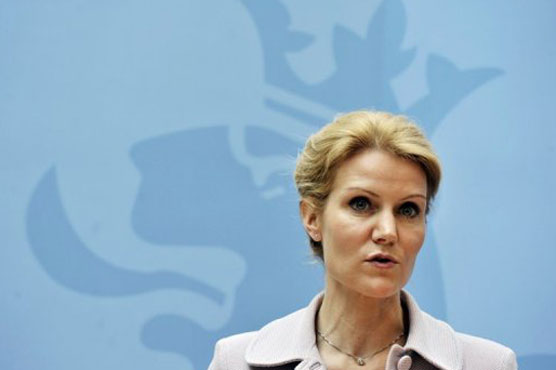
Denmark takes over the presidency of the European Unions Council of Ministers on 1 January with the declared intention of assisting Europes economic recovery.The Scandinavian country, one of the few in Europe with a left-leaning government, will quietly pick up the baton from Warsaw as it takes the helm of the EU for the seventh time.No major events are planned to mark the shift until European Commission representatives arrive for a ceremony on January 11.Denmark, with its some 5.6 million inhabitants, will have to face the euro crisis head-on, although the importance of the rotating presidency has dwindled since the Lisbon Treaty created the post of a permanent president of the European Council.The Scandinavian country also risks being marginalised along with the nine other EU members, including Britain, that have not adopted the euro.Danish Prime Minister Helle Thorning-Schmidt has stressed though that Copenhagen was eager to be a bridge between the 17 and the 27 to make sure that the gap does not widen between the eurozone and non-euro countries.That already towering task has been made more difficult by Britains decision to leave the negotiating table at an EU summit on December 9, raising fears of a European collapse.Denmarks European Affairs Minister Nicolai Wammen has said he wants to see London remain a very active member of the European family, noting that Europe had to find concrete solutions to concrete problems.He said Denmarks main mission during its six months in the drivers seat would be to unify the countries that are in the eurozone with the ones that are outside of it.Apart from the euro crisis, Denmark will also have to mediate disagreements in the upcoming discussions on the EUs 2014-2020 budget.But those sure-to-be-thorny negotiations have not frightened Thorning-Schmidt, who noted recently that consensus is a Danish speciality, recalling that she heads a three-party government coalition requiring compromise between her Social Democrats, the Socialists and the Social Liberals.The Danish presidency also intends to focus on renewable energies to bolster job creation and economic growth in Europe.Every euro spent on energy efficiency will go to ensuring European jobs. Every euro spent on oil imports will go out of Europe. This makes the green agenda one of the most important in Europes future cooperation, Danish Climate Minister Martin Lidegaard said.Copenhagen also hopes to find new trade opportunities for European companies by negotiating deals with Japan, Canada, India and Tunisia, while improving the EUs border controls and controlling immigration are other priorities.Denmark has one of the most restrictive immigration policies in Europe, introduced by previous centre-right governments under the influence of their ally, the far-right Danish Peoples Party.Thorning-Schmidt has only slightly rolled back those policies since her election in September.