Updated on
Summary Mitt Romney promised, if elected, to boost Americas military strength.
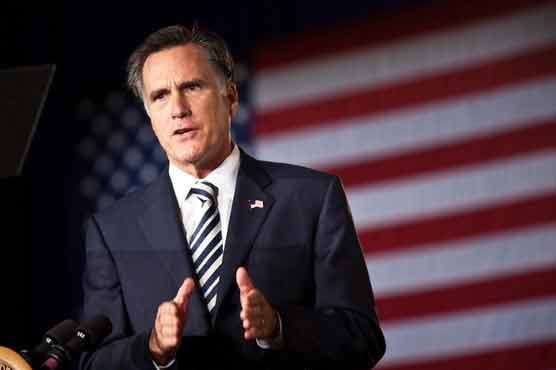
Romney, 64, accused President Barack Obama of bowing to global adversaries, while presenting his national-security vision in a speech set against a backdrop of grey-uniformed cadets at The Citadel, a military academy in Charleston, South Carolina. South Carolina has a traditionally pro-military Republican base, and carrying the early-primary state is important to winning the party’s nomination.“America must lead the world, or someone else will,” Romney said, reprising the argument from his 2010 book, “No Apology,” that U.S. military strength and leadership are essential to deterring tyrants and keeping world peace. “In an American century, America has the strongest economy and the strongest military in the world.”Romney pledged in his first 100 days in the White House to boost naval shipbuilding, deploy Navy carriers to deter Iran’s suspected military ambitions, increase intelligence cooperation with Israel, review military and aid spending in Afghanistan, and invest heavily in missile defense and cybersecurity.At The Citadel and Oct. 6 aboard a World War II aircraft carrier in Mount Pleasant, South Carolina, Romney repeatedly said Obama is slashing defense spending and gutting missile defense, assertions that are contradicted by official data.According to government figures, military spending under Obama is higher than it was under former President George W. Bush. Total Defense Department budget authority for non-war and war spending increased 3.6 percent from fiscal year 2009 to 2010, according to Pentagon budget data. Obama requested $708 billion in budget authority for war and non-war spending in fiscal 2011, an increase of 2.5 percent. Obama’s fiscal 2012 request was to keep core Pentagon spending about level, while the cost of the wars in Afghanistan and Iraq decreased.Two months ago, Congress passed legislation to cut the Pentagon’s spending requests over the next decade as part of the deficit-reduction plan demanded by Republicans in Congress. That doesn’t mean cutting defense spending; rather, increases may not keep pace with previous plans. Congress hasn’t finished the spending bill for fiscal 2012, which began Oct. 1.Romney showed “once again that he is willing to say anything, regardless of the facts, to get elected,” Obama’s re-election campaign press secretary Ben LaBolt said in an e-mail.Romney didn’t acknowledge that Obama has ramped up military and Central Intelligence Agency attacks against al-Qaeda and its affiliates, such as the American Navy SEALs raid that killed Osama bin Laden in Pakistan and the drone strike that killed Anwar al-Awlaki in Yemen. He also didn’t mention the role of U.S. military superiority within the NATO alliance -- providing Tomahawk cruise missiles, drones, and intelligence-gathering aircraft -- in driving Libyan dictator Muammar Qaddafi from power without any American casualties.Democratic strategists have said the elimination of al- Qaeda leaders and the toppling of Qaddafi will play foreign- policy issues to the president’s advantage in voters’ minds.“President Obama has degraded al-Qaeda and dealt huge blows to its leadership, including eliminating Osama Bin Laden, ended the war in Iraq, promoted our security in Afghanistan while winding down our commitment in a responsible way, and strengthened American leadership around the world,” LaBolt said.Romney’s biggest applause lines in his half-hour speech included his pledge to “never apologize” for the U.S. -- a broadside against Obama, who he said has kowtowed to adversaries -- and his promise to “reserve the right to act alone to protect our vital national interests,” a critique of the president for seeking consensus on deterring global threats.The Obama campaign said Romney “didn’t outline a strategy to strengthen America’s security and promote our interests and didn’t even identify defeating al-Qaeda as a goal.”“Governor Romney raised real questions about his capacity to lead this country and wage the fight against terrorism,” LaBolt asserted.Romney also vowed to position a naval carrier task force in the eastern Mediterranean Sea and the Persian Gulf region as a deterrent to Iran. The U.S., its European allies and Israel say Iran is trying to build a nuclear weapon. Iran says its program is for civilian energy use and medical research.Romney proposed increasing military and intelligence coordination and assistance with Israel as a hedge against Iran, and making a national ballistic-missile defense system a priority.Echoing a theme of American exceptionalism that was a favored Bush motif, Romney asserted that “God did not create this country to be a nation of followers. America is not destined to be one of several equally balanced global powers.”