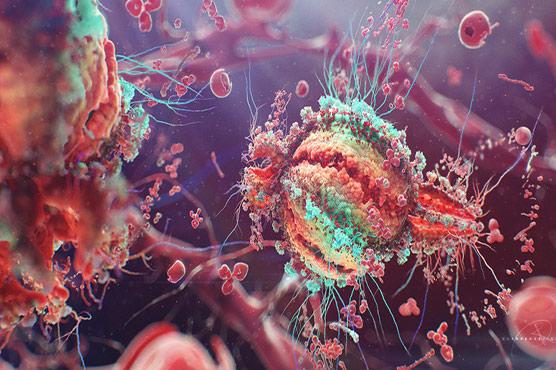
Summary Researchers are now looking into a HIV cure through cancer drugs Photo: Alexey Kashpersky
(Web Desk) – Scientists have turned towards cancer drugs in a hunt for HIV cure.
Immunotherapy has progressed rapidly in almost a decade, which has helped some patients with terminal cancer going into a complete remission.
Normally, a body’s natural defenses weaken and struggle to clear the body of HIV and cancer.
According to BBC, new immunotherapy drugs may help unlock the treatment for HIV virus. Nobel Prize winner and co-discoverer of HIV, Francoise Barre-Sinoussi says, "One of the mechanisms why [latently infected cells] persist is the fact they are proliferating very similar to tumor cells. Those cells are expressing molecules that are the same molecules that are expressed on tumour cells.”
Visual renderings of the HIV virus under electron microscope by Ukranian designer: Alexey Kashpersky
"So that raises the question whether we could develop a strategy for HIV-cure similar to the novel treatment in the field of cancer."
She is one of the scientists attending the HIV and Cancer Cure Forum in Paris.
Antiretroviral drug is used on daily basis to kill the active virus in the treatment of HIV. If it’s left unchecked the HIV virus destroys the immune system, causing Aids. A complete cure of HIV is impossible because the virus mutates so readily, every time the patient’s immune system tries to find a way attacking the virus. Also it is impossible to detect the sleeping or “latent” HIV virus that could be hiding in the body’s cells.
Prof Sharon Lewin, the director of the Doherty Institute in Australia, agrees there is much to learn from cancer. "There are a lot of parallels… I think it s huge."
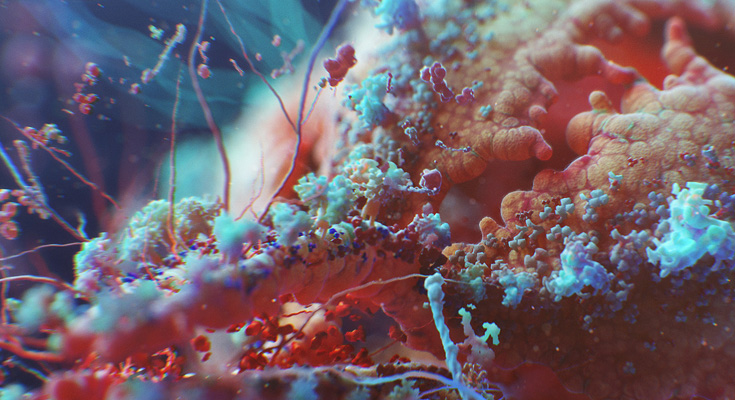 Photo Credit: Alexey Kashpersky
Like the HIV virus, cancers can evolve and be resilient towards the treatments. Although a new class of immunotherapy drugs called “checkpoint inhibitors” allows the immune system to keep on fighting giving outstanding results.
A fifth of patients with terminal melanoma showed no signs of disease after immunotherapy, the results occurred in a trial study. In the meanwhile, only 50 people with HIV have been given immunotherapy (treatment for cancer patients) to treat their cancer. It’s still in its initial stages to draw a conclusion about the evidences of immunotherapy effective towards the HIV virus.
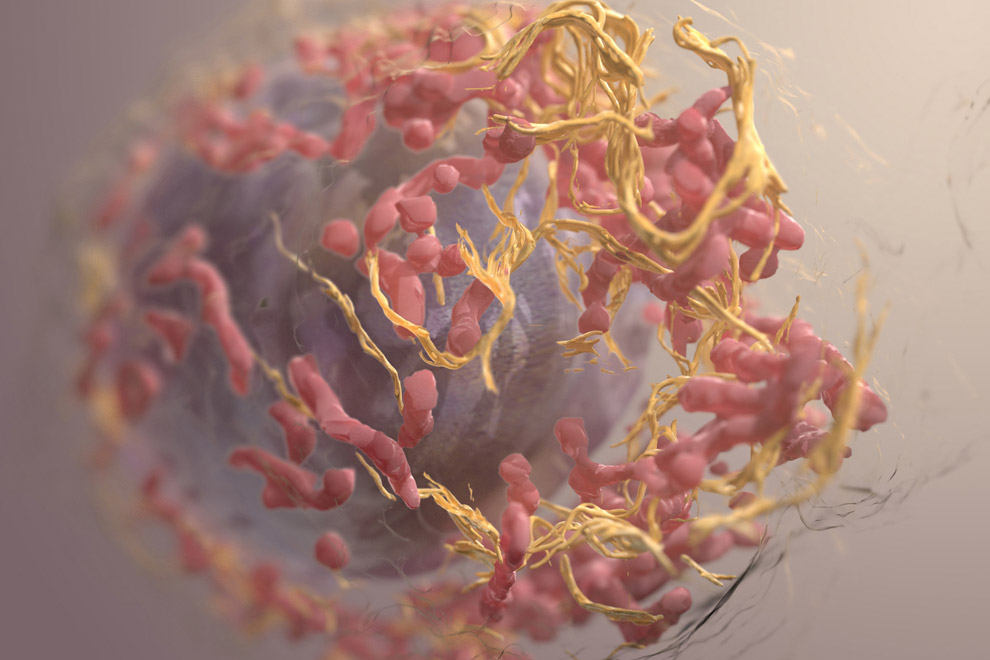
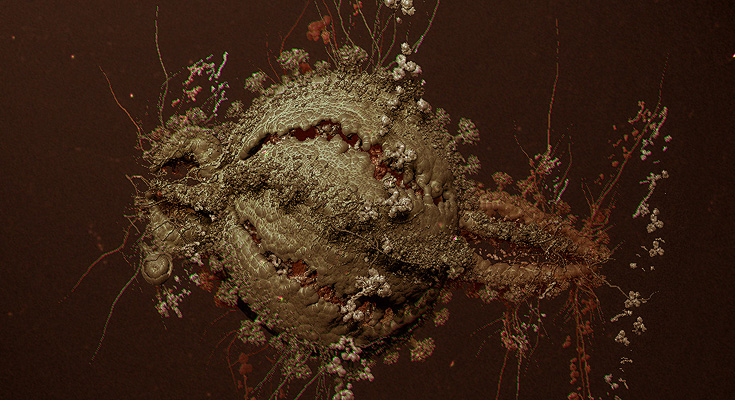
This is a rendered 3D image of a melanoma cell using data obtained using ion abrasion scanning electron microscopy. (Donald Bliss and Sriram Subramaniam; National Library of Medicine, NIH)
Prof Lewin who is currently researching on this thinks that immunotherapy drugs could revive an immune system that has become tired of fighting HIV. "The parts of the immune system that recognise HIV are often exhausted T-cells, they express immune checkpoint markers.
Lewin thinks that there are emerging evidences that the drugs activate the hidden HIV viruses that are lying inactive inside the immune cells. "We want the virus to wake up; any virus that wakes up gets killed [by antiretroviral drugs]."
Although scientists are working hard to find a complete cure for HIV some doctors warn that HIV and cancerous cells are completely different when the immune system is battling against them.
Dr Anthony Fauci, the head of the US National Institute of Allergy and Infectious Diseases, said cautiously, "We have to be careful we don t assume that things that work in cancer are going to work in HIV.
"HIV is so different, that even though it s worth exploring, I wouldn t want people to think this is going to be equally successful in HIV."