Updated on
Summary
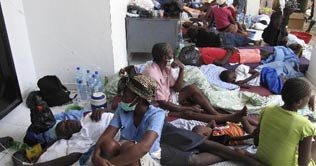
More than a dozen people have died of cholera in central Haiti, adding to concerns that the deadly outbreak is edging closer to the densely populated capital, officials said Saturday. The sudden cholera epidemic has in recent days killed 220 people, mainly in northern Haiti, and sent officials scrambling to contain a wider outbreak 10 months after a January earthquake devastated the Caribbean nation. Hundreds of thousands of people are still living in impoverished tent cities, particularly around Port-au-Prince, where sanitation is poor and where relief groups say the diarrhea-causing illness could spread rapidly. Regional health director Dieula Louissaint said 12 more people died in the Artibonite department in northern Haiti on Saturday, boosting that areas toll 206, while 14 people died in central Haiti closer to the capital. Around 3,000 people have been admitted to hospitals and health centers near the northern city of Saint Marc which is struggling to cope with the overwhelming rush of sick patients as Haiti grapples with its first cholera outbreak in over a century. More than 50 inmates at a prison in the center of the country have been infected with cholera, and three inmates have died, officials said. The Canadian government has offered to set up a military hospital in Haiti and the United States has pledged to set up large tents to treat patients on the ground. The US branch of the Red Cross said Saturday that three large shipments of supplies had arrived in the Americas poorest country. Contamination of the Artibonite river, an artery crossing Haitis rural center that thousands of people use for much of their daily activities from washing to cooking, was believed to be at the source of the epidemic. But the rapid spread of the disease, which is caused by a bacterial infection in the small intestines, raised fears of a much larger health emergency, particularly if it reaches the camps around Port-au-Prince. Aid agencies have 300,000 doses of antibiotics in the country already, Catherine Bragg, the UN deputy emergency coordinator said in New York on Friday. Some 10,000 boxes of water purification tablets, 2,500 jerry cans, and the same number of buckets and hygiene kits are being distributed in the affected area. But Jon Andrus, deputy director of the Pan-American Health Organization, told reporters in Washington Friday that the outbreak is likely to get much larger given our experience with cholera... particularly in a population that has really no protective immunity.