Updated on
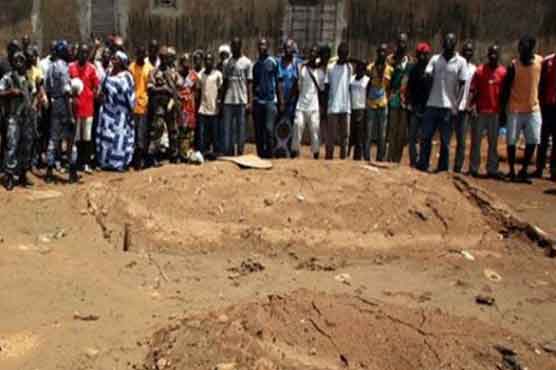
Summary 10 new mass graves have been discovered near site of a July attack on a camp for displaced people.
Rights groups claim summary executions were carried out by the Republican Forces of Ivory Coast, known by its French acronym of FRCI. Last month, officials found six bodies in a well close to the former campsite in the western town of Duekoue.Government, army and U.N. officials toured 10 more graves in the same area on Saturday, said Paul Mondouho, vice-mayor of Duekoue. He said the graves had first been identified by civilians, and that officials did not know the number of bodies they contained because they had not yet been properly exhumed.People were suspecting the presence of bodies in these graves because of the smell coming out of them and because of the shoes we saw nearby, Mondouho said.Prosecutor Noel Dje Enrike Yahau, who is based in the commercial capital of Abidjan, confirmed that multiple new graves had been discovered but could not provide details. U.N. officials and the local prosecutor in charge of investigating the suspected killings could not be reached Tuesday.Army spokesmen could not be reached Tuesday. The Justice Ministry has previously vowed to investigate the discovery of the initial grave.On the morning of July 20, a mob descended on the U.N.-guarded Nahibly camp, which housed 4,500 people displaced by violence in Ivory Coast, burning most of the camp to the ground. Officials said at the time that six people were killed.The attack was prompted by the shooting deaths of four men and one woman on the night of July 19, according to local officials and residents. In response a mob of some 300 people overran the camp on the morning of July 20 after the perpetrators of the shootings reportedly fled there.The victims in the July 19 attack lived in a district dominated by the Malinke ethnic group, which largely supported President Alassane Ouattara in the disputed November 2010 election. The camp primarily housed members of the Guere ethnic group, which largely supported former President Laurent Gbagbo.Gbagbos refusal to cede office despite losing the election to Ouattara sparked months of violence that claimed at least 3,000 lives.Albert Koenders, the top U.N. envoy to Ivory Coast, said one week after the attack that U.N. security forces had been inside and outside the camp at the time but that no Ivorian security forces were present. He said the U.N. forces decided not to fire at a large group of people that were attacking the camp in order to avoid a massacre.Several witnesses have said soldiers and traditional hunters, known as dozos, participated in the attack on the camp. Both military and dozo leaders have denied the claims, saying they had tried to protect the camp.