Updated on
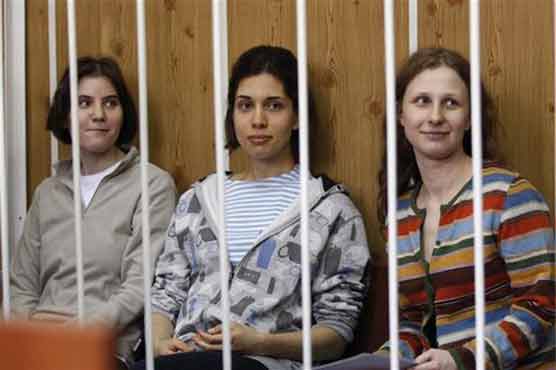
Summary Three young women who staged a punk-rock protest against Vladimir Putin go on trial on Monday.
The trial of the activists - from the band Pussy Riot - should show how much power the resurgent Russian Orthodox Church and its head, Patriarch Kirill, wields. He has called the punk prayer blasphemy, casting it as part of a sinister anti-clerical campaign.Maria Alyokhina, 24, Nadezhda Tolokonnikova, 22, and Yekaterina Samutsevich, 29, were jailed in late February after taking to the altar of Moscows Christ the Saviour Cathedral and belting out a song calling on the Virgin Mary to throw Putin out. The plight of the three women, two of whom have young children, has made headlines in the West.Governments and rights groups, as well as musicians such as Sting and the Red Hot Chili Peppers, have expressed concern about the trial, reflecting doubts that Putin - who is serving his third presidential term and could be in power until 2024 - will become more tolerant of dissenting voices.Symbolically, the trial will take place in the same Moscow courthouse where jailed oil tycoon Mikhail Khodorkovsky was found guilty of stealing his own oil in a trial in 2010 that many Western politicians said looked like a crude Kremlin attempt to keep a man it saw as a political threat behind bars.Charged with hooliganism motivated by religious hatred or hostility, the women face up to seven years in prison if convicted - a punishment rights groups say would be grossly disproportionate no matter what the law says.Pussy Riot, who say they were inspired by 90s-era feminist U.S. punk bands Bikini Kill and Riot Grrl, burst onto the scene this winter with angry lyrics and envelope-pushing performances, including one on Red Square that went viral on the Internet.The collective, who say they average 25 years of age, see themselves as the avant-guard of a disenchanted generation that is looking for creative ways to show its dissatisfaction with Putins 12-year dominance of the political landscape.The all-girl group has no lead singer, and, in order that anyone may join, its members don multi-colored balaclavas, which have become its trademark. They numbered five when they formed in November but later expanded to ten members, though there have been no performances in Russia since their bandmates arrest.The unsanctioned performance that prompted the arrest of three of their members offended many believers in predominantly Orthodox Christian Russia, where the church has enjoyed a huge revival since the collapse of the Soviet Union in 1991.But while some two-thirds of the countrys 142 million people are considered Russian Orthodox, the number of practicing churchgoers is far smaller in a nation where the legacy of decades of official atheism looms large.Patriarch Kirill has said the church was under attack by persecutors and has encouraged pro-church demonstrations including a procession to Christ the Saviour in April.The defendants supporters say the charges are politically-motivated.The performance, a protest against the churchs support for Putin, was part of a lively protest movement that at its peak saw 100,000 people turn out for rallies in Moscow, some of the largest in Russia since the demise of the USSR.The stunt was designed to highlight the close relationship between the Church and former KGB officer Putin, then prime minister, whose campaign to return to the presidency in a March 4 election was backed clearly, if informally, by Patriarch Kirill.Putin won easily - amid opposition claims of some vote rigging - and remains popular. But the protests exposed the vulnerabilities of a leader who often plays to a silent majority of supporters with shows of strength and promises of stability while frustrating middle-class voters in big cities.Rights activist Alexeyeva, 85, said she was certain the women would be convicted, because to clear them would embarrass both church and state and cast doubt over the grounds for their jailing.The trial comes as Putin is trying to rein in his opponents and forestall potential challenges. He has signed laws tightening controls on foreign-funded civil rights groups and sharply raised fines for violations of public order at street rallies.