Updated on
Summary Mexican archaeologists have discovered 1,100 year-old mausoleum near Oaxaca City.
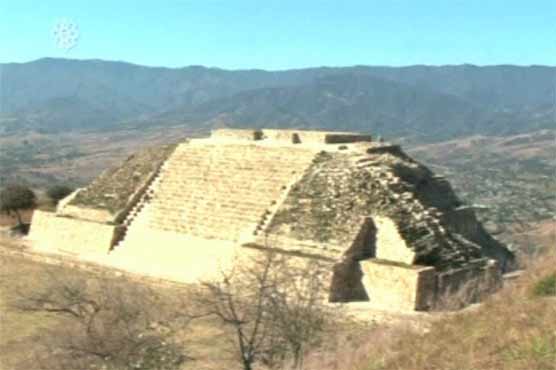
Mexican archaeologists have unearthed a vast funerary complex that anthropological officials believe to feature one the countrys biggest Mesoamerican-era tombs.Archaeologists in the southern Mexican state of Oaxaca have discovered a 1,100 year-old funerary complex at the Atzompa archaeological site, about five kilometres from the state capital of Oaxaca City.The funerary complex is comprised of three rooms, one of which features ancient Zapotec murals in a style of painting previously unseen in Oaxaca.Archaeologist Eduardo Garcia says the funerary complexs sheer size ranks it among the biggest tombs ever discovered in Mexico. The discovery, with its ancient imagery inside the burial complex revealing allegories based on a popular Mesoamerican ballgame, is a boon for archaeologists.Garcia said the construction of the network of chambers, which includes a third room still to be fully explored by archaeologists, makes experts believe the structures were built over a substantial period of time.Mexicos National Institute of Anthropology and History (INAH) believes that the burial site may have been intended for distinguished members of the local society, as the location is adjacent to the House of the Altars, a structure believed to have been an upper class home.Experts consider the Atzompa site - which was founded between 650 and 900 AD - to be a satellite city of the larger archaeological site of Monte Alban, one of the earliest and most important cities of Mesoamerica.Mexican archaeologists first excavated at Atzompa in 2009, revealing several large shrines and elaborate structures as well as a 45-metre ball court used to play an ancient Mesoamerican ballgame.