Updated on
Summary A study says that people with kidney stones may have an increased risk of diabetes.
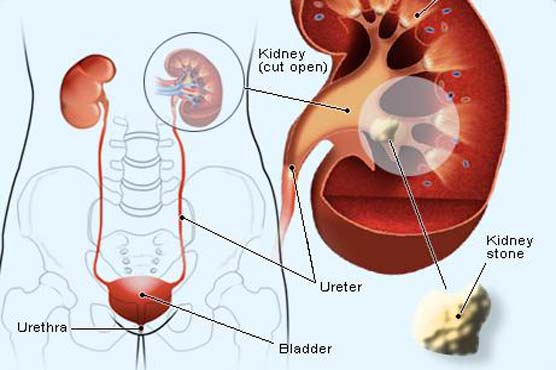
A number of studies have observed that people with diabetes are more likely to form kidney stones than diabetes-free people are. But it hasnt been clear whether the reverse is true.In the new study, researchers found that among more than 94,000 Taiwanese adults, those with a history of kidney stones were about 30 percent more likely to be diagnosed with diabetes over five years than people without stones.Of over 23,000 people who had been treated for kidney stones, 12.4 percent developed diabetes, based on medical records.That compared with 9.6 percent of the 70,700 stone-free adults studied for comparison.Diabetes and kidney stones do share some of the same risk factors -- including obesity and older age. But even when the researchers accounted for age, obesity and certain other health factors, kidney stones were linked to a one-third higher risk of developing diabetes.The exact reason is uncertain, according to the researchers, led by Dr. Herng-Ching Lin of Taipei Medical University. But they suspect that certain processes in the body may contribute to both kidney stones and diabetes. Type 2 diabetes arises when the body loses its sensitivity to insulin, causing levels of the hormone to go up.The study has limitations, Lins team points out -- including the fact that it relied on medical records, which are not always accurate. The study also lacked some key information that could help explain why kidney stones and diabetes were connected. That included information on diet, family history and exercise habits.Still, the researchers say, its possible that kidney stones could serve as a red flag that a person has an increased risk of developing diabetes.And those stone-formers might want to pay extra attention to lifestyle changes -- like a healthier diet and regular exercise -- that could curb their diabetes risk.