Updated on
Summary
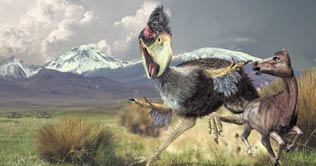
Researchers used the kind of techniques more commonly seen on the computers of construction engineers to ascertain the attack methods of the andalgornis, an Argentine paleontologist said. They say the agile creature repeatedly attacked and retreated, landing well-targeted blows and using hatchet-like jabs to take down its prey. The analysis of specific parts [of the body] is the tool which comes out of engineering, to test the resistance of specific structures of importance to man in construction. Its appearance in biology and paleontology is relatively recent. However, it has resulted in something new and it has been applied to a great diversity of organisms from dinosaurs to mammals, said Argentine paleontologist Federico Degrange. The multinational team of scientists using three-dimensional X-ray scans and advanced engineering methods documented the structure of one bird's skull, thought to be six million years old. They even worked out its main strengths and weaknesses. The main result of applying this technique to the skull of the andalgalornis is that in order for this phororhaco to kill its prey it would have had to use strong and precise vertical strikes and to avoid any sideways movement that that could fatally damage its mouth, said Degrange. The predatory behavior of these birds has been shrouded in mystery, until now. This is the first time that such an exhaustive biomechanical analysis has been carried out on a bird skull, in particular on a phororhacos, said Degrange. The bird could not fly. But, its unusually large, rigid skull, coupled with a hawk-like hooked beak and imposing size made them terrifying predators. We measure specific amounts of bite force in order to obtain a value that can be applied to the 3D andalgornis model of this phororhaco, he added. The bird stood about 1.4 metres (4.5 feet) tall and weighed an estimated 40 kg (90 lbs).