Summary Surprisingly, a number of government institutions are continuously violating the Constitution.
Dunya News Report (Saleem Khilji)
ISLAMABAD: Surprisingly, a number of government institutions are continuously violating the Constitution while refusing to undergo the audit process of their accounts despite the Supreme Court orders.
The institutions that are refusing to open their accounts for audit by the Auditor General of Pakistan (AGP) fall in different categories. Among them, four are foreign funded, one is an authority, four are running under federal government, and two, one each from the Punjab and Khyber Pakhtunkhwa, are functioning under the provincial governments.
Article 170(2) of the Constitution of Pakistan reads: “The audit of the accounts of the Federal and Provincial Governments and the accounts of any authority or body established by, or under the control of, the Federal or a Provincial Government shall be conducted by the Auditor-General, who shall determine the extent and nature of such audit.”
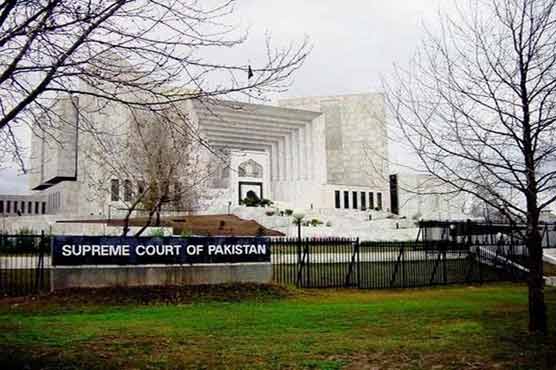
The Supreme Court of Pakistan on September 8, 2015 directed the AGP to audit the accounts of 13 state institutions, including Defence Housing Authority, Wah Nobel Company, National Bank of Pakistan, Pak-China Investment Company Limited, etc. These institutions have sought immunity to get their accounts audited by the AGP; however, the apex court, in its verdict, said that the claim of immunity from audit is against the Constitution.
During the hearing, the AGP told the court that 19 institutions claimed immunity from the provision of 170 (2) of the Constitution while eight institutions were not subjected to audit.
The court however, observed that before 2010 certain departments were exempted from audit, but now it’s a history. The detail of the institutions that are refusing to get their accounts audited is as under:
Pakistan Tele Communication Limited (PTCL): PTCL is a leading information and communication technology provider running a number of communication projects. In 2006, 26 per cent of its shares were sold to Etisalat Telecommunications, a UAE based multinational telecommunications services provider. After privatization, the share holding of PTCL reduced to 62%. The remaining 12% were sold to the general public.
Pak-China Investment Company Limited (PCICL): PCICL is a development financial institution formed in July 2007 by Pakistan and China with the initiatives to promote Trade, Investment and Economic Growth of Pakistan. Started with a capital of $ 200 million, the company is a joint venture in which equity is equally contributed by the Pakistan government and China Development Bank.
Defence Housing Authority (DHA): DHA was primarily established for defence service personnel in 1992 by Pakistan Army welfare department. In the start, it was a housing society but later it was given the status of an authority in 1999 and given cover under chief executive’s orders . It had been set up in Rawalpindi-Islamabad, Lahore, and Karachi, and now it is being expanded to some other cities as well.
National Bank of Pakistan: NBP is the state-owned commercial bank operating throughout the country. It has redefined its role and has moved from a public sector entity into a modern commercial bank. It also acts as a trustee of public funds and as the agent to State Bank of Pakistan (in places where SBP does not exist).
Agri Business Support Fund (ABSF): ASF is a not for profit company, which was set up by the Federal Ministry of Food, Agriculture & Livestock with the support of the Asian Development Bank to promote Agribusiness in the country. It provides farmers with demand-driven technical and managerial services on a matching grant basis to improve their productivity, competitiveness and creditworthiness to access financing for their enterprises.
Punjab Industrial Estate Development and Management Company (PIE): PIE was set up in 2003 by the Punjab government in the backdrop of its industrial policy. A soft loan of Rs1 billion was allocated initially for the development of new industrial estates.
Punjab Rural Support Programme (PRSP): Founded in 2007, the PRSP aims to develop rural areas, support and subsidize means, programmes, plans, and schemes for rural uplift, socio-economic welfare including giving credits to persons having dealings with the company. It is currently operating in 26 districts of the Punjab with the core program and through other interventions in partnership with the government and certain donors.
POF Welfare Trust Fund: It is a subsidiary of Pakistan Ordinance Factories which works under the Ministry of Defence Production.
Wah Noble Private Limited: Wah Nobel is a joint venture between Pakistan Ordnance Factories, Saab (Sweden) and Almisehal (Saudi Arabia). Founded in 1962, Wah Nobel is a multinational group with six companies in its orbit. It is engaged in production of commercial explosives/accessories, wide range of industrial chemicals and acetates along with its contribution in energy sector.
Trust for Voluntary Organization (TVO): TVO is an indigenous grant making organization formed in 1990 after an agreement between Pakistan and the US to establish a special development fund (SDF). It aimed to tap the potential of non-government organizations providing them funds so as to improve the quality of life of the neglected segments. It focuses on six major sectors such as: formal education; primary health care; water, sanitation and hygiene; Livelihood; Environment; Disaster Management.
People s Primary Health Initiatives (PPHI) of KP: In 2005, the federal government, in association with all provincial governments, decided to expand the ‘contracted–out management’ of the Primary Health Care (PHC) infrastructure throughout Pakistan. The rural support organizations in their respective provinces were assigned the management of the rural PHC infrastructure. In KP, the PHC infrastructure management was accordingly transferred to Sarhad Rural support Programme (SRSP). This ‘contracted–out management’ strategy was first named “The President’s Primary Healthcare Initiative’ (PPHI) in 2005 and later re-named the ‘People’s Primary Healthcare Initiative” in May 2008.