Summary Islamabad to host 2027 summit
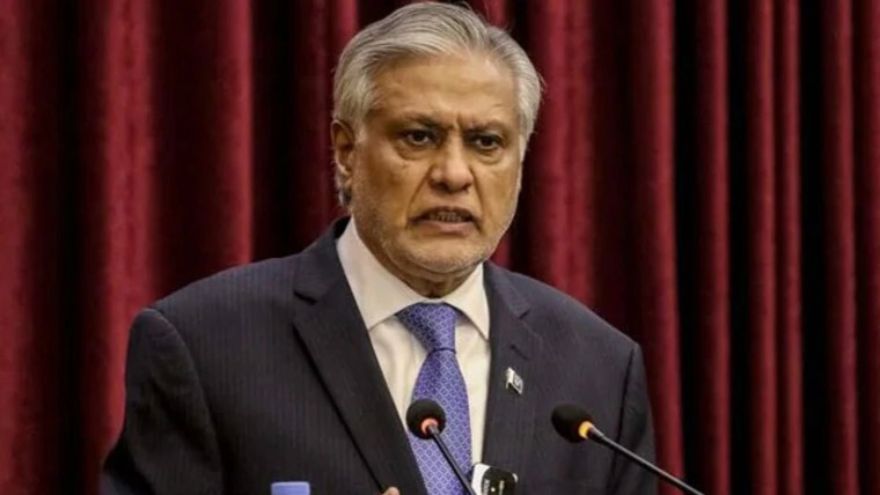
DUSHANBE (Dunya News) – Deputy Prime Minister and Foreign Minister Ishaq Dar has called on Shanghai Cooperation Organisation (SCO) members to expand the use of national currencies in cross-border settlements and establish new financial institutions to protect the region against global economic shocks.
Addressing the SCO Council of Heads of Government (CHG) meeting in Dushanbe, Tajikistan, on Tuesday, Dar also stressed the need for stronger regional connectivity, investment and cooperation in emerging technologies.
Dar urged member states to accelerate efforts to use their national currencies for mutual settlements and establish the SCO Development Bank, SCO Development Fund and SCO Investment Fund. He said these mechanisms could advance development initiatives and help the region withstand international financial disruptions.
The call comes as Russia and Iran, two SCO members, face Western sanctions that restrict their access to international markets and constrain economic growth.
Financial cooperation
The proposal builds on commitments made at the SCO Council of Heads of Government meeting hosted by Pakistan in October 2024. In the joint communiqué, member states reaffirmed the need to implement a roadmap for gradually increasing the share of national currencies in mutual settlements.
The communiqué also stressed the importance of protecting the World Trade Organisation’s multilateral trading system to support inclusive global growth, while reducing dependence on the US dollar in international trade transactions.
Speaking in Dushanbe, Dar said the SCO region had the potential to become a major centre of global economic growth. He also highlighted the China-Pakistan Economic Corridor (CPEC), saying it offered member states an opportunity to participate in and accelerate regional economic integration.
Targeted investment in key sectors, particularly energy and transport, was essential to improving connectivity and supporting closer economic ties, he said.
Dar criticised protectionist policies and unilateral coercive measures, arguing that they ran counter to international law, hindered economic growth, obstructed technological progress and increased inequality. He called for reforms to the global financial architecture and trade regimes to promote more equitable development.
Investment priorities
Pakistan supports greater investment in high-potential industries, including agriculture, mining, minerals and information technology, Dar said. He also identified artificial intelligence, digital transformation, innovation, energy cooperation and international information security as important pillars of future cooperation within the SCO.
He recalled the priorities outlined by Prime Minister Shehbaz Sharif for the SCO Council of Heads of State summit that Pakistan is scheduled to host in 2027. These include peace and security, mutual trust, regional connectivity and trade, innovation and artificial intelligence, digital transformation, climate resilience, sustainable energy and people-to-people exchanges.
Dar also highlighted Pakistan’s engagement with the organisation, including its chairmanship of the SCO Regional Anti-Terrorist Structure and the SCO Working Group on Poverty Alleviation. Pakistan intends to highlight the role of small and medium-sized enterprises in poverty reduction.
The foreign minister said the organisation, which has expanded its work over the past 25 years to cover trade, infrastructure, culture and innovation, remained rooted in mutual trust and respect for diversity.
Afghanistan concerns
Dar also raised the issue of cross-border terrorism from Afghanistan, stressing that lasting economic development required durable peace and security across the region.
Pakistan wanted Afghanistan to be peaceful, stable, prosperous and regionally integrated, with constructive relations with its neighbours, he said. Islamabad’s expectation from the Afghan Taliban administration was that Afghan territory should not be used to facilitate terrorism against Pakistan or other countries.
Pakistan has repeatedly urged the Taliban authorities to dismantle militant sanctuaries on Afghan soil, particularly those linked to the banned Tehreek-i-Taliban Pakistan, which Islamabad says are used to launch attacks inside the country.
Dar reaffirmed Pakistan’s commitment to a peaceful and stable neighbourhood as a foundation for regional development and prosperity.
Meetings in Dushanbe
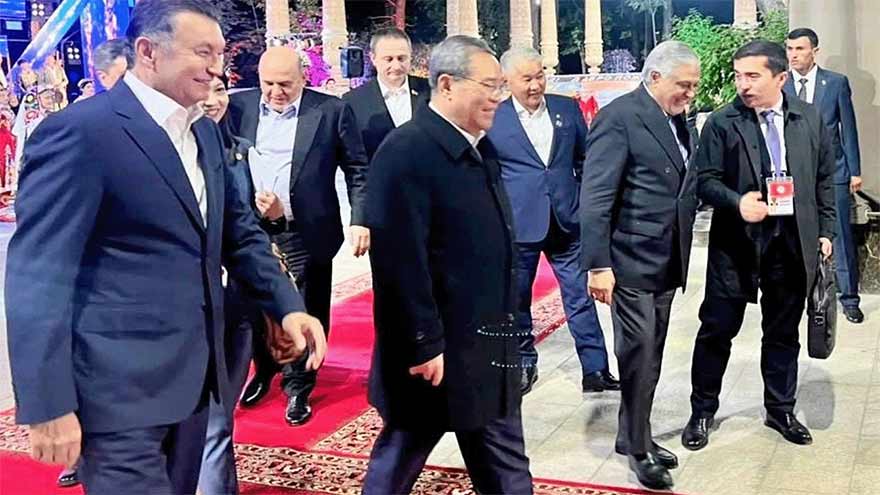
Before the SCO meeting, Dar called on Tajik President Emomali Rahmon alongside other heads of delegations. According to Pakistan’s Foreign Office, Rahmon welcomed the leaders and emphasised stronger regional economic cooperation under the SCO to promote connectivity, stability and shared prosperity.
Dar and other delegates were also received by Tajik Prime Minister Qohir Rasulzoda. On Monday, the Pakistani deputy prime minister met Rasulzoda, Chinese Premier Li Qiang and Mongolia’s First Deputy Prime Minister Jadambyn Enkhbayar during engagements on the sidelines of a banquet for delegates.
Dar was also expected to hold bilateral meetings with counterparts from SCO member states during the gathering.
The organisation comprises 10 member states: Pakistan, China, India, Iran, Russia, Kyrgyzstan, Belarus, Kazakhstan, Tajikistan and Uzbekistan. Afghanistan and Mongolia hold observer status.
Pakistan, which hosted the CHG meeting in October 2024, is scheduled to host the SCO Council of Heads of State summit in 2027 after assuming the organisation’s chairmanship last month. Dar reviewed preparations for the summit on September 30, when SCO national coordinators visiting Islamabad met him.