Updated on
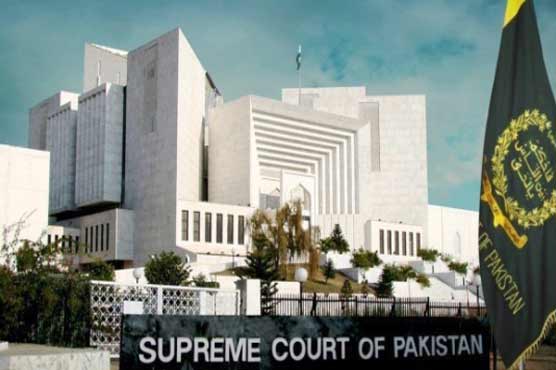
Summary The Supreme Court of Pakistan has delivered its initial verdict on memo case.
In its initial verdict as related to its order, in response to petitions filed under Article 184(3) of the Constitution of the Islamic Republic of Pakistan in the wake of the confidential memorandum of 10th May, 2011, handed over by one Mansoor Ijaz, an American businessman of Pakistani origin to Admiral Mike Mullen, the former Chairman, Joint Chiefs of Staff, USA through former US National Security Advisor James John. Mansoor Ijaz., the Apex Court said that such disclosure, there was unrest amongst the political government and the defense agenciesMansoor Ejaz had claimed that the memorandum-containing message from the Pakistan Government was handed over to him by the then Pakistan Ambassador Hussain Haqqani, stressing that both Mike Mullen and James John had confirmed the contents of the memorandum, contents of which were also published in the foreign as well as local media, prima facie,It is pertinent to recall that the issue of confidential memorandum was highlighted after 21st November, 2011, while all along, the then Ambassador of Pakistan to the USA, was summoned who, according to electronic media reports had tendered his resignation.Media reports had also announced that the ISI had also collected SMS messages exchanged between the former Ambassador of Pakistan and Mr. Mansoor Ijaz, extracts of which have been incorporated in the petitions.Mansoor Ijaz had also emphasized that. “Mr. Mullen insisted on having the Ambassador’s offers to be put in writing because the US Government had been repeatedly deceived by Pakistan’s verbal offers of action in the recent past.”Mansoor had also claimed that even Haqqani had confessed that the final text of the memo was OK and that he had ‘the boss’ (an “obvious reference to President Zardari,”) approval’ that the memorandum could be sent to Admiral Mullen. The Apex Court referred to admittance of Interior Minister Mr. Rehman Malik that Mr. Hussain Haqqani was involved (at least) in communication of voice/text messages with an American national.All the petitioners were of the opinion that if the allegations contained hereinabove are established, then the culprits whosoever are involved, should be held liable for action and a Commission be constituted to probe into the memorandum scandal.Considering the fact that Attorney General for Pakistan was also in favor of a probe, but wanted to wait for the results of Parliamentary Committee on National Security, the Apex Court agreed that result of the Committee’s proceedings, should be waited upon, as both the forums were not against probe into the matter and subject to constitutionality of the Committee; proceeding can be taken up simultaneously.The Apex Court also refereed to Article 5 of the Constitution, it is the basic duty of every citizen to be loyal to the State and to be obedient to the Constitution and law, being inviolable obligation wherever he may be and of every other person for the time being within Pakistan.“We are told that the Prime Minister of Pakistan has also announced that the Parliamentary Committee on National Security will probe into the matter” the Apex Court interjected. However the Apex Court expressed its doubts that “ We do not know the mandate of the Committee”.Considering the civil/constitutional liability with its consequences as envisaged by Article 6 of the Constitution, and secondly, the criminal liability as well, the Apex Court however was also conscious of the fact that the respondents, who include the President of Pakistan, the Army Chief, ISI, etc., also had to file their replies to explain their position.The Court also expressed its desire to share the outcome of probes, conducted during the pending state of the proceedings, including forensic or other physical evidence.Declaring that petitioners, however, undoubtedly had rightfully discharged their burden while arguing their cases with regard to the remedy, under Article 184(3) of the Constitution, however, it would be apt that in the meantime, the respondents may file their replies to all the petitions within 15 days of the passing of this order.The Apex Court also expressed its desire to protect and preserve the evidence, and as such would like to appoint a Commission comprising a competent officer for the purpose of collecting evidenceThe Registrar of the Court was also directed to address a letter on behalf of the Court to Mr. Tariq Khosa, a former PSP officer, formerly Secretary Narcotics, DG, FIA as well as Inspector General/PPO, Balochistan to obtain his consent whether he agrees to perform this National duty; and on receipt of his consent, the matter should be handed over to him.If need be, Mr. Tariq Khosa may travel outside Pakistan for the purposes of collecting evidence. As far as the expenditures of the Commission are concerned, those shall be borne by the Foreign Affairs, Interior, Cabinet and Defense Divisions.All the concerned authorities of the Federal and the Provincial Governments have been ordered to extend their full cooperation to Mr. Tariq Khosa in collecting this evidence, during which he would be fully authorized to exercise contacts with sitting and/or retired officer of the police or any other technical person to collect evidence.The Court also said that since Tariq Khosa would be holding the probe in the Cabinet Division, the Cabinet Secretary shall provide him all logistic support for the purpose of performing the function on behalf of the Court., which he was required to complete as early as possible; preferably within a period of three weeks from the receipt of this order.It is to be noted that in case Mr. Tariq Khosa declines to act as the Commission, he may inform the Registrar who shall place the matter in Chambers for passing of appropriate order for taking up the matter either in the Court or holding proceedings in the Chambers.The Apex Court has also strictly refrained/forbidden to attribute to him anything adverse about his involvement and he (Haqqani) was entitled to due respect, notwithstanding that he should fully cooperate with the Commission, while not, he would not be leaving the country without prior permission of this Court during the pendency of the cases before this Court.The Apex Court has also communicated this order to the Secretaries of the Ministries of Interior and Foreign Affairs with the direction that if Mr. Hussain Haqqani violates the terms of this order and goes abroad, they shall be held personally responsible.The Court also expressed its hopes that at this juncture, all the foreign agencies would /should extend full cooperation to the Commission as it is an issue of utmost importance for the sovereignty, security and independence of the country.