Updated on
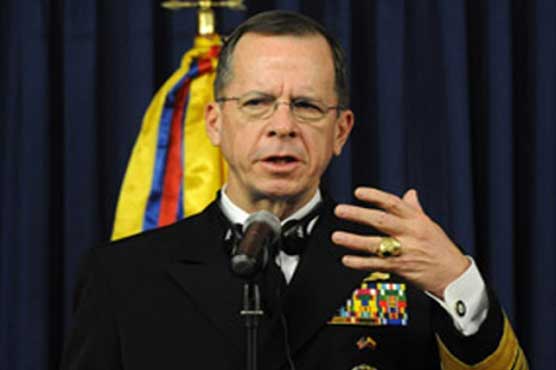
Summary US military's top officer accused Pakistan on Thursday of exporting extremism to Afghanistan.
In a scathing and unprecedented public condemnation of Pakistan, Admiral Mike Mullen said the countrys Inter-Services Intelligence (ISI) was actively supporting Haqqani network extremists who he said have targeted US forces in Afghanistan.The Haqqani Network, for one, acts as a veritable arm of Pakistans Inter-Services Intelligence agency, Mullen told the Senate Armed Services Committee.With ISI backing, Haqqani militants carried out a September 10th truck bombing attack on a NATO base in Afghanistan that wounded 77 Americans, Mullen said.He also blamed Haqqani insurgents for an assault last week on the US embassy and NATO headquarters in the Afghan capital and a June 28th attack on the InterContinental hotel in Kabul.In choosing to use violent extremism as an instrument of policy, the government of Pakistan -- and most especially the Pakistani Army and ISI -- jeopardizes not only the prospect of our strategic partnership, but also Pakistans opportunity to be a respected nation with legitimate regional influence, he said.By exporting violence, they have eroded their internal security and their position in the region. They have undermined their international credibility and threatened their economic well-being.His blunt language follows a series of tough warnings from top US officials on Pakistans failure to crack down on the Haqqani network, raising the possibility of unilateral US action.The CIA already carries out drone bombing raids on Al-Qaeda and other militants in Pakistans northwest tribal areas, which US officials do not explicitly acknowledge.Washingtons relations have grown increasingly strained with Pakistan, which was angered and embarrassed by a US raid on May 2 that killed Al-Qaeda chief Osama bin Laden in Abbottabad.US leaders did not notify their Islamabad counterparts in advance of the nighttime operation by Navy SEAL commandos deep inside Pakistan, fearing that Pakistani officials might tip off bin Ladens circle.Defense Secretary Leon Panetta, appearing at the same Senate hearing, expressed frustration over Haqqani militant sanctuaries in Pakistan and vowed the United States would protect its troops.But when asked by Senator Carl Levin to elaborate, Panetta declined to say what steps the government might take.Mullen, who is due to step down at the end of the month as chairman of the US Joint Chiefs of Staff after four years, defended his efforts to build a dialogue with the Pakistani military.He said more than a dozen meetings with army chief General Ashfaq Kayani were crucial despite Islamabads refusal to meet Washingtons demands.Some may argue I have wasted my time, that Pakistan is no closer to us than before -- and may now have drifted even further away. I disagree, he said.Indeed, I think we would be in a far tougher situation today, in the wake of the frostiness which fell over us after the bin Laden raid, were it not for the groundwork General Kayani and I had laid -- were it not for the fact that we could at least have a conversation about the way ahead, however difficult that conversation might be.While Pakistan has maintained ties to some militants as a hedge to counter its arch-foe India, the gamble has proved a failure, Mullen said.They may believe that by using these proxies they are hedging their bets, or redressing what they feel is an imbalance of regional power. But in reality, they have already lost that bet.