Summary It will be Nawaz Sharif's first visit to Afghanistan since he has come into power.
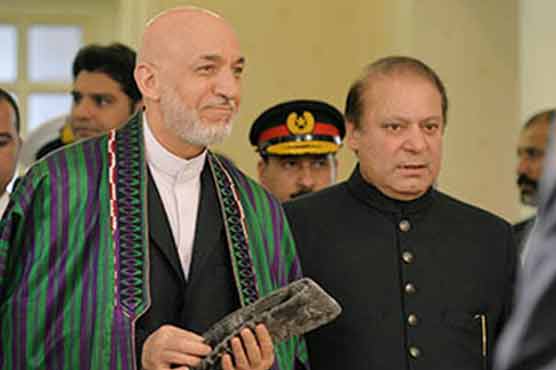
(Web Desk) - Pakistani Prime Minister Nawaz Sharif has reached Kabul on Saturday for talks with President Hamid Karzai as part of efforts to revive Afghanistan’s peace process before NATO troops are withdrawn next year.
The one-day visit is Nawaz Sharif’s first since he took office in May and comes as Karzai is locked in a public dispute with Washington over a crucial security deal covering the role of US soldiers who remain in Afghanistan after next year.
A week ago PM Nawaz met a visiting delegation from the Afghan High Peace Council, which is seeking to open negotiations with the Taliban who have fought US-led NATO and Afghan forces since 2001.
As part of his vision of a peaceful and prosperous neighbourhood‚ Prime Minister Nawaz Sharif has stressed the importance of close‚ cooperative relations with all of Pakistan’s neighbours.
The Afghan president has been bitterly critical of the United States, and on Friday rounded on NATO forces over an airstrike that he said killed a two-year-old boy in the southern province of Helmand.
“This attack shows American forces are not respecting Afghan lives,” Karzai was quoted as saying in a statement released by his office.
NATO apologised for the civilian casualties caused by the airstrike, which they said targeted a Taliban commander involved in operations against Afghan security forces in Helmand.
Afghanistan’s peace process has been at a standstill since a Taliban office opened in Qatar in June, enraging Karzai as it was styled as an embassy for a government-in-exile.
“Both the leaders will discuss the peace and reconciliation process in Afghanistan,” Aizaz Ahmad Chaudhry, a Pakistani foreign ministry spokesman, said ahead of Saturday’s visit.
The Taliban have refused to have direct contact with Karzai or with the High Peace Council, dismissing them as puppets of Washington.
Karzai and Sharif met British Prime Minister David Cameron in London in October in the fourth of a series of trilateral meetings designed to foster stability in the volatile South Asia region.