Summary Punishment can either be death penalty or life imprisonment in this case, the Attorney General said.
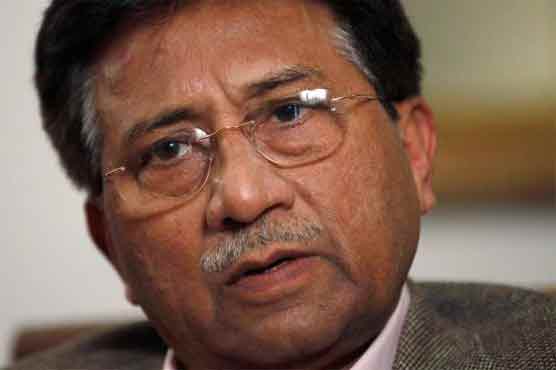
ISLAMABAD (Web Desk) - Attorney General Munir A Malik on Wednesday stated that there is strong evidence against former president General (retired) Pervez Musharraf in the treason case.
Speaking with reporters outside Supreme Court, Munir A. Malik said that as soon as the special court receives the complaint, the Federal Investigation Agency (FIA) will be authorised to arrest Musharraf.
He said punishment can either be death penalty or life imprisonment in this case, adding that decision will be made swiftly.
The power to give bail lies with the special court as well, he added.
Earlier on Tuesday, Prime Minister Muhammad Nawaz Sharif approved a panel of three judges for a special court for trial of Pervez Musharraf for treason charges under Article-6 of the Constitution.
The special court will be headed by Justice Faisal Arab from Sindh High Court‚ while Justice Tahira Safdar of Balochistan High Court and Justice Yawar Ali of Lahore High Court (LHC) will be members of the panel.
MUSHARRAF IN TROUBLE AGAIN
The decision comes after Musharraf was granted bail in other cases against him, stoking rumours a deal for his departure could be imminent.
The former general applied last week to be removed from the government s "exit control list" that stops him leaving Pakistan, to go to visit his sick mother in Dubai.
On Monday a court adjourned a hearing into his travel ban after the government s attorney-general failed to attend court.
The treason accusation relates to Musharraf s decision in 2007 to impose emergency rule shortly before the Supreme Court was due to decide on the legality of his re-election as president a month earlier while he was still army chief.
Musharraf overthrew the government of Nawaz Sharif -- elected to power again in May this year -- in a bloodless military coup in October 1999, but a year later the Supreme Court validated the take over.
During the 2007 emergency rule he suspended the constitution and parliament, and sacked top judges who declared his actions unconstitutional and illegal.
Musharraf technically became a free man this month when an Islamabad district court granted him bail over a deadly raid on a radical mosque in the capital in 2007.
But faced with Taliban threats to his life, he has remained under heavy guard at his villa on the edge of Islamabad.