Summary Shahid Hamid says the court should direct the parliament to remove constitutional loopholes.
ISLAMABAD (Online) - Attorney General Munir A Malik has said compromise can take place in Qasas and Diyat cases no matter the case stands at any stage.
Amicus Curiae Shahid Hamid has said the courts can award punishment as per section 113 under Tazeer even if the legal heirs of killed person pardon the killers. The court should not rely on compromise only in murder case.
The court should direct the parliament to remove constitutional loopholes. Both of them gave these arguments during the course of hearing of pardoning the killers in the name of Allah in murder cases.
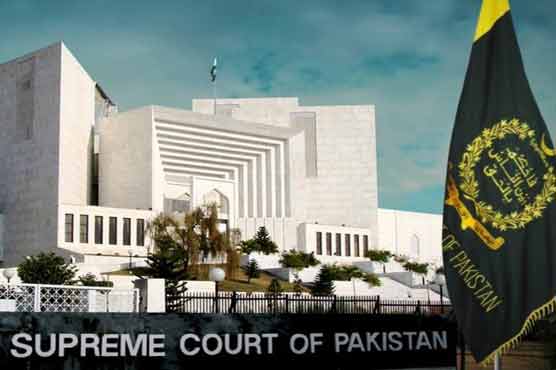
A 5-member larger bench of Supreme Court headed by Justice Nasir ul Mulik took up the pardoning in the name of Allah in murder case for hearing Monday.
The judges remarked the court will give decision remaining within it ambit in consonance with Islamic teachings.
Justice Saqib Nisar remarked court is competent to accept compromise in Qasas cases.
Justice Ejaz Afzal remarked “we have to give decision in the light of facts. There lies difference between law and customs. Whatever is done will be done in keeping with law and constitution.
Shahid Hamid submitted “ I have already said in my reply that if the family members of killed pardon the killer even then punishment will be awarded under tazeer. The court can declare void any law repugnant to Quran and Sunnah.
About “qatal-e-Amd he told the court that if some one kills any one deliberately then the killer is awarded capital punishment.
He also read out section 305, 306. Qasas does not become practicable as long as members of family of the killed person remain non adult. Matter of Diyat is somewhat different. Punishment of 25 years term is fixed in Tazeer.
The court inquired from Shahid Hamid if any punishment is there in Islamic teachings with reference to Qatl-e Amd.
Shahid Hamid said Islam is a clear religion and everything is laid down therein. Even Majlis-e-Shoora can lend no help to the murderer in this respect.
Justice Ejaz Afzal remarked there are a few among thousands of the cases which have been decided under Qasas. Section-311 clarifies Qasas.
Shahid Hamid said this matter is laid down in section-345. Any Qatl-e-Amd is not only a crime against a persons but he is also criminal of the state. If the family members of the killed person say that they pardon for the sake of Raza-e-Elahi but the killer will be punished being the murder a state offence.
The court inquired if any agreement is reached in Qatl-e-Amd then if the killer will be awarded punishment under Islamic teachings.
Shahid Hamid said the Islamic teachings also speak for awarding him punishment. All the sentences are mentioned in the Holy Quran.
The court remarked “we are not appraising the case on modern laws but we want to see what Islamic teachings say about it.
Shahid Hamid said the punishment prescribed under Qatl-e-Amd is aimed at eliminating the vicious customs including Karokari.
Justice Nasir ul Mulk remarked the culprit is acquitted under compromise under the section being referred to by you. The court is satisfied to the extent of section 345 because compromise has been kept subordinate to court’s orders.
Justice Saqib Nisar observed “ the case will be decided in conformity with Islamic teachings. He inquired from amicus curiae if the culprit pleads the guilty and extend apology even then if the court can punish him.
Shahid Hamid said: “yes, he will be punished even then.”
Several decisions of the cases are there in support of it. Superior judiciary has also given decisions in this regard.
Justice Nasir ul Mulk observed you want to say whosoever commits crime will be awarded punishment at any cost. What is responsibility of state in the murder case.
Shahid Hamid said it is responsibility of the state to convict whosoever commits crime. The Quranic teachings and the law also say this. The court can give guidelines. It is necessary to review the circumstances under which the murder has been committed.
The hearing of the case was adjourned for indefinite period.