Summary Say quake island is spewing methane at various points and there are signs of marine life on it.
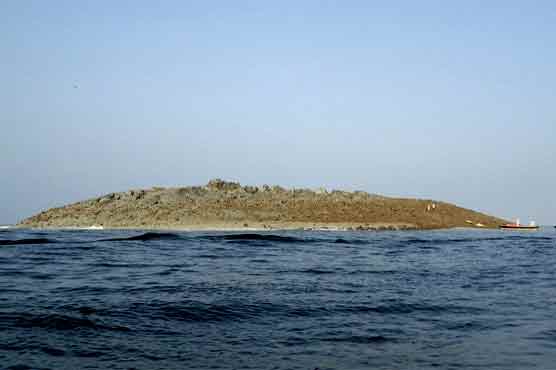
GWADAR (Web Desk) - Following the 7.8 magnitude earthquake which truck southwest Pakistan on Sunday an island had emerged of the Gwadar coastline.
Experts from the National Institute of Oceanography are evaluating the island and say that it is spewing methane gas which can be seen at various points and there is a visible presence of marine life on the island.
The island is 60-70 feet above sea level and its land mass stretches 100-120 metres by 250-300 metres.
To the south, on the beach near Gwadar port, crowds of bewildered residents gathered to witness the rare phenomenon of an island that the quake thrust up out of the sea.
The island would not survive long because sea waves would eventually break it down, the NDMA spokesman said.
"This is not a permanent structure, just a body of mud," he added. "It will disappear over time."
Pakistani officials were investigating a small island that appeared off the coast of Pakistan after the quake, apparently the result of earth and mud pushed to the surface by the quake.
The head of the Geological Survey of Pakistan confirmed that the mass was created by the quake and said scientists were trying to determine how it happened. Zahid Rafi said such masses are sometimes created by the movement of gases locked in the earth under the sea, pushing mud and earth up to the surface in something akin to a mud volcano.
"When such a strong earthquake builds pressure, there is the likelihood of such islands emerging," he said. "That big shock beneath the earth causes a lot of disturbance."
To get a better idea of what the island is made of and how permanent it is, scientists will have to get samples of the material to see if it s mostly soft mud or rocks and harder material. He said these types of islands can remain for a long time or eventually subside back into the ocean, depending on their makeup.
A Pakistani Navy team reached the island by midday Wednesday, navy geologist Mohammed Danish told the country s Geo Television. He said the mass was about 60 feet (18 meters) high, 100 feet (30 meters) long and 250 feet (76 meters) wide.
"There are stones and mud," he said, warning residents not to try to visit the island. "Gasses are still emitting."
But dozens of people had already visited the island, said the deputy commissioner of Gwadar district, Tufail Baloch, who traveled by boat himself to the island Wednesday morning.
Water bubbled along the edges of the island, in what appeared to be gas discharging from under the surface, Baloch said. He said the area smelled of gas that caught fire when people lit cigarettes.
Dead fish floated on the water s surface while local residents were visiting the island and taking stones as souvenirs, he added.
Such land masses have appeared before off Pakistan s Makran coast, said Muhammed Arshad, a hydrographer with the navy. After quakes in 1999 and 2010, new land masses rose up along a different part of the coast about 282 kilometers (175 miles) east of Gwadar, he said.
He said each of those disappeared back into the sea within a year during the monsoon season, a period of heavy rain and wind that sweeps Pakistan every summer. He said that in the area where the island was created on Tuesday, the sea is only about six to seven meters (23 feet) deep.