Updated on
Summary White House has no intention to end CIA drone strikes against militant targets on Pakistani soil.
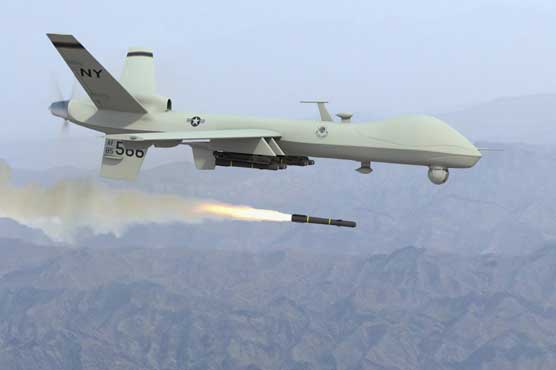
The White House has no intention to end CIA drone strikes against militant targets on Pakistani soil, US officials say, possibly setting the two countries up for diplomatic tensions after Pakistans parliament unanimously approved new guidelines for the countrys troubled relationship with the United States.US officials say they will work in coming weeks and months to find common ground with Pakistan, but if a suspected terrorist target comes into the laser sights of a CIA drones hellfire missiles, they will take the shot.It is not the first time the US has ignored Pakistans parliament, which demanded an end to drone strikes in 2008. What is different now is that the Pakistani government is in a more fragile political state and can continue no longer its earlier practice of quietly allowing the US action while publicly denouncing it, Pakistani officials say.All officials spoke on condition of anonymity to discuss the high stakes diplomatic jockeying.The parliament approved on Thursday recommendations intended to guide Pakistans government in its negotiations to reset the US relationship.The guidelines allow for the blockade on US and NATO supplies to be lifted. The lawmakers demanded a halt to CIA-led missile attacks but did not make that a prerequisite to reopening the supply lines.The relationship between Pakistan and the US faltered after a series of incidents in 2011 that have damaged trust on both sides from the controversy over CIA security officer Ray Davis, who killed two Pakistani alleged assailants and was later released, to the US Navy SEAL raid that killed Osama bin Laden in Pakistan in May, without Pakistani permission. But the arguable nadir in relations came in November, when US forces returned fire they believed came from a Pakistani border post and killed 24 Pakistani troops.Those incidents led to the ejection of US military trainers who had worked closely with Pakistani counterinsurgent forces, slowed CIA drone strikes, and joint raids and investigations by Pakistans intelligence service together with the CIA and FBI. The border incident led to the shutdown of border supply lines into Afghanistan, more than doubling the cost of shipping in supplies for the war effort.A recent series of high-level US military and State Department visits have produced backroom understandings on almost every issue except the drones, one former US official briefed on the talks explained, with US officials offering to negotiate some sort of payment to use the border crossing points, for instance. The White House also is considering issuing an official apology for the deadly border incident, two senior US officials say, which would help ease Pakistani outrage and demonstrate the Pakistani government wrested at least one major concession from the US.And while the US has no intentions of stopping its CIA and FBI counterterrorist activities on Pakistani soil, the White House could take the step of withdrawing some of the staff for a few months until the spotlight is off the controversy, as it did last year after the Ray Davis incident, and again after the Bin Laden raid.Still, neither side is budging on the drone issue, both US and Pakistani officials say.The White House has raised the bar on whom the CIA is allowed to target, applying new limits and all but curtailing so-called signature strikes where CIA targeters deemed certain groups and behaviour as clearly indicative of militant activity.The White House also explored whether giving Pakistan advance notice of the strikes could become the basis of a compromise to keep the operation going.In exploratory counteroffers, Pakistani officials have suggested the US transfer ownership of the drones to the Pakistani Inter-Services Intelligence, flagging them as Pakistani aircraft, taking off from Pakistani air bases, two Pakistani officials say. The Pakistanis argue their public would react with less venom to errant strikes that hit Pakistani civilian targets than they do when such strikes are carried out by a foreign force. They point out the drone transmissions have to travel via US-controlled satellites, giving US officials a failsafe to terminate the Pakistani strikes at any time.An alternate proposal put forward is that the US better arm Pakistans F-16 fleet, enabling the Pakistan air force to attack the targets. While Pakistani officials insist the jets have proven successful in the past, US officials claim their shots flew wide of the mark, allowing some of the militant targets to escape.