Updated on
Summary European markets fell as Greece and Italy still face tremendous obstacles.
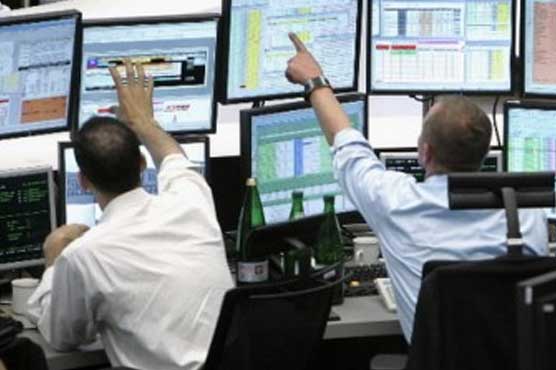
European markets fell on Monday as initial relief over new governments in Greece and Italy gave way to the reality that those countries still face tremendous obstacles.Technocrats have taken over in both Athens and Rome and have promised to institute the reforms required to keep their economies afloat.In Greece, Lucas Papademos must persuade his countrys creditors to hand over the next €8 billion installment of the bailout that will keep it from defaulting. Many Greeks have fought the reforms demanded by creditors, protesting in the streets and making the country nearly ungovernable at times.In Italy, Mario Monti needs to convince investors that a well-managed country can slash its debts and restart growth. Monti seemed off to a good start Monday the morning after he was installed and before he had a chance to do anything when Italys bond yields dropped significantly in early trading.They soon edged higher, however, as investors remained cautious about the countrys huge challenges ahead. The key 10-year borrowing rate was at 6.60 percent, up from Friday but still below last weeks worrying highs above 7 percent.That caution extended to stock markets, where European indexes lost early gains to trade lower by late afternoon. In France, the CAC-40 fell 1.4 percent to 3,104.92, while Germanys DAX was down 1.5 percent at 5,964.11. The FTSE index of leading British shares fell 0.6 percent to 5,512.06. The euro, meanwhile, was down 1 percent at $1.3625.Wall Street fell on the open as well the Dow dropped 0.3 percent to 12,120.57 and the S&P 500 shed 0.6 percent to 1,256.75.While investors are clearly relieved that experienced economists are in charge in two of Europes most fragile countries, reliable leadership is only the beginning: Reducing Italys €1.9 trillion ($2.6 billion) mountain of debt in an era of stagnant growth is still a monumental task.In Asia, markets enjoyed gains on early enthusiasm over the new governments in Italy and Greece. Economic data there was also upbeat Japans economy grew for the first time in four quarters, at an annualized rate of 6 percent.Japans Nikkei 225 index added 1.1 percent to close at 8,603.70. Hong Kongs Hang Seng surged 2 percent to 19,508.18 and South Koreas Kospi climbed 2.1 percent to 1,902.81On mainland China, the benchmark Shanghai Composite Index gained 1.9 percent to 2,528.71 while the smaller Shenzhen Composite Index jumped 2.5 percent to 1,083.04. Benchmarks in Singapore, Australia, and Indonesia were also higher.The good news about Japans economy had buoyed energy prices earlier in the day since growth means an increase in demand for oil. But once the focus turned back to Europes problems, oil fell $1.18 to $97.81.
Featured