Updated on
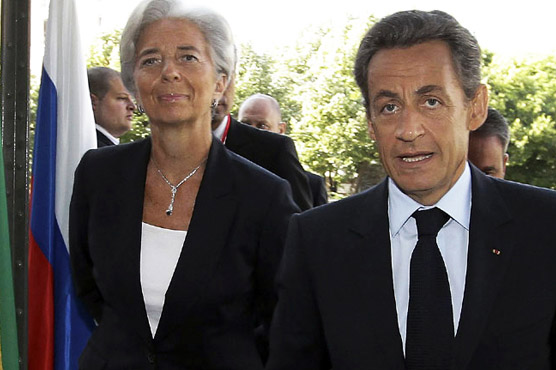
Summary IMF Chief had talks in Paris with Nicolas Sarkozy on a crunch weekend for the European debt crisis.
International Monetary Fund Managing Director Christine Lagarde made no comment either as she went into the Elysee palace or as she left an hour later.The talks preceded a trip to Berlin by Sarkozy on Sunday to meet German Chancellor Angela Merkel, as eurozone leaders cobble together a plan to recapitalise banks overexposed to risky sovereign debt. On Friday the European Commission gave member states 10 days to agree a plan to shore up their lenders, which Lagardes IMF thinks will need between 100 and 200 billion euros ($135 billion and $270 billion) to cover potential losses.French banks in particular are seen as overexposed to Greek, Italian and Spanish debts, and leaders fear a default in a weaker Mediterranean economy could trigger a financial crisis across the continent. Highlighting the urgency of the task, ratings agency Moodys downgraded a dozen British banks over concerns government support for lenders could be withdrawn, and the Fitch agency downgraded Italys and Spains credit ratings.The debt crisis, which began in Greece, has snared Ireland and Portugal and now put Italy and Spain in the firing line too, threatening to sink the entire euro project as banks find it hard to raise funding.The French, German and Italian employers federations on Saturday appealed for greater European integration, calling for a new treaty to get over the current shortcomings of the euro zone.So that the foundations can be laid for a prosperous and politically strong 21st century Europe, we call on the European Union to start work on a new treaty, which would be a new step towards closer political and economic union, Frances Medef, Germanys BDI and Italys Confindustria said.They stressed that sufficient capitalisation for banks were essential to resolve the current crisis and should be treated as such.World Bank President Robert Zoellick agreed, accusing Merkels Germany of lacking vision in an interview with economic weekly WirtschaftsWoche.Fears of a credit crunch have raised the spectre of 2008, when US giant investment bank Lehman Brothers collapsed and could have taken the global financial system with it but for massive government support. Merkel, whose country is Europes strongest economy and effective eurozone paymaster, insisted Friday that under-pressure banks must first turn to investors for funds before appealing for national or European cash.France, the eurozones next biggest player, is reportedly more ready to turn to public funds to shore up its at risk lenders, and a state investment fund has already drawn up plans to rescue Franco-Belgian bank Dexia.Negotiations between the French and Belgian governments on Dexia stepped up Saturday as top officials tried to reach agreement on guarantees and the price to be paid for the banks various offshoots.