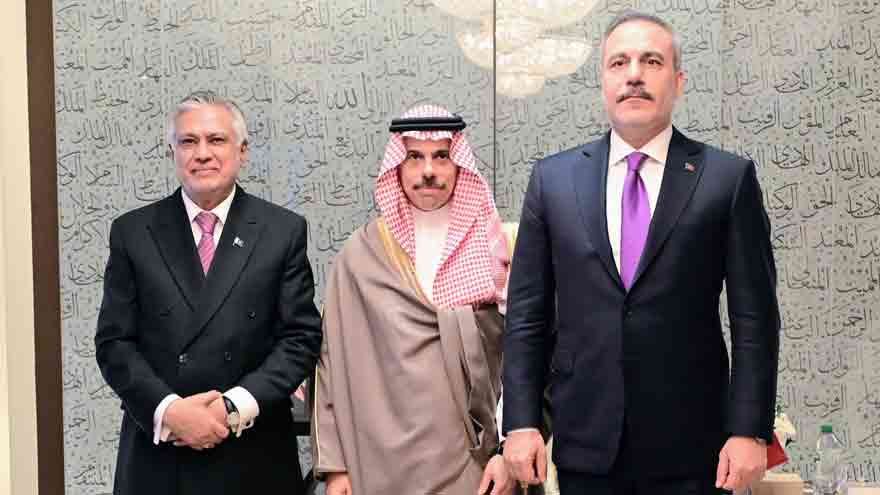
Summary While Trump showed little interest in publicly airing any differences between the two powers, Chinese media reported that behind closed doors Xi urged him to oppose independence for Taiwan
NEW YORK (Reuters) - From his high-profile address to the UN General Assembly to his high-stakes White House summit with Chinese leader Xi Jinping, US President Donald Trump this week was looking to reassert himself on the world stage.
But Trump’s diplomatic flurry has done little to dispel the view among many analysts of a president beset by problems at home and abroad. Those include a widening Iran war that has driven up US gasoline prices and cratered his approval ratings, while his relations with allies worsen and the AI challenge from China intensifies.
With the limits of his power exposed, Trump has begun facing pushback from world leaders on issues ranging from the crisis in the Middle East to Russia’s war in Ukraine, leaving the impression of a foreign policy agenda that has stalled. This comes as Trump’s Republican Party faces midterm elections in November that could further constrain him politically.
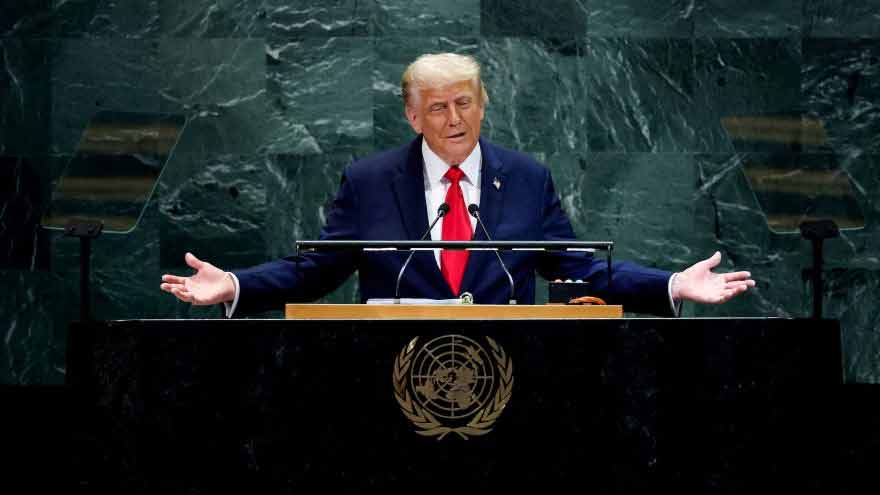
Even so, Trump’s speech to the United Nations on Tuesday was a stark reminder of how, since returning to the White House last year, he has shaken up the rules-based global order that Washington helped to create from the ashes of World War Two.
Standing atop the rostrum of a world body dedicated to peacemaking, he issued a fresh threat to annihilate Iran if it did not agree to a deal, defended his coercive approach to OPEC member Venezuela by asserting to the victor belong the spoils, and signaled he may not be done deploying the US military to achieve his international aims.
Despite that strident stance, Trump’s talks with Xi on Thursday put the US president up against a Chinese counterpart who appeared to be in stronger position, overseeing a surge in his country’s trade with the world while the US grapples with the economic fallout from the Iran conflict.
Limited results from Xi summit
That was the backdrop for a state visit by Xi that was heavy on pomp and ceremony but light on substance, despite a host of thorny issues such as AI, trade, Taiwan and Iran. The most tangible outcome appeared limited to a two-month extension of a trade truce, originally due to expire in November, between the world’s two biggest economies.
While Trump showed little interest in publicly airing any differences between the two powers, Chinese state media reported that behind closed doors Xi urged him to oppose independence for Taiwan. The democratically governed island claimed by China remains the most contentious topic in relations between Washington and Beijing.
Trump’s seemingly non-confrontational attitude was a far cry from his previously hawkish, tariffs-driven approach, which has been tempered by Beijing’s control over rare earth minerals, a key input for technology and auto manufacturing that Beijing has shown the ability to withhold in retaliation.
“Trump sees himself taking us back to a world where might makes right,” said Brett Bruen, who was a foreign policy adviser in the Obama administration and now heads the Global Situation Room strategic consultancy.
“But its noteworthy that he goes all wobbly when it comes to Xi Jinping and ascendant Chinese power.”
Responding to Reuters questions, a White House official rejected the notion that Trump’s foreign policy had hit a wall and said his UN remarks “highlighted his various wins in advancing US interests around the world,” including preventing Iran from getting a nuclear weapon. Tehran has always said its nuclear program is for peaceful purposes.
Iran war stalemate
Looming over Trump’s packed week of diplomacy was the war with Iran, which he started alongside Israel on February 28.
It has dragged on for nearly seven months, disrupting global energy supplies and spreading to other countries in the region most recently to Yemen and the Red Sea shipping corridor.
Iran’s defiance, despite the economic and military beating it has taken, has become the most intractable foreign policy challenge of Trump’s second term.
Trump used his address at the UN to defend his attack on Iran and to declare that America is back, stronger than ever.
But after a string of early foreign policy achievements, including a Gaza ceasefire and the capture of Venezuela’s leader, Trump’s record in his second term in office is increasingly defined by stalemates.
With the Iran war deeply unpopular and dividing Trump’s political base, he could pay a price in the midterm congressional elections when his Republican Party’s control of Congress is at risk.
World leaders appear to be preparing for a time when the US president’s influence could begin to wane following the midterms, and with less than two-and-a-half years left in office.
Most European and Asian allies have already spurned Trump’s demands for assistance in an Iran conflict he launched without consulting them.
At this year’s UN gathering, some US partners took aim at Trump, though mostly without mentioning him by name.
France’s President Emmanuel Macron warned against a global “return to the law of the jungle,” saying countries faced a choice between a world governed by power and coercion, and a “civilised international society.”
In a rebuke to Trump, Brazilian President Luiz Inacio Lula da Silva decried foreign interference in his country’s October election and insisted that “we do not need aircraft carriers patrolling our waters, we need cooperation to stem the flow of weapons and money that fuel crime”.
The White House official, speaking on condition of anonymity, said that Trump was “not concerned with posturing but about results” and that some leaders’ public comments did not match what they told the president in private.
Resisting Trump
In another sign of diminished clout, Trump’s effort to pressure Ukraine and Russia to agree to even a limited energy ceasefire failed to gain much traction.
And while Trump touted a deal with Denmark and Greenland for an expanded US military presence in the vast Arctic island, it fell short of his initial demand to own the territory and his threat, if necessary, to take it by force from a fellow Nato member.
A year ago, few countries dared cross Trump, Ian Bremmer, president of the Eurasia Group, wrote on X. Now Canada, Europe, China, Iran, Russia and others are all more willing to say no.
At one point, Trump himself seemed to wonder how much international sway he actually possessed.
In his speech, he told world leaders he wanted to rebrand AI as super intelligence.
“Let’s see if I have any power,” he said. “Maybe I do and maybe I don’t. We’re going to find out pretty soon.”