Summary Iran rapidly responded to the strikes, saying two US bases in Kuwait were targeted in response to more than a week of intensifying attacks.
TEHRAN (AFP) - The United States carried out airstrikes on Sunday (Jul 19) to "punish" Iran after the first US military deaths since open hostilities rekindled the Middle East war.
Iran rapidly responded, saying two US bases in Kuwait were targeted in response to more than a week of intensifying attacks - which Tehran said included strikes on an airport, a railway station and bridges.
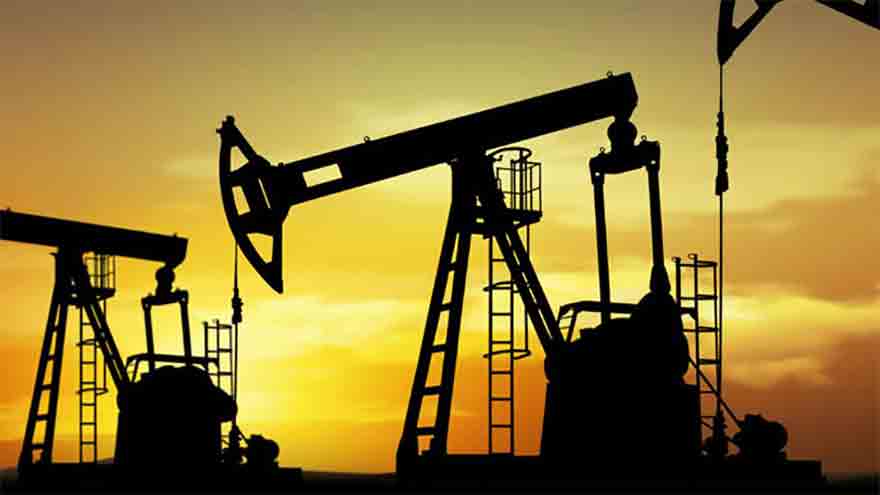
A preliminary deal aimed at ending the war has collapsed as the foes fight to break the deadlock over the Strait of Hormuz, a waterway key to the world's oil supply.
The Iranian army said it targeted two US bases in Kuwait with drones, hitting an ammunition depot at Camp Udairi and Patriot radar and air surveillance systems at the Ali Al Salem Air Base.
Tehran had also launched fresh strikes in Jordan, where the US military's Central Command (CENTCOM) said two service members were killed on Friday as they "defended against Iranian ballistic missile and drone attacks".
CENTCOM said another service member was still missing in action.
Separately, CENTCOM said a US service member was killed on Saturday during a controlled detonation of unexploded ordnance in northern Iraq. The ordnance was from a downed Iranian one-way attack drone, CENTCOM said in a statement released on Sunday.
These deaths brought to 16 the confirmed number of US military fatalities since the US and Israel launched the war with deadly strikes on Iranian targets on Feb 28.
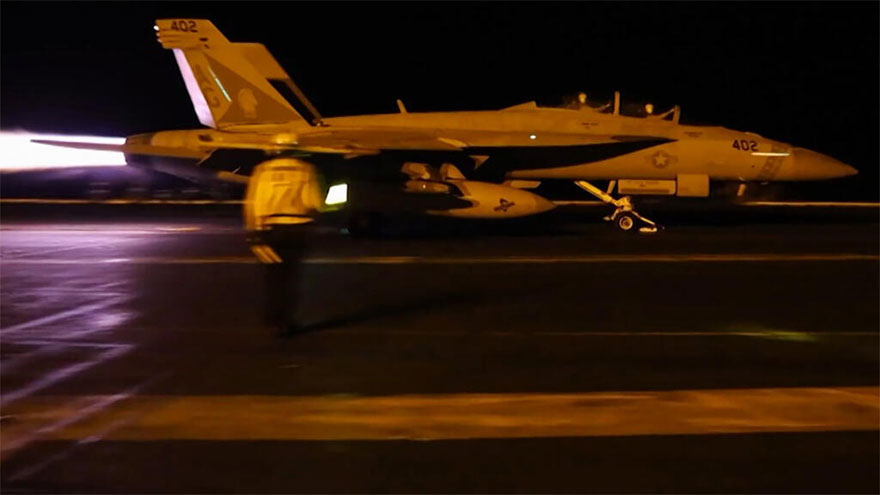
The US military said it carried out an eighth consecutive night of strikes against Iran, with targets including units behind the attack that killed the two American troops in Jordan.
The attacks aimed to "swiftly punish Islamic Revolutionary Guard Corps forces who launched attacks against American service members in Jordan last night", CENTCOM said.
The Atomic Energy Organization of Iran said the US attacked an under-construction nuclear power plant in the country's southwest, as tensions between Tehran and Washington escalate.
In a statement carried by state TV, the agency said US forces "in an aggressive and brutal act contrary to international law, attacked the under-construction Darkhovin nuclear power plant ... with a number of projectiles on Sunday".
ATTACKS ON JORDAN, KUWAIT
Jordan said it intercepted three Iranian missiles flying over its territory on Sunday, according to the country's military, part of a pattern it says has repeated over the past week.
Jordan's ministry of foreign affairs said it had summoned Iran's charge d'affaires in Amman over what it called "unjustified and blatant Iranian attacks" and "provocative and inflammatory statements targeting the Kingdom's territory".
Sirens also sounded in Jordan, and the Israeli military said its forces along with Jordan's had intercepted an Iranian missile heading towards Jordan's port city of Aqaba.
Iran did not immediately confirm launching the attack, but the US embassy in Amman had earlier warned its citizens of a "specific and credible threat" targeting Aqaba's port and airport.
Kuwait's electricity ministry said a power and water plant was attacked for a second consecutive day, causing a fire at the facility.
Kuwait's foreign ministry condemned the attack on Sunday, describing it as a direct strike on vital civilian infrastructure. It said the repeated targeting of civilian facilities amounted to a dangerous escalation and violated international law, the UN Charter and UN Security Council Resolution 2817, adding that Iran bore full legal and moral responsibility for the attack and its consequences.
Bahrain's military also said its air defences "confronted, intercepted, and destroyed a number of treacherous Iranian aerial attacks", accusing Iran of targeting civilians.
The renewed violence was initially sparked by Iranian attacks on ships in the strategic Strait of Hormuz.
Iran closed the strait after the war broke out, and control over the route has become leverage in negotiations with Washington, which reimposed on Tuesday its own blockade of Iran's ports.
On Sunday, the Islamic Revolutionary Guard Corps (IRGC) said two ships attempting to transit the strait were stopped.
"Four violating ships, with the mischief and support of American terrorists ... intended to disrupt and exit the Strait of Hormuz via an unsafe route, two of which had an accident and were stopped in place," IRGC said, adding that the other two ships abandoned their journey.
Iran's health ministry said on Friday that 50 people had been killed since the renewed fighting broke out and more than 500 hurt.
VITAL INFRASTRUCTURE
Hope for a political settlement to the war has fallen by the wayside, though mediators have attempted to bring both sides back to the negotiating table.
Iranian Supreme Leader Mojtaba Khamenei, who took over from his father after he was killed in the opening salvo of US-Israeli strikes, vowed to teach the Americans an "unforgettable lesson", in a statement carried by state TV on Saturday.
Major General Mohsen Rezaei, a senior military adviser to Khamenei, warned that Tehran would resume "full-scale offensive operations" if US strikes continued in the coming days.
Iran's central military commander, Ali Abdollahi, warned that further US aggression would face a "decisive and devastating response", according to a statement carried by state television on Sunday.
Gulf countries including Kuwait have accused Tehran of targeting civilian sites and vital infrastructure, with residents voicing worry that the renewed hostilities might drag on.
"The demand for water and canned goods has increased since this morning amid fears that services or supply chains will be affected," Kuwait resident Hassan Rayan, 61, said.