


'Deeply disappointing': Trump responds to US Supreme Court ruling against his tariffs
World
The justices, in a 6-3 ruling, upheld a lower court’s decision that the Republican president’s use of this 1977 law exceeded his authority

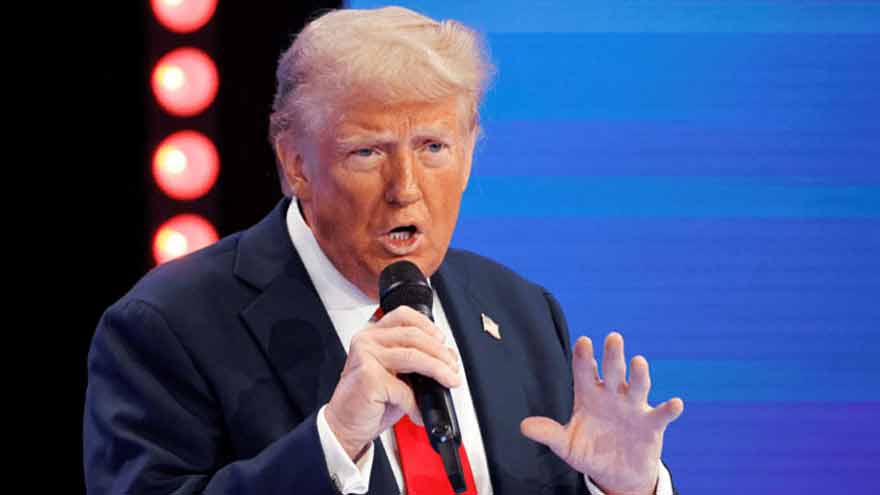
WASHINGTON (Reuters) - President Donald Trump on Friday said that the US Supreme Court's ruling that struck down his sweeping tariffs was "deeply disappointing" and that he was "absolutely ashamed" by the justices who ruled against him in the 6-3 decision.
The US Supreme Court struck down Trump’s sweeping tariffs that he pursued under a law meant for use in national emergencies, rejecting one of his most contentious assertions of his authority in a ruling with major implications for the global economy.
The justices, in a 6-3 ruling, upheld a lower court’s decision that the Republican president’s use of this 1977 law exceeded his authority.
The Supreme Court reached its conclusion in a legal challenge by businesses affected by the tariffs and 12 US states, most of them Democratic-governed, against Trump’s unprecedented use of this law to unilaterally impose the import taxes.
Trump’s tariffs were forecast to generate over the next decade trillions of dollars in revenue for the United States, which possesses the world’s largest economy.
Trump’s administration has not provided tariffs collection data since December 14.
The US Constitution grants Congress, not the president, the authority to issue taxes and tariffs. But Trump instead turned to a statutory authority by invoking IEEPA to impose the tariffs on nearly every US trading partner without the approval of Congress.
Also Read: Trump to travel to China from March 31 to April 2 amid trade tensions
Trump has imposed some additional tariffs under other laws that are not at issue in this case. Based on government data from October to mid-December, those represent about a third of the revenue from Trump-imposed tariffs.
IEEPA lets a president regulate commerce in a national emergency.
Trump became the first president to use IEEPA to impose tariffs, one of the many ways he has aggressively pushed the boundaries of executive authority since he returned to office in areas as varied as his crackdown on immigration, the firing of federal agency officials, domestic military deployments and military operations overseas.
Trump described the tariffs as vital for US economic security, predicting that the country would be defenseless and ruined without them.
Trump, in November, told reporters that without his tariffs “the rest of the world would laugh at us because they’ve used tariffs against us for years and took advantage of us”.
Trump said the United States was abused by other countries, including China, the second-largest economy.
IEEPA historically had been used for imposing sanctions on enemies or freezing their assets, not to impose tariffs. The law does not specifically mention the word tariffs.
In February and March of 2025, Trump invoked IEEPA to impose tariffs on China, Canada and Mexico, citing the trafficking of the often-abused painkiller fentanyl and illicit drugs into the United States as a national emergency.
Trump has wielded his tariffs to extract concessions and renegotiate trade deals, and as a weapon to punish countries that draw his ire on non-trade political matters.
IEEPA was passed by Congress and signed by Democratic President Jimmy Carter. In passing the measure, Congress placed additional limits on the president’s authority compared to a predecessor law.
