Summary The EU marked a symbolic shift in its approach to Iran's leadership on Thursday by designating the Revolutionary Guards as a terrorist organisation
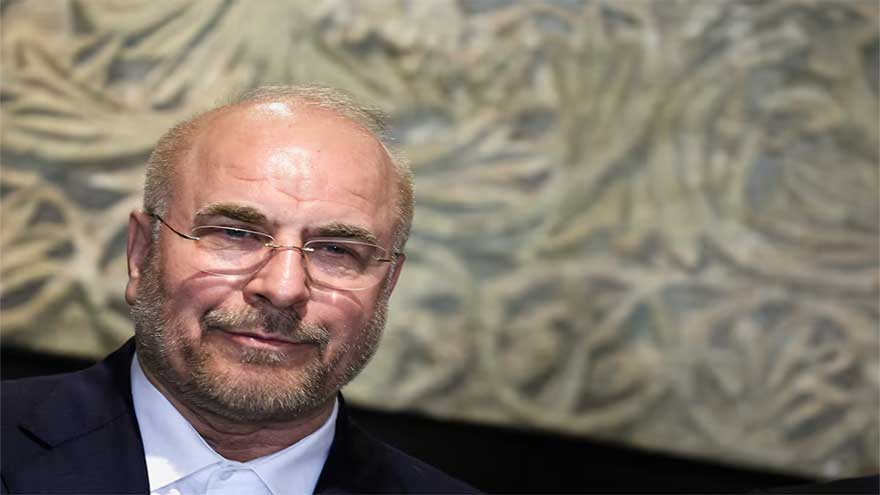
DUBAI (Reuters) – Iran considers as "terrorist groups" the armies of EU countries that listed the Islamic Revolutionary Guard Corps on the bloc's list of terrorist organisations, Parliament Speaker Mohammad Baqer Qalibaf said on Sunday.
The EU marked a symbolic shift in its approach to Iran's leadership on Thursday by designating the Revolutionary Guards as a terrorist organisation, following what turned out to be the Islamic Republic's bloodiest crackdown of protests since its establishment in 1979.
"By trying to hit the Revolutionary Guards ... the Europeans actually shot themselves in the foot and once again made a decision against the interests of their people by blindly obeying the Americans," Mohammad Baqer Qalibaf told his fellow MPs, all wearing Revolutionary Guards uniforms in support to the elite force.
"According to Article 7 of the law on countermeasures against the designation of the Revolutionary Guards as a terrorist organisation, the armies of European countries are considered terrorist groups."
Qalibaf added that the national security parliamentary commission would deliberate on the expulsion of EU countries' military attaches and follow up on the issue with the foreign ministry.
Set up after Iran's 1979 Islamic Revolution to protect the Shi'ite clerical ruling system, the Revolutionary Guards have great sway in the country, controlling swathes of the economy and armed forces.
QATAR PM TO MEET SECURITY OFFICIAL
Qatari Prime Minister Sheikh Mohammed bin Abdulrahman al-Thani met with top Iranian security official Ali Larijani in Tehran and reviewed efforts to de-escalate tensions in the region, Qatar's foreign ministry said on Saturday in a statement.
Earlier, Iranian President Masoud Pezeshkian said on Saturday that US, Israeli and European leaders had exploited Iran's economic problems, incited unrest and provided people with the means to "tear the nation apart” in recent protests.
The two-week long nationwide protests, which began in late December over an economic crisis marked by soaring inflation and rising living costs, have abated after a bloody crackdown by the clerical authorities that US-based rights group HRANA says has killed at least 6,563, including 6,170 protesters and 214 security forces.
Iranian Foreign Minister Abbas Araqchi told CNN Turk that 3,100, including 2,000 security forces, had been killed.
The US, Israeli and European leaders tried to "provoke, create division, and supplied resources, drawing some innocent people into this movement," Pezeshkian said in a live state TV broadcast.
US President Donald Trump has repeatedly voiced support for the demonstrators, saying the US was prepared to take action if Iran continued to kill protesters. US officials said on Friday that Trump was reviewing his options but had not decided whether to strike Iran.
Israel's Ynet news website said on Friday that a US Navy destroyer had docked at the Israeli port of Eilat.
Trump, Israeli Prime Minister Benjamin Netanyahu and Europeans "rode on our problems, provoked, and were seeking — and still seek — to fragment society," said Pezeshkian.
"They brought them into the streets and wanted, as they said, to tear this country apart, to sow conflict and hatred among the people and create division," Pezeshkian said.
"Everyone knows that the issue was not just a social protest," he added.
Regional allies including Turkey, the United Arab Emirates, and Saudi Arabia have been engaging in diplomatic efforts to prevent a military confrontation between Washington and Tehran.
The US is demanding that Iran curb its missile programme if the two nations are to instead resume talks, but Iran has rejected that demand.
Foreign Minister Araqchi said in Turkey on Tuesday that missiles would never be the subject of any negotiations.
In response to US threats of military action, Araqchi said Tehran was ready for either negotiations or warfare, and also ready to engage with regional countries to promote stability and peace.
"Regime change is a complete fantasy. Some have fallen for this illusion," Araqchi told CNN Turk. "Our system is so deeply rooted and so firmly established that the comings and goings of individuals make no difference."