Summary The ruling said that Rodríguez would assume "the office of President of the Bolivarian Republic of Venezuela, in order to guarantee administrative continuity and comprehensive defense of the Nation"
CARACAS (Reuters) – The Constitutional Chamber of Venezuela's Supreme Court ordered on Saturday that Vice President Delcy Rodríguez assume the role of acting president of the country in the absence of Nicolás Maduro, who was detained early Saturday morning in an operation by US forces.
The court ruling said that Rodríguez would assume "the office of President of the Bolivarian Republic of Venezuela, in order to guarantee administrative continuity and the comprehensive defense of the Nation."
The ruling added that the court will debate the matter in order to "determine the applicable legal framework to guarantee the continuity of the State, the administration of government, and the defense of sovereignty in the face of the forced absence of the President of the Republic."
MADURO IN NEW YORK
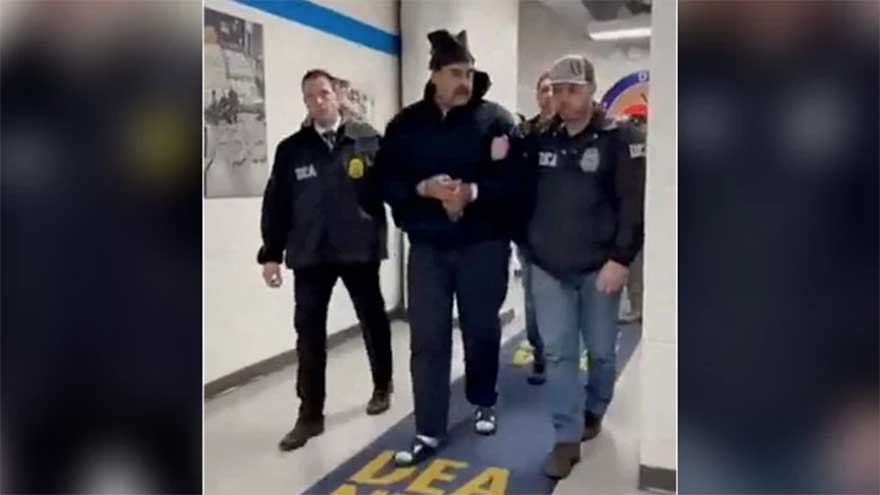
Meanwhile, Venezuelan President Maduro landed in the United States on Saturday, multiple news outlets reported, arriving in upstate New York following his capture in an overnight US operation.
Video showed a plane arriving at Stewart International Airport about 60 miles (97 km) northwest of New York City, with several US personnel in FBI and other gear boarding the aircraft after it landed. TV news networks, including CNN, Fox News and MS Now, identified a person who disembarked from the plane as Maduro.
US TO RUN VENEZUELA: TRUMP
Earlier, US President Donald Trump said he was putting Venezuela under temporary American control after the United States captured President Nicolas Maduro in an audacious raid and whisked him to New York to face drug-trafficking charges.
"We will run the country until such time as we can do a safe, proper and judicious transition," Trump said during a press conference at his Mar-a-Lago resort in Florida. "We can't take a chance that someone else takes over Venezuela who doesn't have the interests of Venezuelans in mind."
Maduro and his wife, Cilia Flores, were transported to a US Navy ship offshore before being flown to the US on Saturday evening.
Video showed a plane arriving at Stewart International Airport about 60 miles (97 km) northwest of New York City, with several US personnel boarding the aircraft after it landed. A Justice Department official confirmed Maduro had landed in New York, and video later showed a large convoy arriving at the Metropolitan Detention Center in Brooklyn under a heavy police presence.
Maduro, who was indicted on various US charges, including narco-terrorism conspiracy, is expected to make an initial appearance in Manhattan federal court on Monday, according to a Justice Department official. His wife also faces charges, including cocaine importation conspiracy.
It is unclear how Trump plans to oversee Venezuela. US forces have no control over the country itself, and Maduro's government appears not only to still be in charge but to have no appetite for cooperating with Washington. Trump did not say who will lead Venezuela when the US cedes control.
Maduro's apparent successor, Venezuelan Vice President Delcy Rodriguez, appeared on Venezuelan television Saturday afternoon with other top officials to decry what she called a kidnapping.
“We demand the immediate release of President Nicolas Maduro and his wife Cilia Flores," Rodriguez said, calling Maduro "the only president of Venezuela." A Venezuelan court later ordered Rodriguez to assume the position of interim president.
In the US some legal experts questioned the legality of an operation to seize the head of state of a foreign power, and Democrats who said they were misled during recent briefings demanded a plan on what would now follow.
POTENTIAL POWER VACUUM
In Venezuela, the streets were mostly calm on Saturday. Soldiers patrolled some parts and small pro-Maduro crowds gathered in Caracas.
Others expressed relief. "I'm happy, I doubted for a moment that it was happening because it's like a movie," said merchant Carolina Pimentel, 37, in the city of Maracay.
At his press conference, where he was accompanied by Secretary of State Marco Rubio and Secretary of Defense Pete Hegseth, Trump did not provide specific answers to repeated questions about how the United States would run Venezuela given its government and military are still functioning.
"The people that are standing right behind me" - such as Rubio and Hegseth - would oversee the country, Trump said.
He said he was open to sending US forces into Venezuela. "We're not afraid of boots on the ground," he said.
The removal of Maduro, whom critics called a dictator as he led Venezuela with a heavy hand for more than 12 years, could open a power vacuum in the country, which is bordered by Colombia, Brazil, Guyana, and the Caribbean.
Trump publicly closed the door on working with opposition leader Maria Corina Machado, widely seen as Maduro's most credible opponent.
Trump said the US has not been in contact with Machado, who was awarded the Nobel Peace Prize last year. "She doesn't have the support within or the respect within the country," he said.
RECALLING PAST REGIME CHANGES
Trump's comments about an open-ended military presence in Venezuela echoed the rhetoric around past invasions in Iraq and Afghanistan, both of which ended in American withdrawals after years of costly occupation and thousands of US casualties.
He said on Saturday that as president, including his first term, he has overseen military actions that were "only victories." But none of those involved removing another country's leader.
Trump in the past criticized such interventions, calling the Iraq invasion "a big fat mistake" during a 2016 presidential debate, and saying in 2021 that he was "especially proud to be the first president in decades who has started no new wars."
Before Saturday, the US had not made such a direct intervention in the region since the invasion of Panama 37 years ago to depose military leader Manuel Noriega over allegations that he led a drug-running operation. The United States has leveled similar charges against Maduro, accusing him of running a "narco-state" and rigging the 2024 election.
Maduro, a 63-year-old former bus driver handpicked by the dying Hugo Chavez to succeed him in 2013, has denied those claims and said Washington was intent on taking control of his nation's oil reserves.
Trump's action recalls the Monroe Doctrine, laid out in 1823 by President James Monroe, laying US claim to calling the shots in the region, as well as the "gunboat diplomacy" seen under President Theodore Roosevelt in the early 1900s.
Trump nodded to the comparisons during his press conference, suggesting an updated version of it might be called the "Donroe Doctrine."
While various Latin American governments oppose Maduro and say he stole the 2024 vote, Trump's boasts about controlling Venezuela and exploiting its oil revive painful memories of past US interventions in Latin America that are generally opposed by governments and people in the region.
Argentina's President Javier Milei lauded Venezuela's new "freedom" while Mexico condemned the intervention and Brazil's President Luiz Inacio Lula da Silva said it crossed "an unacceptable line."
Russia and China, both major backers of Venezuela, criticized the US action.
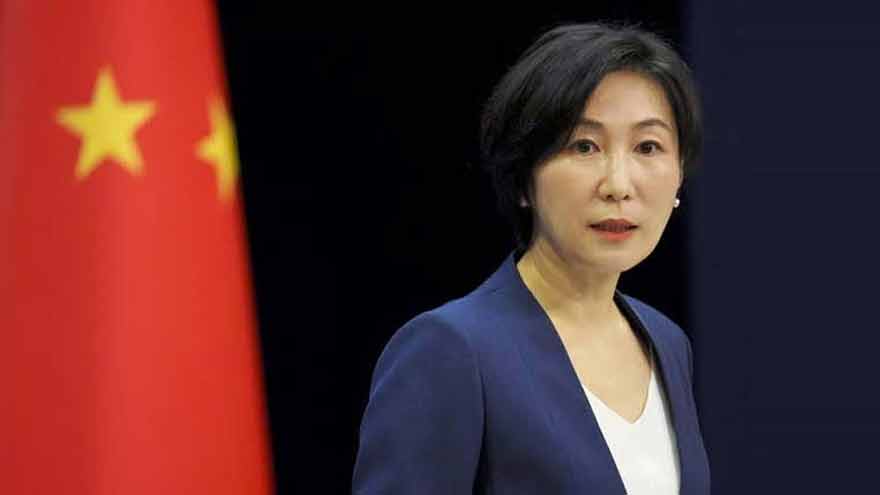
"China firmly opposes such hegemonic behaviour by the US, which seriously violates international law, violates Venezuela's sovereignty, and threatens peace and security in Latin America and the Caribbean," China's foreign ministry said.
POLITICAL RISKS TO TRUMP AT HOME
A US occupation "won't cost us a penny" because the United States would be reimbursed from the "money coming out of the ground," Trump said, referring to Venezuela's oil reserves, a subject he returned to repeatedly during Saturday's press conference.
The idea that a country's oil reserves can pay for an American invasion also recalls the 2003 Iraq war. In the run-up to the invasion, US officials repeatedly stated that the cost would largely be covered by Iraq's assets, including its oil. Various estimates by academics say the actual cost to the United States of its years-long entanglement in Iraq ended up being at least $2 trillion.
Trump’s focus on foreign affairs provides fuel for Democrats to criticize him ahead of midterm congressional elections in November, when control of both houses of Congress is at stake. Republicans control both chambers by narrow margins.
Opinion polls show the top concern for voters is high prices at home, not foreign policy.
Trump also runs the risk of alienating some of his own supporters, who have backed his "America First" agenda and oppose foreign interventions.
Voicing those concerns, Marjorie Taylor Greene, a Georgia Republican who has broken with Trump in recent months, said on social media, "This is what many in MAGA thought they voted to end. Boy were we wrong."