Summary The discovery could provide valuable insights into Roman-era magical practices, religious rituals and occult traditions.
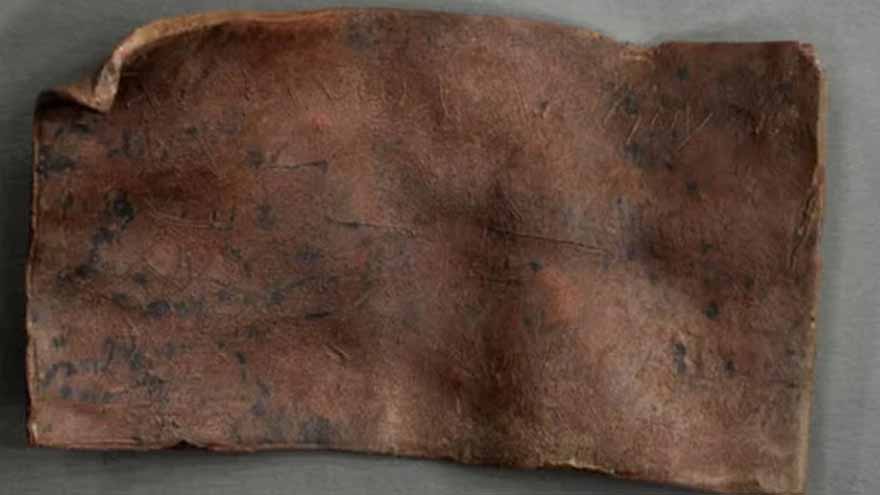
(Web Desk) - Archaeologists in the Netherlands have uncovered a rare Roman-era lead tablet inscribed with mysterious magical spells believed to have been used to invoke gods and spirits against enemies.
The artefact was discovered at an archaeological site in the former Roman province of Lower Germania, located in present-day Heerlen in the Netherlands.
Measuring approximately 9.3 centimetres long and 4.8 centimetres wide, the tablet contains inscriptions that have intrigued researchers. Surprisingly, the text was written in ancient Greek rather than Latin, while its writing style bears similarities to Egyptian script.
A study conducted by researchers at the Institute of Papyrology found that the inscription contains three different types of letters and symbols, adding to the tablet’s mysterious nature.
Experts say such tablets, commonly known as “curse tablets,” were often made from lead. In ancient beliefs, lead was thought to possess special powers that could spiritually bind or influence individuals and objects.
According to researchers, the discovery could provide valuable insights into Roman-era magical practices, religious rituals and occult traditions.
The tablet is expected to help historians better understand how people in the Roman Empire combined religious beliefs with supernatural practices to seek protection, revenge or influence over others.