Summary Latif Khosa and Salman Safdar met ex-PM Imran Khan at Adiala Jail after an IHC order.
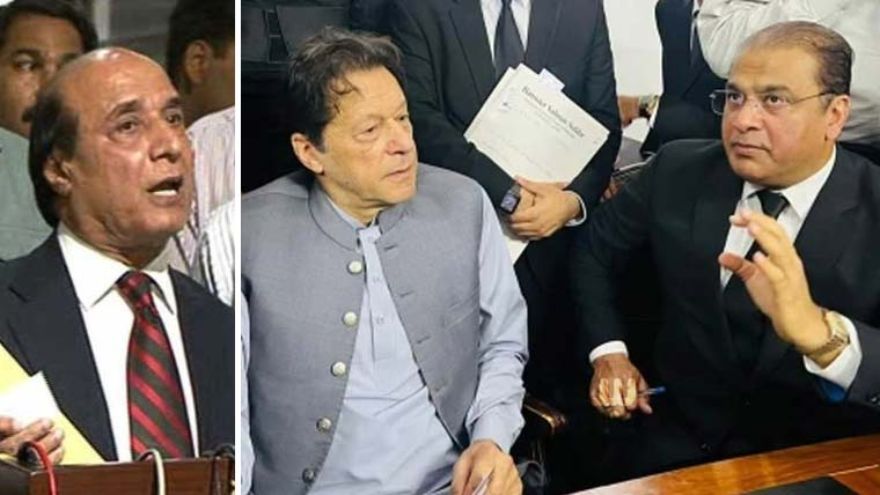
RAWALPINDI (Dunya News) – Former prime minister and Pakistan Tehreek-e-Insaf (PTI) founder Imran Khan met his lawyers, Sardar Latif Khosa and Barrister Salman Safdar, at Adiala Jail in Rawalpindi on Wednesday, following an Islamabad High Court (IHC) order allowing legal consultations with him and his wife, Bushra Bibi.
The two lawyers entered the prison in a vehicle after the court directed jail authorities to arrange one-hour meetings with their respective clients. The permission came amid concerns raised before the court about the health and medical treatment of Bushra Bibi, who is also incarcerated at Adiala Jail.
Speaking to the media before entering the prison, Barrister Salman Safdar said the meeting with Imran Khan would be strictly limited to legal matters.
He said he intended to obtain instructions from the PTI founder regarding his ongoing cases and stressed that there would be no political discussion during the meeting.
The meetings followed directions issued by a two-member IHC bench headed by Chief Justice Sarfraz Dogar during proceedings on appeals challenging convictions in the £190 million Al-Qadir Trust case.
During the hearing, the court allowed Sardar Latif Khosa, who represents Bushra Bibi, and Salman Safdar, Imran Khan’s counsel, to meet their respective clients at Adiala Jail.
The bench directed prison authorities to facilitate one-hour consultations. It initially granted permission for Khosa to meet Bushra Bibi and Imran Khan before allowing Safdar to meet his client.
The chief justice told Safdar that the permission was being granted in accordance with the law. However, the bench cautioned him against subsequently seeking permission to add five more individuals to the list of visitors allowed to meet Imran Khan.
Chief Justice Sarfraz Dogar also questioned the need for another meeting, observing that Safdar had met Imran Khan and Bushra Bibi a few days earlier.
In response, the lawyer explained that the previous consultation had taken place but the time allocated was insufficient to discuss all the relevant matters, making another meeting necessary.
Bushra Bibi’s health concerns
The hearing also focused on Bushra Bibi’s medical condition and the treatment being provided to her in prison.
Earlier, Safdar informed the court that Bushra Bibi had told him during their previous meeting that prison authorities had taken her for surgery around six months earlier and that another operation was scheduled for November 15.
He requested the formation of a medical board to examine her condition and assess her treatment requirements. The lawyer also told the court that prison authorities had acknowledged before the Supreme Court that Bushra Bibi was suffering from an eye condition.
Safdar clarified that he had not yet filed a bail application on medical grounds. He argued that courts traditionally adopt a considerate approach in cases involving women and maintained that Bushra Bibi was not receiving adequate medical treatment in prison.
He also indicated that he intended to begin arguments on the appeals once her medical treatment had been completed.
Islamabad Advocate General Naveed Malik, however, told the court that Bushra Bibi was receiving medical care in prison. He maintained that access to healthcare was a fundamental right and that the government was fulfilling its responsibilities in this regard.
The advocate general also submitted details of the medical facilities and treatment made available to her.
Safdar asked the court to seek further information from prison authorities, arguing that Bushra Bibi had been returned to her prison cell on the same day as her surgery, despite doctors having performed the procedure on an emergency basis.
He maintained that returning her to her cell immediately after emergency surgery was inappropriate and raised questions about the medical care provided to her.
The advocate general subsequently informed the bench that a medical board had also visited Bushra Bibi for an examination on November 8, presenting the government's position on the medical arrangements made for her during her incarceration.