Summary Foreign Office rejects claims that Asim Munir visited Iran as a US envoy, saying his Tehran trip was part of Pakistan’s mediation efforts to ease US-Iran tensions.
ISLAMABAD (Dunya News) – The Foreign Office on Thursday rejected claims that Chief of Defence Forces (CDF) and Chief of Army Staff Field Marshal Asim Munir visited Iran as an envoy of the United States, terming the assertions “misleading and factually incorrect.”
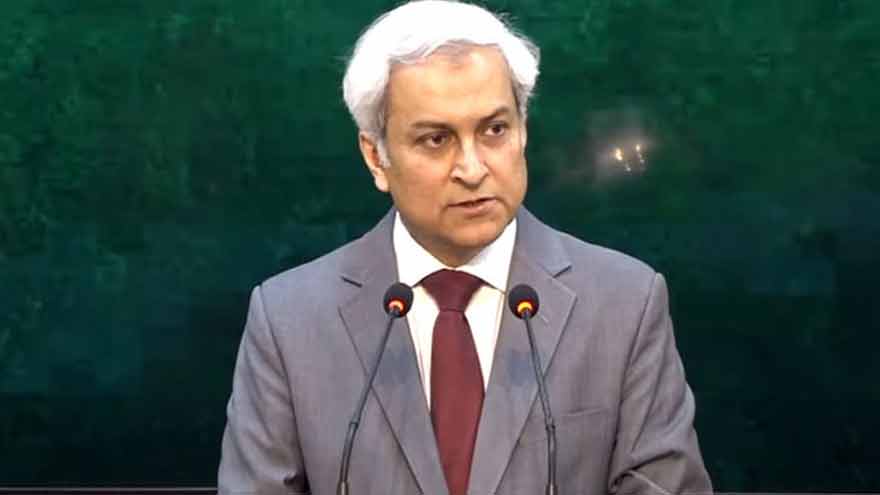
Addressing the weekly press briefing in Islamabad, Foreign Office spokesperson Tahir Andrabi said Asim Munir’s day-long visit to Tehran on August 24 was undertaken purely in the context of Pakistan’s role as a mediator in efforts to ease the ongoing US-Iran conflict.
CDF Asim Munir’s Iran visit
Andrabi said discussions during the army chief’s visit focused on regional de-escalation, breaking the military stalemate and exploring a negotiated settlement aimed at restoring peace and stability.
He said the visit demonstrated Pakistan’s “sincere and constructive role” in bridging differences between Washington and Tehran. According to the spokesperson, the Iranian leadership also appreciated Pakistan’s efforts towards de-escalation and a peaceful resolution of the conflict.
Pakistan, he said, remains engaged with brotherly countries in sincere and concerted efforts to address crises in the Middle East and Gulf, as well as the standoff between the United States and Iran.
Andrabi stressed that Pakistan would continue diplomatic engagement and support sincere efforts aimed at reviving peace talks and achieving a comprehensive, just and lasting resolution to the conflict.
Ishaq Dar’s diplomatic engagement
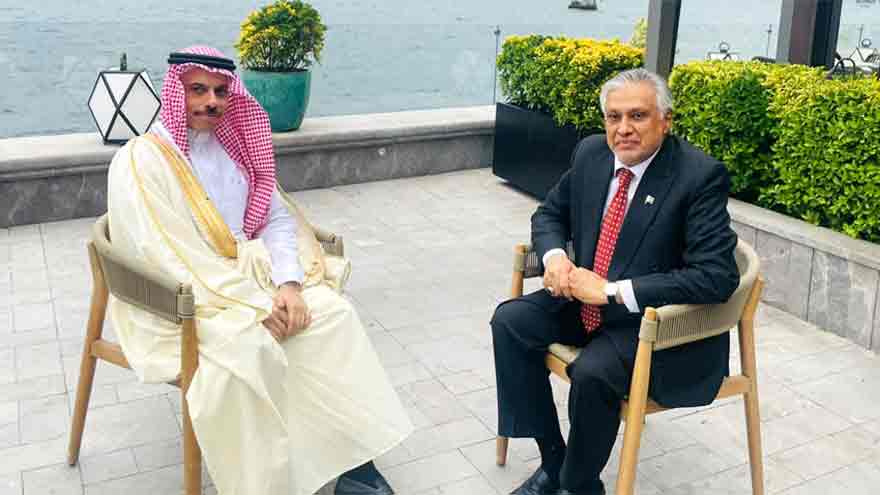
The FO spokesperson said Deputy Prime Minister and Foreign Minister Ishaq Dar had also remained engaged with his counterparts regarding regional developments.
He added that Dar had spoken with Turkish Foreign Minister Hakan Fidan three times over the past two weeks as part of Pakistan’s diplomatic engagement on regional developments.
Pakistan’s mediation efforts
A Pakistan-mediated memorandum of understanding signed between the United States and Iran in mid-June had provided for the reopening of the Strait of Hormuz, while leaving Tehran and Muscat to define the future administration and maritime services in the waterway in consultation with Gulf states and in accordance with international law.
However, the agreement, which was expected to pave the way for talks on permanently ending the conflict, subsequently fell apart.
Omani Foreign Minister Badr Albusaidi visited Tehran on Tuesday and discussed a framework agreement involving a temporary corridor for shipping and a project to clear mines from the Strait of Hormuz.
Despite the absence of a clear breakthrough and continued fundamental differences between Iran and the United States, the latest diplomatic activity has brought the political and technical aspects of the dispute back into focus.
‘Tangible actions’ needed from Kabul
Responding to a question about Afghan Interior Minister Sirajuddin Haqqani’s reported remarks concerning a proposed security mechanism, Andrabi said Pakistan was aware of the proposal and remained open to state-level dialogue.
However, he stressed that the sustainability of any such mechanism would depend on “tangible actions rather than mere assurances.”
The FO spokesperson said the Afghan Taliban must ensure that Afghan soil is not used to carry out terrorism against Pakistan for any dialogue to take place.
He said Kabul must honour its international commitments, including those under the Doha framework, and ensure that Afghan territory is not used by hostile proxies, particularly the Tehreek-i-Taliban Pakistan and the Baloch Liberation Army, against Pakistan.
Andrabi reiterated that Islamabad remained ready for institutional coordination if it resulted in tangible and verifiable counterterrorism measures and effective border management.
FO rejects Indian claims over Kirana Hills
The Foreign Office also rejected claims made by former Indian Chief of Defence Staff Anil Chauhan regarding the 2025 conflict between Pakistan and India.
Chauhan had claimed that an Indian Harop drone accidentally struck Kirana Hills near Sargodha during the May 2025 conflict after running critically low on fuel.
Andrabi categorically rejected what he described as self-contradictory and retrospective claims regarding Kirana Hills.
He said Pakistan’s layered air defence network had effectively thwarted India’s military objectives during the conflict, while Pakistan’s subsequent response under Operation Bunyanum Marsoos demonstrated its ability to impose costs across the conflict spectrum.
The spokesperson maintained that no strategic asset or sensitive infrastructure was compromised in Pakistan and said attempts to retrospectively recast the events through selective narratives or dramatic productions could not alter the operational record of May 2025.
“History is established by facts and evidence, not by Bollywood-style retrospective claims,” Andrabi said.
Makkah defence pact open to new members
Responding to Bangladesh’s interest in joining the Makkah Joint Defence Agreement (MJDA) between Pakistan, Saudi Arabia and Turkiye, the FO spokesperson said the evolving security framework remained open to countries sharing commitments to collective obligations and common security interests.
The joint defence agreement, signed on August 7, aims to strengthen collective deterrence and allows its signatories to treat an attack against one member as an attack against all.
Andrabi stressed that the pact was a defensive framework aimed at safeguarding peace and promoting regional stability.
He said any formal request from another country to join the agreement would be considered in consultation with Riyadh and Ankara.
However, he added that the operationalisation of the Makkah Joint Defence Agreement remained at an early stage.