Summary An offensive racial slur rang out from the audience
(Web Desk) - Sunday night’s BAFTA Film Awards were meant to be a celebration of cinematic brilliance. Instead, for a few uncomfortable seconds, they became a lesson in the unpredictability of live television — and in the importance of context.
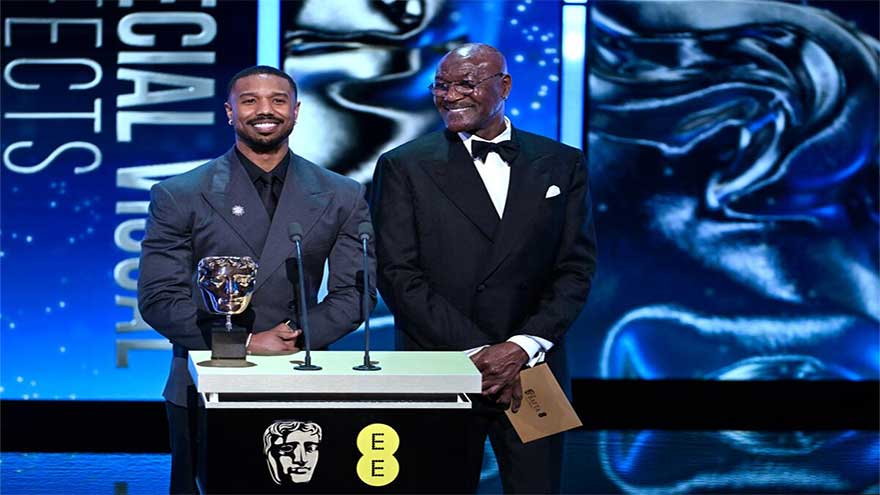
As Michael B. Jordan and Delroy Lindo took to the stage at London’s Royal Festival Hall to present the first award of the evening — Best Visual Effects — an offensive racial slur rang out from the audience. The room seemed to freeze. Both actors paused, visibly absorbing what they had just heard. Lindo, in particular, looked stunned. Then, in a masterclass of composure, they carried on. The show, as they say, must go on — and it did.
It wasn’t the only interruption of the night. According to Variety, there were further shouted profanities during BAFTA chair Sara Putt’s opening speech and again as the award for Best Children’s and Family Film was accepted. For an event built on carefully timed speeches and polished applause, it was an evening that refused to stick entirely to the script.
The source of the outbursts was John Davidson MBE — a Tourette syndrome campaigner and the inspiration behind the British independent film I Swear, which went on to win four awards that night.
Davidson lives with Tourette syndrome, a neurological condition that can cause involuntary verbal tics, sometimes involving offensive words. Crucially, such tics are not intentional and do not reflect the beliefs of the person experiencing them.
BAFTA had briefed attendees in advance that Davidson was present and that involuntary language or noises might occur during the ceremony. Nevertheless, when a particularly offensive term was heard while Jordan and Lindo were on stage, the impact was immediate and painful. In a statement released afterwards, BAFTA apologised unreservedly to the actors and to anyone affected, praising Jordan and Lindo for their “incredible dignity and professionalism.”
Davidson himself later expressed deep mortification that his involuntary tics could be perceived as intentional or meaningful. He reiterated that his life’s work has been dedicated to supporting the Tourette’s community and promoting empathy and understanding — values that, on a night like this, felt especially vital.
In the end, the evening became a reminder of two things: that live events can veer off-script in ways no one anticipates, and that compassion sometimes matters more than choreography. It was an awkward moment, undoubtedly — but also one that underscored the complexities of inclusion in real time.