


200-year-old wooden hujra in Swat stands as symbol of Pashtun culture
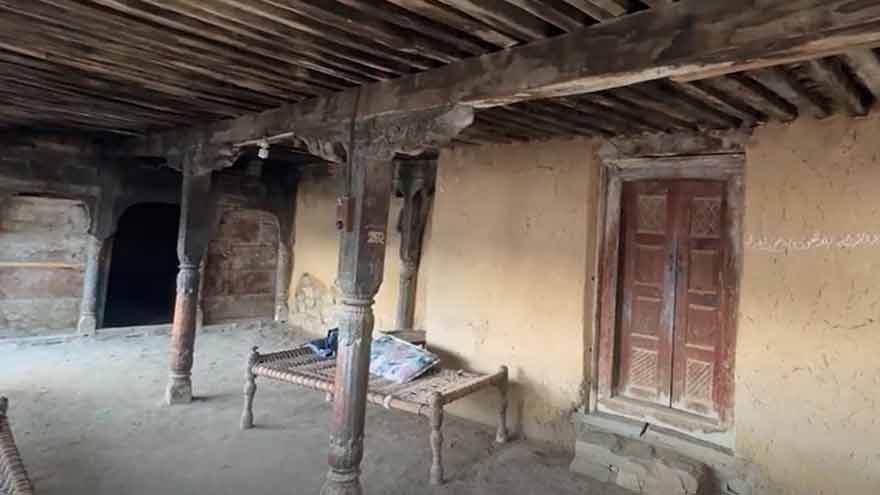
A 200-year-old wooden hujra in Swat’s Dardiyal area still preserves Pashtun traditions of jirga, hospitality and community gatherings, serving as a symbol of cultural heritage.

SWAT (Dunya News) - A nearly 200-year-old wooden hujra located in the Dardiyal area of Swat District still stands today as a living reminder of the past.
The structure has long served as an important center of traditional Pashtun social life, including the customs of jirga, hospitality, and communal gatherings.
The hujra, widely known as the Sheikhanon Hujra, is currently owned by Khadim Shah, who says the building is more than two centuries old and has been preserved in its original condition. In earlier times, such hujras were the heart of village social life.
Khadim Shah explained that elders used to gather in the hujra every evening.
During winter, a fire would be lit in the built-in hearth and people would sit around it.
At that time there were no hotels, so travelers and unexpected guests were also hosted here.
The hujra was the place where jirgas were held, community celebrations took place, and important village decisions were made.
According to Khadim Shah, most of the structure is built from Banrai wood, with wooden pillars, beams and ceilings forming the entire framework.
Even the base structure was made using wood instead of modern materials. He added that the hujra has never been repainted nor have the original wooden parts been replaced, as the family wishes to preserve it in its authentic form.
He further shared that the intricate carvings on the wooden pillars took about six months to complete.
As narrated by elders, two craftsmen worked on the carvings while a woman accompanied them to prepare their meals.
During that time, the workers were served traditional food made with desi ghee and chicken throughout the project.
Historically, the hujra also served as a place for learning and collective consultation. People gathered here to discuss farming, land management, and livestock.
Today, when individuals come alone they often spend time on their mobile phones, but when several people gather together, conversations and storytelling continue as before.
Local youth Waqar Ahmad says he visits the hujra at least once a month.
According to him, the place brings a sense of peace and offers an opportunity to learn from the elders of the community.
He noted that while today’s youth are often absorbed in social media and smartphones, the hujra connects them with their traditions and cultural values.
Another young resident, Dildar Khan, believes the hujra remains a living tradition.
He said people still gather there in the evenings for discussions and sometimes poetry gatherings.
However, he added that such hujras are becoming rare and younger generations often do not fully realize their importance.
The historic hujra stands as a reminder that cultural heritage is not just about preserving buildings, but also about protecting the collective traditions and identity of a community.
Safeguarding such heritage, residents say, is a shared responsibility of society.
