Summary Prime Minister Shehbaz Sharif directed the FBR to address traders’ concerns, intensify action against tax evasion, expand digital tracking and ensure merit-based reforms.
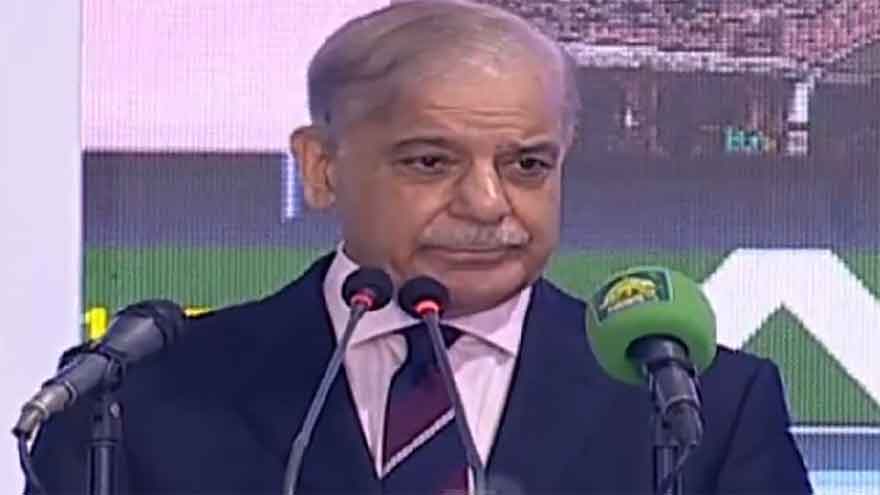
ISLAMABAD (Dunya News) – Prime Minister Shehbaz Sharif has directed the Federal Board of Revenue (FBR) to promptly address the concerns of the business community and take legal action against individuals and businesses involved in tax evasion.
Chairing a weekly review meeting on FBR reforms, the prime minister reviewed progress on revenue enhancement and institutional reforms. He instructed officials to develop a comprehensive, scientific methodology for assessing the tax potential of various sectors.
Shehbaz Sharif directed the FBR to work with the power sector to identify undocumented economic activities and businesses involved in tax evasion, stressing that legal action should be taken against violators. He said the first-ever alignment between sugar industry production data and FBR records demonstrated the effectiveness of the tax authority’s tracking system.
The prime minister praised the FBR chairman and his team for their efforts, saying taxpayers and businesses that comply with tax laws are valuable national assets. He reaffirmed the government's commitment to facilitating both exporters and domestic industries while ensuring tax compliance.
He instructed the FBR chairman and senior officials to spend the first week of every month in Karachi to meet traders and resolve their issues without delay.
The prime minister also directed that digital production monitoring systems be made operational by December in the textile, beverages, steel, poultry, edible oil and ghee, and tyre sectors.
Emphasising transparency, Shehbaz Sharif said appointments and transfers within the FBR would be made strictly on merit. He called for a list of high-performing officers to be prepared for recognition with Independence Day awards and ordered an immediate third-party audit and validation of customs bonded warehouses to detect and prevent irregularities.
Officials informed the meeting that tracking systems were already fully operational in the sugar, cement, tobacco, tiles and fertiliser sectors, while implementation in five additional sectors was in its final stages. These sectors have an estimated tax potential exceeding Rs700 billion. Work is also underway to introduce tracking systems in nine more manufacturing sectors, with an additional estimated tax potential of Rs560 billion.
The prime minister directed authorities to ensure the implementation of tracking systems for indirect tax collection across the manufacturing sector by the end of this year.
The meeting was also briefed on human resource reforms, including merit-based recruitment, internationally aligned training programmes for newly recruited and serving officers, and the introduction of peer review and performance evaluation systems to ensure competent postings in Customs and Inland Revenue.
Officials said 957 third-party auditors had been appointed to strengthen transparency, while recruitment of 280 goods evaluators under the customs faceless assessment system was underway. The system has reduced cargo clearance times and improved revenue collection.
The meeting was further informed that a Case Scrutiny Committee was being established to reduce unnecessary tax litigation by reviewing proposed tax cases on merit before filing. Under the Alternative Dispute Resolution Committees (ADRCs), 152 out of 377 applications were resolved within 90 days by June 2026, resulting in the recovery of Rs54 billion in tax revenue.
The meeting was attended by federal ministers, the governor of the State Bank of Pakistan, the FBR chairman and other senior government officials.