Summary She said Pakistan had strong potential in copper, gold, rare earth elements, industrial minerals and other critical mineral resources.
ISLAMABAD (APP) - The United States has expressed interest in expanding long-term cooperation with Pakistan in the mining and industrial sectors, with a focus on skilled employment, technology transfer and economic development.
US Acting Ambassador to Pakistan Natalie Baker said this during her visit to the headquarters of National Vocational and Technical Training Commission in Islamabad.
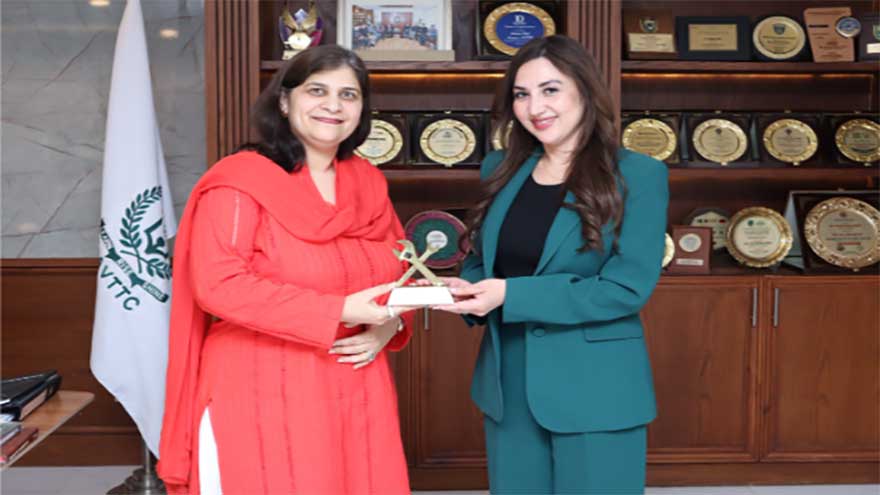
During the visit, Acting Chairperson Gulmina Bilal Ahmed and senior officials welcomed the US envoy at the NAVTTC headquarters. Natalie Baker also visited the organization’s Center of Excellence, where officials briefed her on training programmes linked with industry needs, international certification systems and initiatives designed to prepare Pakistani youth for employment opportunities in global markets.
Speaking at the event, Natalie Baker said cooperation between Pakistan and the United States in the mining sector was moving forward after the recent visit of experts from the South Dakota School of Mines and Technology. She said the partnership was not limited to mineral extraction and also covered workforce training, technology sharing, safety standards and institutional development.
She said Pakistan had strong potential in copper, gold, rare earth elements, industrial minerals and other critical mineral resources.
According to her, the United States wanted to support Pakistan in connecting mining activities with industrial expansion and skilled job creation.
The acting ambassador said cooperation in workforce development and industrial capacity building could further improve economic and technical relations between the two countries.
She added that technical training and modern industrial skills were important for sustainable growth and future economic planning.
Addressing the gathering, Gulmina Bilal Ahmed said Pakistan’s future competitiveness depended on linking education with industry requirements, technology and international markets.
She said countries were now building partnerships through workforce cooperation and technical collaboration.
She added that Pakistan wanted its skilled workforce to benefit from American expertise and modern industrial practices through stronger bilateral engagement.
According to her, cooperation with international partners could help Pakistani workers gain access to better training systems and improve their participation in global industries.
The visit highlighted the growing importance of skills development and workforce advancement in economic cooperation between Pakistan and the United States. Both sides stressed that technical education, industrial training and knowledge sharing could play an important role in supporting economic growth, employment opportunities and industrial progress in the coming years.