Summary The IMF forecasts a gradual reduction in Pakistan’s budget deficit, from 5.1 percent of GDP in the current fiscal year to 3.1 percent by 2030.
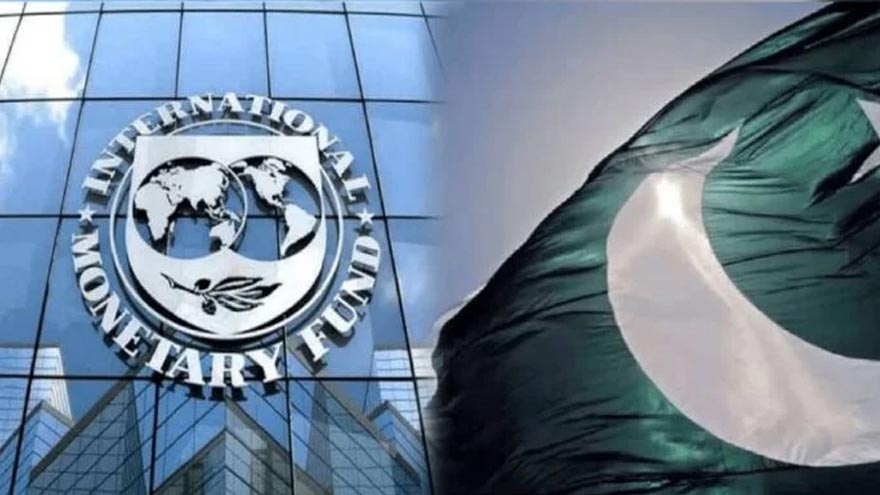
ISLAMABAD (Mudassar Ali Rana) - The International Monetary Fund (IMF) has revised Pakistan’s key macroeconomic projections, estimating that the country’s Gross Domestic Product (GDP) will reach Rs193.63 trillion by 2030.
According to the IMF, Pakistan’s GDP is expected to grow by approximately Rs68 trillion between fiscal year (FY) 2026 and FY2030. However, the GDP target of Rs129.517 trillion set for the current fiscal year is unlikely to be met.
The IMF forecasts a gradual reduction in Pakistan’s budget deficit, from 5.1 percent of GDP in the current fiscal year to 3.1 percent by 2030. Despite improvements in revenue collection, the IMF projects that the Federal Board of Revenue (FBR) will not achieve a tax-to-GDP ratio of 15 percent, with the ratio expected to hover around 11.1–11.2 percent through FY2030.
Under the revised estimates, FBR tax collections are projected at Rs13.979 trillion for the current fiscal year, rising to around Rs21.5 trillion by 2030, while non-tax revenues are expected to increase modestly from Rs3.681 trillion to Rs3.861 trillion over the same period. Financing requirements to cover fiscal deficits are estimated at Rs28 trillion between FY2026 and FY2030, with around Rs2.3 trillion expected from external sources.
The IMF projects Pakistan’s total outstanding public debt will increase to Rs117.441 trillion by FY2030, although debt-to-GDP ratio is expected to decline gradually from 72 percent to 60.7 percent. Debt servicing costs will rise steadily, with interest payments estimated at Rs8.251 trillion in FY2026, increasing to Rs9.38 trillion by FY2030.
While the government aims to raise the tax-to-GDP ratio to 13 percent, the IMF expects this target will remain unattainable by 2030, highlighting ongoing fiscal challenges despite projected economic growth.