Updated on
Summary Hadi pledges to preserve the country's unity, independence and territorial integrity.
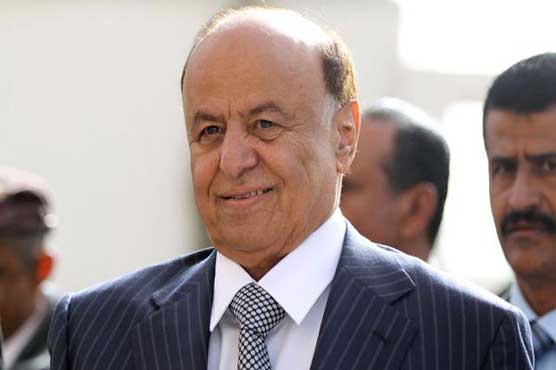
Abdrabuh Mansur Hadi, who was sworn in Saturday as Yemens president, is a career soldier with no popular or tribal base but who has emerged as a consensus figure in the strife-torn country.Hadi pledged to preserve the countrys unity, independence and territorial integrity as he took the oath of office in parliament, ahead of a formal handover of power by veteran strongman Ali Abdullah Saleh.Official results released from a Tuesday presidential election in which Hadis name was the only one on the ballot paper gave him 99.8 percent of valid votes cast.A major general from the restive south, where separatists boycotted the election for failing to meet their aspirations, Hadi had been Salehs deputy since 1994 and secretary general of the ruling General Peoples Congress party.But he never played a top role in politics before taking Salehs powers in June last year, when the 69-year-old former president was wounded in an attack on his presidential compound and spent more than three months receiving treatment in Saudi Arabia.During Salehs absence, the once fiercely private vice president of few words gained the respect of Yemens political parties, including the opposition.Hadi also played a crucial role in convincing Saleh to sign a UN-backed power-transition plan in November, which marked the beginning of the end of the embattled presidents 33-year-rule.The way he handled the negotiations for the settlement plan, and above all the way in which he convinced Saleh to go along with it, proves that he is very savvy, a Western diplomat said, on condition of anonymity.The Gulf-brokered deal gave Saleh and his closest aides immunity from prosecution and made him honorary president.It also stipulated that Hadi become the next president of Yemen for an interim two-year period following Tuesdays vote.Unlike Saleh, however, Yemens new president has no tribal, familial, regional, or partisan base and has no real experience in power, said the diplomat.He stands above all these conflicts and this is what gives him his strength, he added.Born on May 1, 1945, in the village of Dhakin in the southern Abyan province when it was a British protectorate, Hadi graduated from a military academy in formerly independent South Yemen in 1964, before receiving military training in Britain and Egypt.His hometown is now a hotbed of Al-Qaeda activity.Hadi was a low-profile figure in the freedom struggle of South Yemen, which won independence in November 1967.But he rose to prominence in his military career in what was the only Marxist nation in the Arab world, a state with close ties to the Soviet Union during the Cold War.He remained loyal to South Yemens president Ali Nasser Mohammed, who was forced in January 1986 to seek protection in neighbouring North Yemen, a country Saleh had ruled since 1978.A unified Yemen was proclaimed on May 22, 1990, four years after Hadi had joined the northern camp.The southerners tried to break away in May 1994, sparking a bloody civil war during which Hadi closed ranks with the northerners to crush the revolt. During the civil war, Hadi was appointed defence minister.With the defeat of southern forces five months after the conflict erupted, he was promoted to vice president and held on to the post despite a series of political, sectarian and tribal crises.He has two daughters and three sons, and has written several books, including one on the military defence of mountain areas.