
Updated on
Summary India's home ministry disowned arguments made in Supreme Court about legality of heterosexuality.
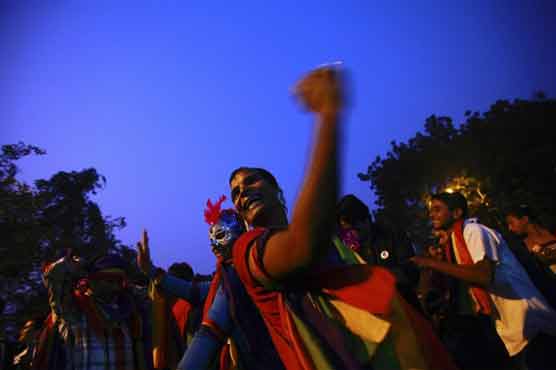
Indias home ministry disowned arguments made before Supreme Court on Thursday by a top government lawyer that homosexuality was immoral, against nature and should be banned.Additional solicitor general P.P. Malhotra said he was representing the ministry when he urged the court to overturn a landmark 2009 ruling that decriminalised gay sex between adults in India.Gay sex is highly immoral... against nature and spreads HIV, Malhotra told the top court in New Delhi.But the home ministry quickly released a statement distancing itself from Malhotras remarks and reiterated a previous cabinet decision not to appeal the 2009 ruling by the Delhi High Court.The ministry of home affairs has not taken any position on homosexuality, the statement said, adding that it had not given any instruction to the solicitor generals office.Ministry spokeswoman Ira Joshi said there appeared to have been some miscommunication.The Supreme Court is hearing more than a dozen petitions filed to overturn the High Court ruling that struck down a colonial-era ban on gay sex on the grounds that it was unconstitutional.The judgment was hailed by gay activists as a major victory in their fight for equal rights and opportunities in the worlds biggest democracy.In his deposition to the Supreme Court, Malhotra said the 2009 ruling should be overturned to prevent child abuse and because Indian society was largely against homosexuality.Laws cant run separately from society and the morals of the time, he said.A survey last year by the CNN-IBN television news channel found that as many as 73 percent of Indians believed homosexuality should be illegal, while Malhotra cited a Law Commission study on attitudes that drew similar conclusions.Many Indians, particularly in rural areas, regard homosexuality as a mental illness or something shameful to be ignored, and the country has no high-profile gay sportsmen, politicians or Bollywood stars.Prior to the Delhi High Court ruling, gay sex was illegal in India under a 150-year-old British colonial law that banned carnal intercourse against the order of nature.Conviction carried a fine and maximum 10-year jail sentence. Prosecutions were rare, but gay activists said police used the law to harass and intimidate homosexuals.Since the decriminalisation ruling, Indias small gay scene has flourished. Gay pride marches take place annually in New Delhi, Mumbai and other major cities, while a gay publishing industry is more visible than ever.--Agencies