Summary The prolonged heat and dry conditions are already taking a toll on British agriculture, raising concerns about food security and the future of farming
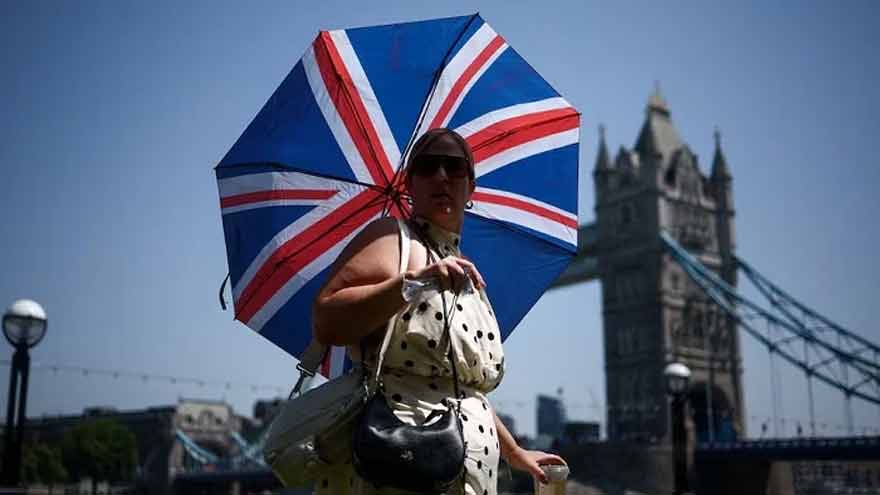
LONDON (Web Desk) - The United Kingdom is bracing for its fifth heatwave of the year, with temperatures forecast to reach as high as 36°C in parts of eastern and southeastern England next week, after the country recorded its highest number of days above 30°C in a year.
According to the BBC, temperatures reached 30.6°C in Frittenden, Kent, on Sunday, bringing the number of days this year on which at least 30°C has been recorded somewhere in the UK to 35. That surpassed the previous annual record of 34 days, set in 1995.
Forecasters expect temperatures to rise further later next week. Parts of East Anglia and southeast England could see temperatures approaching 36°C by Thursday, although Monday is expected to be cooler before the heat builds again.
The prolonged heat and dry conditions are already taking a toll on British agriculture, raising concerns about food security and the future of farming.
English farmers have faced the driest July ever recorded by the Met Office, with crops suffering from a lack of rainfall. Suffolk farmer John Pawsey said the drought had continued for weeks, leaving fields severely depleted.
“It suddenly, completely dried out,” Pawsey told AFP, describing how the drought “just seems to have gone on forever” on his farm in eastern England.
When harvesting began, his worst fears were confirmed. Pawsey said yields of crops including oats, wheat and vetch were between 25% and 30% lower than expected.
The 62-year-old farmer, whose family has worked the Suffolk land for generations, said he was increasingly concerned about the years ahead. Farmers, he argued, must adapt to changing weather patterns rather than rely solely on traditional methods.
On his organic farm, Pawsey has begun experimenting with crops such as fava beans and chickpeas, which are better suited to hotter and drier conditions. He has also adopted techniques designed to improve soil and crop resilience, including growing different crops together in the same fields.
He called for greater government support to help farmers make the transition to more climate-resilient agriculture.
Food security expert Timothy Benton has similarly argued for less intensive and more diverse farming systems. Such approaches, he said, could make Britain less dependent on imported food, fertilisers and other agricultural products.
“Climate impacts will become greater,” Benton told AFP, warning that food systems will have to change.
As Britain faces increasingly frequent heatwaves and prolonged periods of drought, farmers and experts say adapting agriculture will be essential to protecting both domestic food production and national food security.